

AI CERTS
2 months ago
USS Cincinnati Visit Signals Ream Openness
Strategic Port Call Context
Ream’s first U.S. warship docking since 2016 arrives after the base’s China-funded renovation. Furthermore, the visit coincides with Indo-Pacific Command chief Admiral Samuel Paparo’s meetings in Phnom Penh. Both events illustrate how Washington and Phnom Penh are recalibrating ties. However, lingering doubts about exclusive foreign access continue to color the narrative.
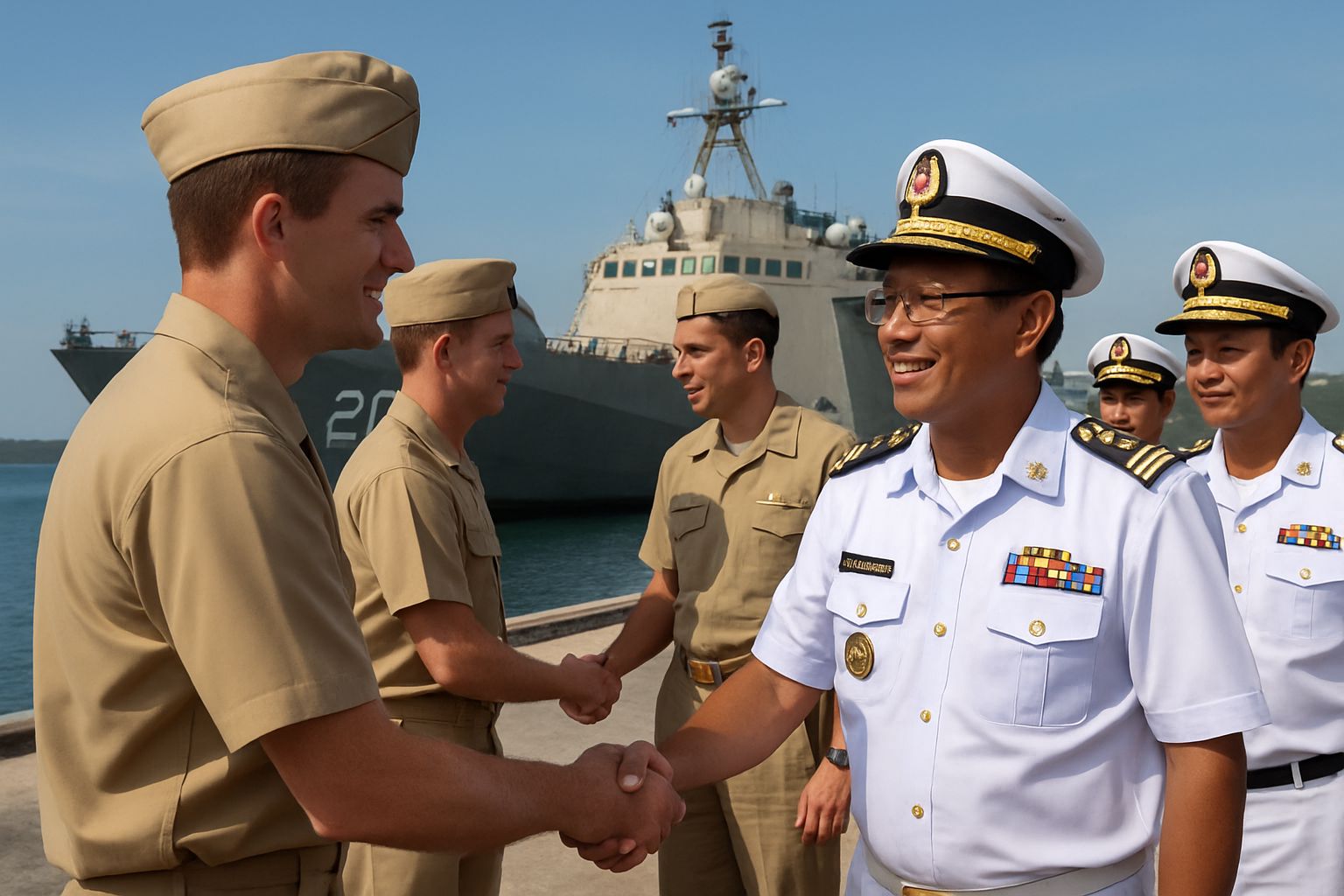
The USS Cincinnati Visit involves sporting exchanges, technical tours, and limited bilateral drills. In contrast, earlier U.S. port calls used Sihanoukville’s civilian harbor because Ream lacked deep-water capacity. Cambodian officials now emphasize that any “friendly” fleet may berth, subject to ship-size limits.
These points highlight diplomatic intent and operational practicality. Therefore, understanding the renovation’s scope becomes essential.
Ream Upgrade Key Details
Satellite imagery from CSIS-AMTI shows a 270-meter pier and a 140-meter dry dock. Moreover, new workshops and fuel storage appear along the shoreline. Cambodian leaders credit Chinese grants for most construction costs. Nevertheless, Phnom Penh insists no exclusive basing agreement exists.
Key statistics worth noting include:
- Pier length roughly triples previous capacity, allowing corvettes and LCS vessels.
- The dry dock can service many diesel submarines, though not large destroyers.
- Cambodia reports 31 earlier U.S. port calls involving 37 ships between 2003-2026.
The USS Cincinnati Visit therefore serves as a real-time test of the upgraded facilities. Additionally, it demonstrates that American hulls still fit within physical and political parameters.
These enhancements strengthen Cambodian maintenance capabilities. However, they also invite external scrutiny regarding potential military leverage.
Regional Actors' Mixed Reactions
Vietnam eyes developments cautiously because Ream faces important maritime routes. Meanwhile, Japan has already sent minesweepers to the new pier, framing its arrival as humanitarian cooperation. Australia voices concern that China might secure privileged access despite public denials.
Analysts like Thomas Shugart note the dry dock’s submarine-ready dimensions. Consequently, speculation about a stealthier Chinese presence persists. Cambodian Rear Admiral In Sokhemara counters that the port welcomes all, including the U.S. Navy.
The USS Cincinnati Visit thus functions as both reassurance and probing gesture. Moreover, it offers regional navies fresh data on pier usage, ceremony protocols, and logistic throughput.
Diverse responses underscore Southeast Asia’s balancing act. Therefore, understanding strategic implications becomes imperative.
Strategic Balance Implications
For Washington, the call shows commitment to presence operations without escalating tension. Additionally, it signals confidence that open access can dilute unilateral influence. For Beijing, continued financing yields diplomatic dividends even when American hulls arrive.
Ream’s position near the Gulf of Thailand grants reach toward vital sea lanes. Consequently, any sustained foreign military foothold could shift regional deterrence equations. The USS Cincinnati Visit allows U.S. planners to survey infrastructure firsthand, informing future posture choices.
Meanwhile, Cambodian leaders gain leverage by showcasing plural engagement. Moreover, transparent hosting may help defuse allegations rooted in the disputed 2019 draft agreement. Nevertheless, verification gaps remain, especially regarding long-term access terms.
These dynamics illustrate how a single pier can influence broader power balances. In contrast, purely civilian port improvements rarely provoke similar debate.
Transparency And Future Access
Independent monitors rely on commercial satellites to track vessel rotations. Furthermore, open-source imagery remains crucial because on-site inspections are limited. Cambodian spokespeople promise published guidelines for future visits, yet documents have not surfaced publicly.
Washington may push for periodic joint exercises at Ream to institutionalize openness. Meanwhile, ASEAN observers advocate multilateral port calls that include smaller regional navies. The USS Cincinnati Visit could set a precedent for such cooperative schedules.
Professionals seeking deeper policy insight can bolster analytical credibility with the AI+ Government™ certification. Moreover, data-driven assessment skills remain essential when satellite frames serve as primary evidence.
Enhanced transparency would ease suspicion and support regional stability. However, achieving that goal demands formalized reporting and regularized foreign access.
Opportunities For Maritime Professionals
Shipbuilders examine Ream’s dry dock length to tailor service offerings. Additionally, logistics firms assess fuel and repair capacity for commercial tie-ins. Defense contractors consider sensor packages that track movements without infringing sovereignty.
Key professional takeaways include:
- Infrastructure scale dictates vessel maintenance market size.
- Open access policies influence insurance and routing decisions.
- Data analytics training upgrades maritime situational awareness.
The USS Cincinnati Visit provides a timely case study for naval architects and policy scholars alike. Consequently, certification-backed expertise can translate observation into actionable recommendations.
Commercial and defense actors thus find convergent interests at Ream. Therefore, multidisciplinary skills gain premium value.
Timeline And Next Steps
Key milestones frame the present moment. July 2019 brought Wall Street Journal claims of a secret China deal. Subsequently, December 2023 saw Chinese corvettes at Ream. April 2025 marked the official reopening. Now, the January 2026 USS Cincinnati Visit validates pier readiness under operational conditions.
Observers will watch for official Indo-Pacific Command readouts after the ship departs. Moreover, satellite firms will likely release new imagery confirming activity levels. Cambodian ministries face growing pressure to publish standardized access rules.
These future data points will either reinforce transparency or fuel renewed suspicion. Consequently, journalists and analysts must maintain meticulous source validation.
Understanding the evolving timeline helps anticipate policy shifts. In contrast, ignoring incremental developments risks strategic surprise.
These milestones chart a path toward clearer regional security patterns. However, continued vigilance remains essential.
In summary, the USS Cincinnati Visit epitomizes how infrastructure, diplomacy, and perception intertwine at one coastal facility. Additionally, it underscores that access parity can serve as a quiet stabilizer amid strategic competition. Nevertheless, only sustained transparency will determine whether Ream becomes a cooperative hub or a geopolitical flashpoint.


