

AI CERTS
2 months ago
AI Data Centers Widen Infrastructure Power Gap
Moreover, new numbers from the International Energy Agency show electricity use could nearly double by 2030. Meanwhile, AI-optimized facilities alone may consume four times more power within the same period. Therefore, utilities, regulators, and investors must confront unprecedented load growth and regional strain.
This article dissects projections, bottlenecks, solutions, and career implications for professionals tracking the Infrastructure Power Gap. Nevertheless, forecast ranges differ widely, underscoring methodological uncertainty that market participants cannot ignore. In contrast, each scenario still points to substantial capital requirements for new generation and efficiency. Subsequently, we examine the data and outline strategies to close the looming gap responsibly.
AI Drives Power Surge
Global AI training runs ballooned during 2024, doubling GPU shipments year over year. Furthermore, every large language model release triggered a fresh wave of inference clusters. Aggressive Scaling of model parameters pushes compute intensity higher. IEA calculates baseline 2024 data-centre electricity at approximately 415 TWh, or 1.5% of world consumption. However, AI workloads concentrate compute into energy-dense racks drawing more than 100 kW each. Consequently, facility power density rises even when software gains improve efficiency per operation.
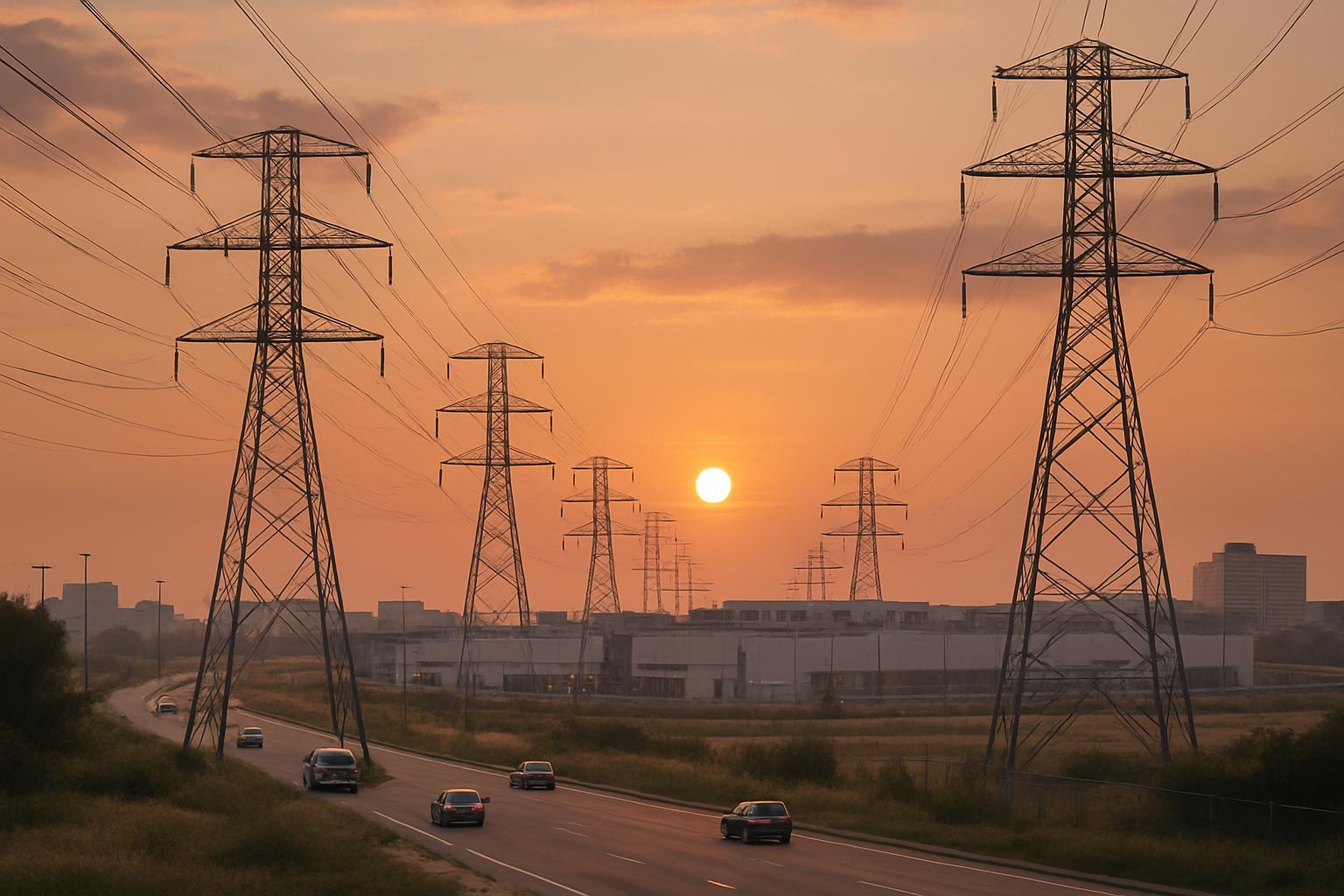
Gartner analyst Linglan Wang emphasizes, “Their electricity usage is set to rise nearly fivefold.” Moreover, Goldman Sachs now pegs current constant draw at 55 GW and projects 165% growth by 2030. Such numbers translate into thousands of megawatts of fresh capacity requests across already stressed regions.
AI accelerators clearly dominate the growth story. However, their escalation intensifies the Infrastructure Power Gap across key markets. The widening imbalance becomes starker when competing forecasts are compared.
Compounding Infrastructure Power Gap
Forecasts vary, yet every credible model shows steep upward curves. IEA’s base case reaches 945 TWh by 2030, more than double today. In contrast, McKinsey’s high scenario tops 1,400 TWh within the same horizon. Meanwhile, Gartner outlines 980 TWh, almost matching IEA despite differing baselines. BNEF analysts add regional nuance, projecting compounded annual growth above 15% in U.S. corridors. Every scenario forecasts Energy use overtaking entire national totals such as Sweden.
These deltas arise from assumptions about workload intensity, efficiency, and renewable penetration. Consequently, decision makers must treat each forecast as a range, not a single outcome. Nevertheless, all trajectories imply a persisting Infrastructure Power Gap unless action accelerates.
Every projection signals outsized electricity additions this decade. Therefore, planners need harmonized data to prioritize investments. Clearer numbers alone will not keep servers humming; the grid must evolve.
Forecasts Signal Demand Divergence
Different organizations publish headline figures that can confuse non-specialists. Additionally, baselines differ, making percentage comparisons tricky. Global power demand from data centers may eclipse several midsized nations within five years. To clarify, the table below distills core statistics.
- IEA (Apr 2025): 415 TWh in 2024 → 945 TWh by 2030.
- Gartner (Nov 2025): 448 TWh in 2025 → 980 TWh by 2030.
- McKinsey (Aug 2025): scenario peaks at 1,400 TWh by 2030.
- Goldman Sachs: 55 GW today → 84 GW by 2027.
- BNEF: regional growth above 15% annually in U.S. and China.
Despite numerical spread, the direction remains unmistakable. Consequently, utilities must prepare for aggressive load additions earlier than planned. Those preparations run headlong into permitting and interconnection obstacles. This disparity underscores the Infrastructure Power Gap confronting utilities.
Grid Bottlenecks Intensify Pressure
Transmission expansion traditionally lags load growth by many years. However, queue backlogs stretch longer as project volumes spike. Goldman Sachs estimates roughly $720 billion is required to relieve congestion by 2030. Meanwhile, local opposition slows siting for substations, lines, and transformers. In contrast, some operators deploy on-site gas turbines or batteries to bypass delays.
Those stopgaps raise emissions risks when fossil fuel generation dominates. IEA warns that locking in gas now could undermine climate goals later. BNEF researchers echo that caution, citing a surge in turbine orders.
Infrastructure backlogs materially widen the Infrastructure Power Gap each quarter. Therefore, policy reform remains indispensable for timely upgrades. Technology advances may lighten loads but cannot fully replace wires.
Technologies Ease Energy Load
Liquid cooling, immersion tanks, and airflow redesigns cut facility PUE toward 1.1. Moreover, hyperscalers invest in renewable power purchase agreements paired with battery storage. IEA notes that half of incremental supply could come from clean sources under ambitious policies. Demand-response software leverages AI itself to curtail peaks and improve grid flexibility. Smart cooling supports vertical Scaling without equal increases in site footprint. Key emerging options include:
- Small modular reactors offering steady carbon-free baseload for campus clusters.
- Hydrogen fuel cells delivering backup power without diesel emissions.
- Grid-scale batteries shifting renewable Energy from midday to night.
- AI-optimized chip designs lowering inference Energy per transaction.
Additionally, advanced capacity planning tools help operators align build schedules with realistic interconnection dates. Such innovations narrow the Infrastructure Power Gap but cannot erase it alone.
Technology buys time and slices operating costs. Nevertheless, comprehensive policy and investment must follow for enduring relief. Professionals managing these projects need updated competencies and credentials.
Career Upskilling Opportunities Ahead
Escalating complexity boosts career prospects for electrical engineers, energy strategists, and cloud architects. Furthermore, employers increasingly demand proof of specialised cloud and AI literacy. Professionals can enhance their expertise with the AI+ Cloud™ certification. Moreover, regulatory familiarity with BNEF scenario modeling strengthens strategic planning credibility.
Recruiters prioritize candidates who grasp grid constraints and Sustainability Scaling principles together. Consequently, multidisciplinary training yields faster project approvals and smoother stakeholder alignment.
Upskilled talent directly contributes to closing the Infrastructure Power Gap. Therefore, continuous learning offers both personal and systemic dividends. We now recap the major findings and outline next actions.
Conclusion And Next Steps
AI workloads are rewriting electricity math for the digital era. Multiple forecasts differ, yet all confirm a rapid surge in data-centre Demand. Consequently, transmission expansion, on-site generation, and efficiency technologies must advance in concert. Meanwhile, policy reform and targeted investment remain vital to reduce the widening Infrastructure Power Gap. Moreover, workforce upskilling through recognized certifications equips leaders to steer complex Scaling initiatives responsibly. Take action now by evaluating grid impacts, adopting clean Energy strategies, and pursuing specialized credentials. Act today to help close the Infrastructure Power Gap before servers outpace substations.


