

AI CERTS
2 months ago
Intel Supply Crisis Reshapes Server Market Dynamics
Intel disclosed the crunch during its Q4 2025 call. DCAI revenue rose 9 percent year-over-year, yet executives confessed that wafer output cannot satisfy escalating AI server demand. Therefore, the company is diverting wafers from low-end client processors to high-margin Data Center parts. Nevertheless, management expects the tightest conditions in Q1 2026, with gradual relief from Q2.
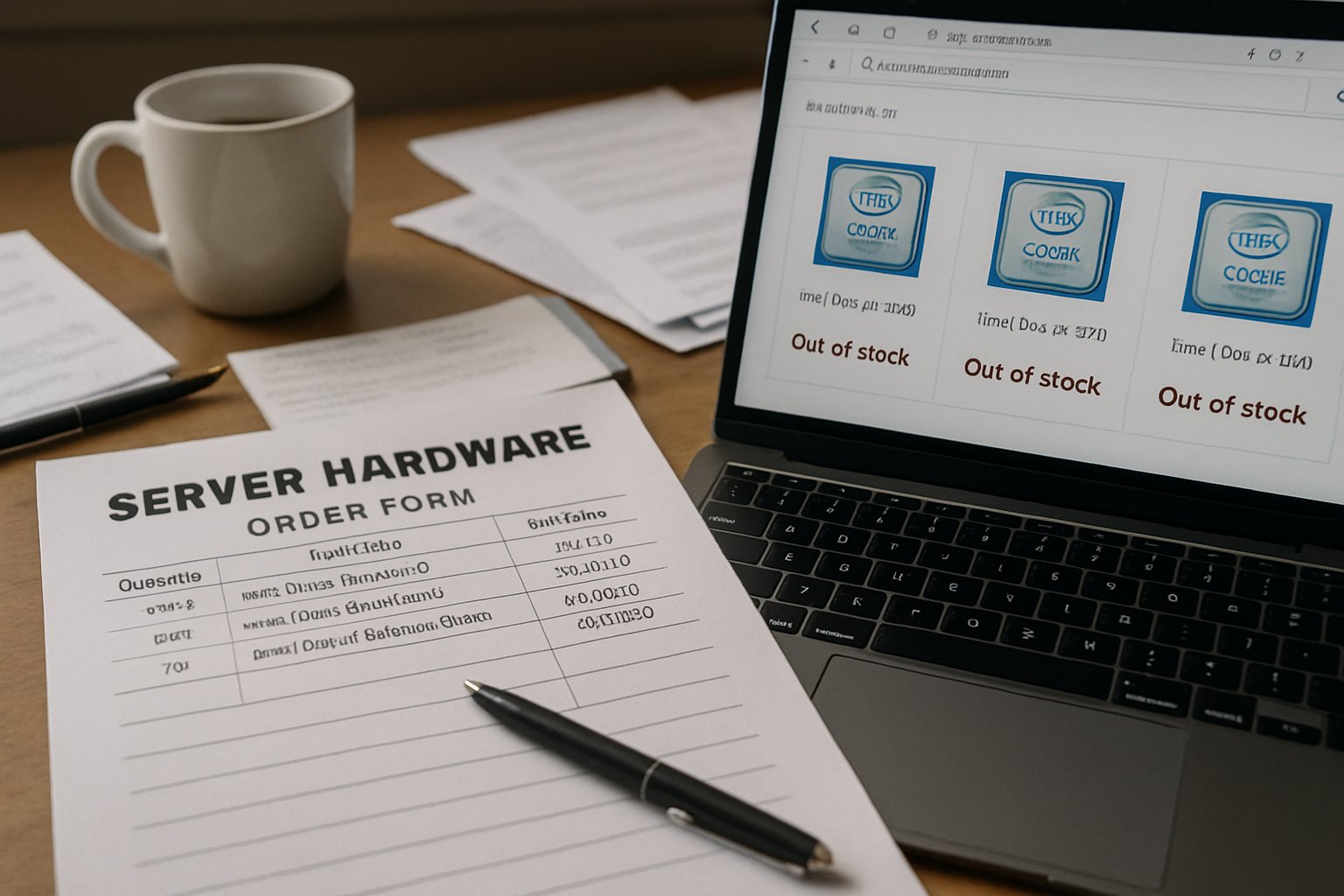
These revelations reframe industry planning. In contrast, competitors such as AMD see opportunity while OEMs confront extended lead times. The Intel Supply Crisis thus shapes budgets, capex cycles, and strategic sourcing for every cloud architect.
AI Server Demand Spike
Hyperscaler AI build-outs intensified through 2025. Consequently, server CPU unit Demand ballooned beyond prior forecasts. KeyBanc supply checks found server allocations nearly sold out for 2026, underscoring the Intel Supply Crisis. Additionally, Nvidia’s accelerator roadmap forced operators to pair each GPU pod with dozens of host CPUs, compounding pressure.
Market researchers peg the global Data Center CPU market at roughly $14 billion-$22 billion for 2025. Despite macro uncertainty, growth remains in the high single digits. Moreover, Intel still controls about 60-75 percent of server shipments, depending on the tracker cited. That dominance magnifies any supply disruption.
These numbers highlight runaway Demand. However, wafer starts and packaging lines cannot expand overnight. The imbalance propels clients toward long-term commits, locking capacity before rivals can respond.
This feverish Demand cycle underpins the crisis. Subsequently, understanding capacity physics becomes imperative for planners.
Tight Wafer Capacity Issues
Intel manufactures many Xeon dies on its Intel 7 process while ramping Intel 3. Early yields remain imperfect. Consequently, usable die output lags wafer starts, fueling the Intel Supply Crisis. Moreover, some devices rely on TSMC nodes, introducing external constraints.
Advanced packaging further complicates flow. High-Bandwidth Memory stacks and 2.5D substrates demand scarce tooling. Therefore, even when CPU yields improve, substrate shortages can still bottleneck shipments. Analysts note double-digit DRAM and HBM price jumps over recent quarters, squeezing budgets.
David Zinsner, Intel CFO, put it plainly: “We expect available supply to be at its lowest levels in Q1 before improving in Q2.” His comment underscores how wafer capacity, yields, and packaging converge to throttle throughput.
These technical hurdles slow volume gains. Nevertheless, strategic investments could widen capacity by late 2026, provided suppliers keep pace.
Ripple Effects Across Supply
The Intel Supply Crisis cascades through adjacent components. Memory partners Samsung, SK Hynix, and Micron confront explosive Demand for HBM. Consequently, contract prices rose more than 30 percent year-on-year. Additionally, substrate vendors struggle to supply enough ABF material for advanced interposers.
OEMs already signal longer client CPU lead times. In contrast, server-class parts receive priority, yet many builders still face allocation limits. Meanwhile, channel distributors warn of potential spot-market scalping if conditions persist.
Key short-term impacts include:
- Elevated DDR5 and HBM pricing through at least H2 2026
- Extended laptop and desktop processor backlogs
- Possible 10-15 percent Xeon price uplift, per KeyBanc
Such effects tighten budgets across verticals. However, disciplined inventory management can mitigate volatility until supply normalizes.
The widening Supply chain strain demands proactive risk controls. Consequently, organizations must revisit procurement contracts immediately.
Market Share Winners Shift
AMD’s EPYC line benefits materially. Moreover, Mercury Research reports steady share gains through 2024-2025. If Intel Supply Crisis lingers, more hyperscalers may pivot workloads toward EPYC or Arm solutions. Consequently, Intel risks ceding unit share despite higher near-term Revenue per chip.
Nevertheless, price leverage can offset moderate share loss. Intel’s mix shift toward premium Data Center SKUs already lifted average selling prices. Furthermore, some customers prefer Intel’s established software ecosystem, tempering migration pace.
Investors therefore face a nuanced picture: expanding margins against possible volume erosion. Strategic clarity will hinge on execution across fabrication ramps.
Competitive dynamics remain fluid. Subsequently, every quarter of constraint reshapes bargaining power.
Pricing Power And Risks
Scarcity usually breeds pricing strength. Consequently, analysts forecast 10-15 percent ASP gains on select Xeon models through 2026. Moreover, Intel’s focus on Data Center chips amplifies Revenue resilience despite unit caps.
However, sustained shortages risk reputational damage. OEMs may design in alternative architectures to hedge. Additionally, high component costs pressure system integrators, potentially stalling downstream AI projects.
Companies must evaluate total-cost trajectories, not just CPU line items. Furthermore, memory premiums can erase margin improvements if budgets lack flexibility.
Pricing therefore offers opportunity and peril. Therefore, balanced allocation strategies remain critical for long-term loyalty.
Timeline And Mitigation Paths
Intel projects improved supply from Q2 2026. Nevertheless, packaging and memory constraints may persist into H2. Independent analysts remain cautious, citing historical ramp delays.
Organizations should adopt multipronged mitigation steps:
- Secure multi-quarter contracts covering CPU, memory, and substrate.
- Diversify server architectures to include AMD or Arm options.
- Invest in workload optimization to reduce node counts per cluster.
- Upskill staff on supply-chain analytics.
Professionals can enhance their expertise with the AI-Powered Supply Chain™ certification. Additionally, firms should establish quarterly reviews with component vendors to track lead-time shifts.
These measures create resilience. Meanwhile, transparent communication with executives keeps expectations realistic.
Strategic Takeaways For CIOs
Technology leaders must treat the Intel Supply Crisis as a systemic challenge, not a transactional hiccup. Moreover, capacity scarcity across CPUs, memory, and packaging demands coordinated response.
CIOs should align procurement, finance, and engineering teams around scenario models. Consequently, budgeting must account for volatile component costs and staggered delivery windows. Furthermore, forward-looking analytics can identify workloads suitable for heterogeneous compute.
Regular dialogue with suppliers is vital. In contrast, silence breeds unpleasant surprises. Therefore, active relationship management helps secure priority status when allocations tighten.
These strategic levers fortify operational continuity. Subsequently, organizations can pursue growth without capitulating to scarcity premiums.
Overall, proactive governance differentiates leaders from laggards during supply turbulence.
Conclusion
The Intel Supply Crisis underscores the fragility of semiconductor ecosystems. However, informed action can soften its impact. Data Center operators must navigate wafer ceilings, packaging limits, and memory inflation while safeguarding Revenue goals. Moreover, competitive shifts offer both risk and opportunity. Nevertheless, disciplined planning, certification-driven skill building, and diversified sourcing improve resilience.
Act now. Review capacity contracts, explore the linked certification, and stay ahead of evolving supply realities.


