

AI CERTs
4 months ago
Maharashtra AI immigrant identification sparks policing debate
Mumbai’s government is racing to embed artificial intelligence across policing and governance. However, the most controversial effort is the Maharashtra AI immigrant identification initiative. Developed through the MARVEL special vehicle, the tool aims to flag undocumented Bangladeshi and Rohingya nationals by analysing speech. Meanwhile, complementary systems like MahaCrimeOS promise faster cyber investigations. Industry leaders see innovation, yet civil-rights groups warn of bias. Consequently, Maharashtra sits at the centre of a national debate on algorithmic accountability. This article unpacks the strategy, technical foundations, political pledges, and oversight gaps driving the conversation. Readers will learn how language models intersect with immigration enforcement, why Microsoft and IIT Bombay matter, and what comes next for state surveillance. Professionals can enhance their expertise with the AI Foundation Essentials™ certification. Finally, we will discuss steps needed to balance security benefits with constitutional safeguards.
Maharashtra State AI Strategy
The Home Department created MARVEL in March 2024 to coordinate statewide AI projects. Moreover, the unit signed an April 2025 memorandum with Microsoft to build three Centres of Excellence. These hubs in Mumbai, Pune, and Nagpur train officials and run pilots across 16 departments. Consequently, tools such as MahaCrimeOS emerged to handle cybercrime evidence in 23 Nagpur stations.
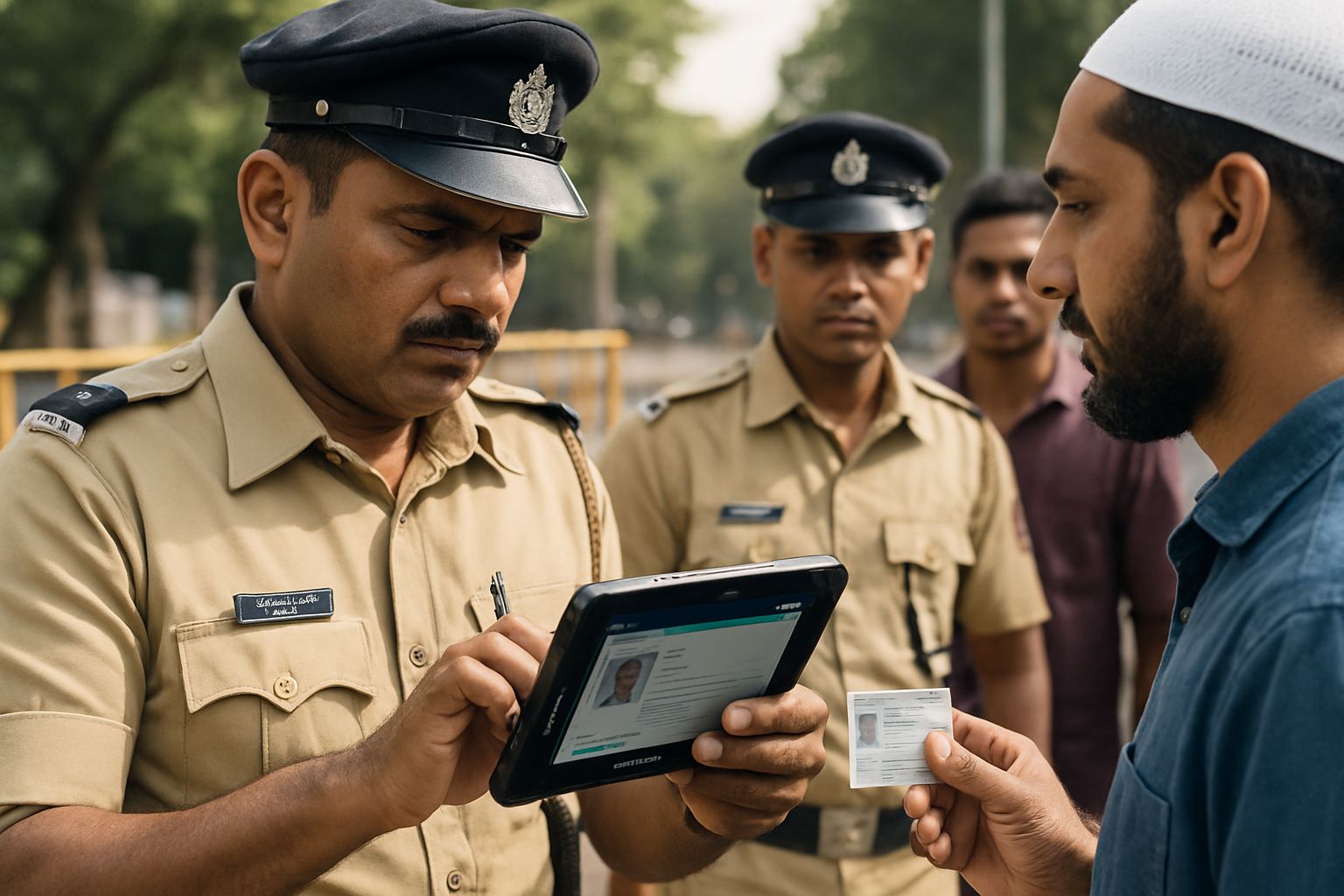
Rollout plans target roughly 1,100 police stations within a year. Furthermore, state dashboards credit MARVEL systems with detecting 5,600 malnutrition cases and other social issues. Supporters claim faster service delivery and better resource allocation. Nevertheless, procurement details for cloud hosting, data retention, and vendor audits remain unpublished.
These moves position Maharashtra as a public-sector AI pioneer. However, immigration applications raise distinct challenges discussed next.
Immigrant Tool Project Genesis
The Maharashtra AI immigrant identification tool arrived through a January 2026 Devendra Fadnavis AI announcement. He told reporters that a language-profiling model, built with IIT Bombay, already achieved 60 percent accuracy. Additionally, the chief minister forecast “100 percent” reliability within six months, citing a ₹3 crore budget.
The Mahayuti manifesto AI pledge positioned the technology as a safeguard against alleged infiltration. In contrast, linguists warned that West Bengal and Bangladesh share dialects, complicating nationality inference. Nonetheless, pilots continue under Home Department supervision.
Project managers state that audio samples funnel through a phonetic classifier linked to identity databases. Consequently, flagged individuals may face extra verification or detention. Civil-society groups argue such steps erode due-process rights.
Political urgency pushed rapid development. However, rigorous validation still lags, as the next section explains.
Technical Model Foundations Explained
Engineers describe the language tool as a supervised deep-learning model trained on Bengali, Sylheti, and Hindi corpora. Moreover, Microsoft Azure supplies compute power, while IIT researchers fine-tune acoustic embeddings. The broader IIT Bombay AI project portfolio also includes traffic analytics and disaster alerts.
MahaCrimeOS, another pillar of Maharashtra AI immigrant identification infrastructure, runs on Azure OpenAI models. Additionally, CyberEye integrates optical character recognition to structure screenshots and bank statements. Officers receive chat-style suggestions but must approve every step.
Key performance metrics remain undisclosed. Nevertheless, leaked briefing notes mention the following provisional figures:
- Language-profiling precision: 60 percent on mixed border dialects
- MahaCrimeOS entity extraction accuracy: 84 percent across 1,200 documents
- Average investigation time reduction: 42 percent during Nagpur pilot
These numbers appear promising. However, independent audits are absent, leaving confidence gaps.
Clear documentation would strengthen stakeholder trust. Therefore, governance measures demand attention.
Governance And Oversight Framework
MARVEL asserts that human officers remain “in-the-loop.” Nevertheless, critics insist on legally binding safeguards. Furthermore, Medianama research highlights missing standard operating procedures governing evidence handling.
Privacy advocates call for algorithmic impact assessments before statewide expansion. Additionally, they seek transparent retention schedules for voice samples and chat logs. Without such clarity, illegal migrant tracking technology could normalise mass surveillance.
International best practice suggests three oversight layers:
- External technical audits on bias, recall, and false positives
- Judicial review when AI outputs influence detention
- Public reporting on model updates and vendor contracts
Maharashtra has yet to publish any of these instruments. Consequently, legal scholars urge immediate reforms.
Governance gaps colour stakeholder perceptions, explored below.
Diverse Stakeholder Perspectives Vary
State officials emphasise efficiency. Sujata Saunik notes that AI accelerates case disposal and frees officers for fieldwork. Moreover, Harssh Poddar stresses that algorithms only augment human judgment.
Conversely, Digital Futures Lab researcher Dona Mathew argues that hallucinations could taint evidence. Meanwhile, migration-rights groups fear community profiling via Bangladeshi immigrant detection algorithms.
Private partners voice optimism. Microsoft executives tout Azure’s security layers, and Pinaka Technologies highlights scalable architecture. However, procurement clauses on audit rights remain confidential, fuelling skepticism.
Stakeholder divisions underline the importance of transparency. Subsequently, the roadmap must integrate ethical design principles.
Responsible Path Forward Planning
Policymakers have several immediate actions.
- Publish technical validation reports for Maharashtra AI immigrant identification models.
- Institute external audits for the IIT Bombay AI project and MahaCrimeOS.
- Create redress mechanisms for individuals wrongly flagged by illegal migrant tracking technology.
- Mandate periodic legislative briefings on Devendra Fadnavis AI announcement milestones.
Furthermore, integrating responsible-AI curriculum into police training will improve frontline deployment. Professionals may bolster their own skills through the earlier-mentioned AI Foundation Essentials™ course.
A balanced roadmap can unlock benefits while protecting rights. Nevertheless, success depends on sustained scrutiny from media, academia, and civil society.
These recommendations offer a workable template. Consequently, implementation speed will determine public trust.
Section Summary
Maharashtra AI immigrant identification projects illustrate both technical promise and ethical risk. Moreover, governance reforms remain the decisive factor for success.
Next, we conclude with key takeaways and a call to action.
Conclusion And Call
Maharashtra AI immigrant identification has evolved from manifesto idea to multi-crore pilot. Furthermore, allied efforts such as the IIT Bombay AI project and MahaCrimeOS showcase rapid innovation. However, accuracy gaps, opaque procurement, and civil-liberty concerns persist. Consequently, immediate publication of audits, datasets, and oversight protocols is essential. Professionals should monitor policy updates, join stakeholder consultations, and pursue continuous learning. Therefore, consider advancing your knowledge through the AI Foundation Essentials™ certification. Action today will shape how technology serves justice tomorrow.
Disclaimer: Some content may be AI-generated or assisted and is provided ‘as is’ for informational purposes only, without warranties of accuracy or completeness, and does not imply endorsement or affiliation.


