

AI CERTs
2 months ago
Zhipu AI Caps Sign-Ups Amid Surging Demand and Compute Strain
Investors and developers saw a surprise on 21 January 2026. Zhipu AI announced a sudden cap on its GLM Coding Plan sign-ups. The company will allow only 20% of previous daily registrations starting 23 January. Management says the move protects existing users from peak-time slowdowns.
However, the restriction also exposes deeper stresses in China’s fast-growing model market. Surging AI Demand, ballooning compute costs, and supply constraints converge at this flashpoint. This article unpacks the decision, financial backdrop, and likely industry ripple effects. Readers will gain concrete numbers, expert commentary, and actionable insights.
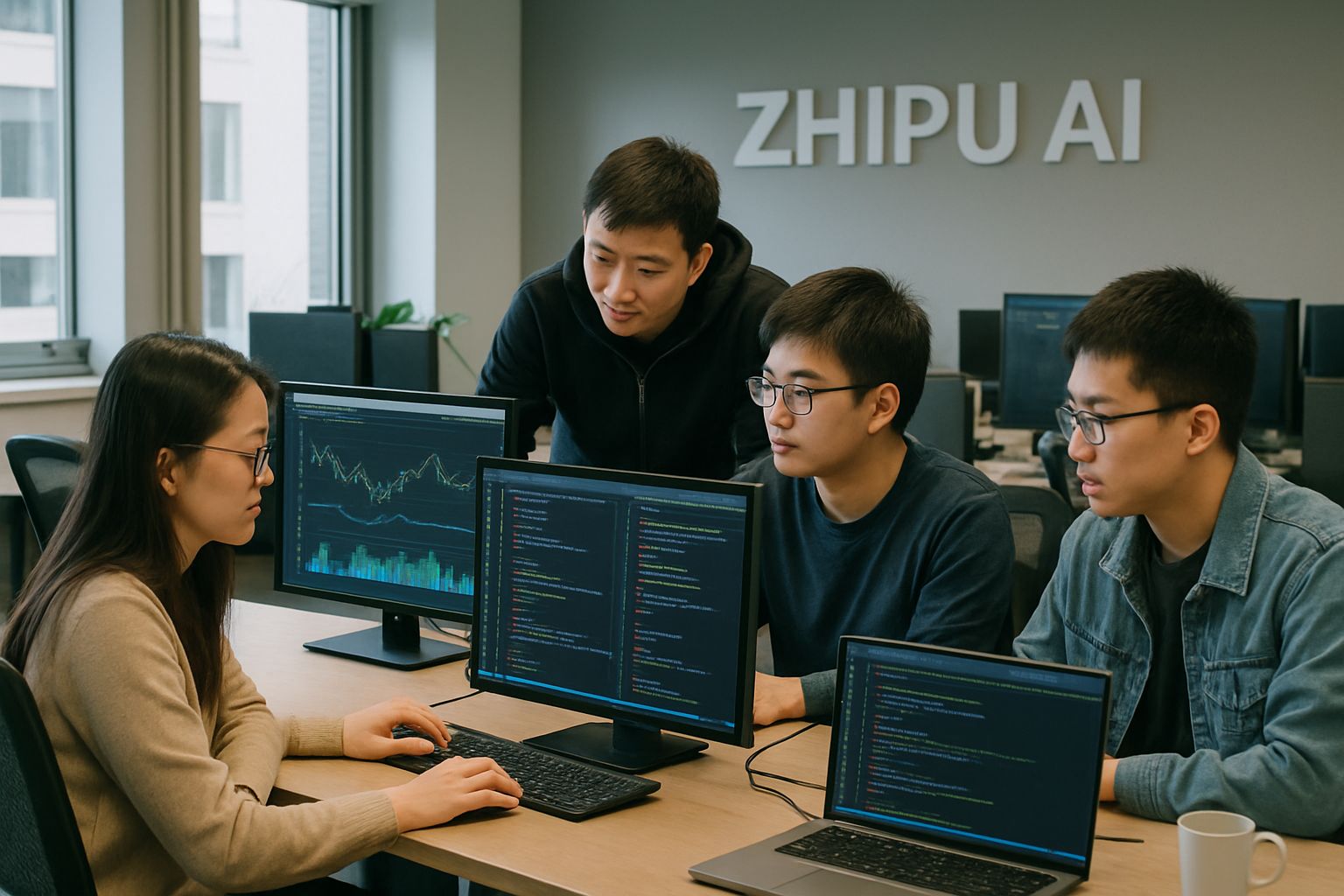
Zhipu Capacity Crunch Announcement
The temporary limit cuts new sales by 80% compared with earlier weeks. Consequently, only a small daily quota refreshes at 10:00 each morning. Auto-renewing subscribers keep full access, according to Zhipu AI.
Company channels blame a demand spike following the December release of GLM-4.7. Moreover, weekday concurrency between 15:00 and 18:00 created notable latency for coders. Third-party monitors recorded response times doubling during several weekday spikes. Some corporate clients reported queue positions exceeding 500 calls. Temporary timeouts also disrupted automated CI pipelines during afternoon builds.
Zhipu stated it will prioritise “old friends” and crackdown on abusive accounts. Nevertheless, many developers raced to secure slots before the window narrowed.
The cap aims to preserve service quality for paying customers. However, limiting growth carries reputational and revenue risks. Understanding the forces behind soaring interest clarifies the trade-off.
Drivers Behind Soaring Demand
GLM-4.7 delivered longer context, multimodal inputs, and stronger code reasoning. Therefore, early benchmarks circulated widely across Chinese developer forums. Many users migrated from foreign assistants seeking lower latency and Mandarin support.
Additionally, launch promotions cut subscription prices during the Zhipu AI pre-IPO marketing blitz.
In contrast, broader AI Demand ballooned as domestic companies pursued digital transformation goals. The resulting traffic exceeded planned cluster capacity quickly.
Developers praised the model’s handling of 32,000-token contexts in unit tests. Meanwhile, integration plugins for popular IDEs simplified adoption. Open-source notebooks showcasing GLM-4.7 hit GitHub trending lists within hours. Consequently, viral posts on Weibo accelerated word-of-mouth adoption. Beta users shared detailed benchmark logs that highlighted notable gains over previous GLM versions.
Demand surged faster than hardware arrived. Consequently, rationing became management’s fastest safeguard. Financial disclosures reveal why scaling remains difficult.
Financial Strain And Compute
IPO filings show compute costs exceeding 70% of research spending during 2024. Meanwhile, first-half 2025 R&D reached ¥15.94 billion, yet revenue lagged.
To contextualise the pressure, consider the headline numbers.
Key Financing Figures Overview
- 2024 compute outlay: ¥15.53 billion
- H1 2025 R&D spend: ¥15.94 billion
- Planned IPO raise: HK$4.3 billion
- Daily sales cap: 20% of former volume
These numbers underline a steep cash burn relative to inbound cash. Therefore, Zhipu AI must balance customer acquisition with operating margins. Zhipu AI emphasised in its prospectus that compute investment remains its top budget priority. Analysts note that every additional inference call directly taps expensive GPU clusters.
Compute leases remain billed in US dollars, exposing margins to forex swings. Furthermore, US export limits restrict access to Nvidia H100 accelerators after 2025. In response, management ordered additional Huawei Ascend clusters for domestic data centers. However, model optimisation for new architectures demands engineering time. Delay in tuning could extend the current quota beyond expectations. Capital raised on the Hong Kong exchange is earmarked primarily for server procurement.
Financial pressure constrains immediate hardware expansion. Nevertheless, strategic partnerships could alleviate future shortages. User experiences illustrate the current tension.
User Impact And Reactions
Customers voiced mixed feelings in Chinese and international press. Steve Yeung of Elufa Systems praised model quality yet lamented lost concurrency.
Furthermore, several Reddit threads catalogued timeouts during afternoon coding sessions. Developers complained that AI Demand collided with promised throughput.
Zhipu AI responded by issuing refunds for failed activations and extending some trial periods. Several start-ups postponed hackathon events because seat allocations vanished overnight. Meanwhile, educators integrating the coding plan into curricula scrambled for alternatives. Community moderators urged patience and shared scheduling tricks to avoid busy hours. Nevertheless, frustration remained visible across Discord channels dedicated to Chinese LLMs.
Maintaining transparency may curb churn. However, prolonged caps could push users to rivals. Competitive dynamics frame that threat.
Industry Context And Comparisons
In contrast, OpenAI throttled new ChatGPT Team seats last February for similar reasons. Anthropic also staggered enterprise onboarding after unveiling Claude-3.
Moreover, Chinese peers MiniMax and DeepSeek quietly lengthened queue times during holiday peaks.
Supply limits on Nvidia GPUs, alongside export controls, tighten available capacity across the region.
Consequently, AI Demand continues to outpace infrastructure investments. Some companies pursue domestic chips like Huawei Ascend to diversify.
Observers note that Zhipu AI faces similar GPU allocation challenges as its peers. Zhipu AI positions its restraint as standard “growing pains” rather than structural weakness.
Analysts warn that compute scarcity could widen performance gaps between firms. China’s Ministry of Industry signaled upcoming incentives for domestic chip capacity. Market watchers expect consolidation as smaller vendors struggle with infrastructure costs. Therefore, partnerships with cloud giants may decide long-term winners.
Peer precedent may buffer reputational damage. Nevertheless, investor patience has limits. Attention now turns to future capacity plans.
Outlook For Future Capacity
Zhipu announced accelerated data-center expansion financed by IPO proceeds. Meanwhile, engineers optimise GLM-4.7 inference efficiency to lower per-call cost.
Additionally, the company explores mixed-precision quantisation and dynamic batch scheduling.
Professionals may deepen skills through the AI Writer™ certification.
Therefore, management set a tentative review date one month after the cap’s introduction. Zhipu AI expects to restore normal onboarding once additional clusters go online.
Engineers are experimenting with speculative decoding to trim unnecessary tokens. Moreover, dynamic pricing during peaks is under internal review. Investors want clear milestones linking capital spend to capacity gains. Successful scaling could strengthen post-IPO valuation multiples.
Execution speed will determine competitive standing. Consequently, analysts monitor capacity announcements closely. Key themes emerge from the story’s arc.
Zhipu AI’s cap spotlights the fragile balance between innovation, cost, and customer loyalty. Surging AI Demand continues to challenge infrastructure budgets across the global LLM sector. Financial disclosures reveal compute spending that dwarfs short-term revenue. Consequently, rationed sign-ups may recur whenever a popular model reaches mainstream adoption. Nevertheless, rapid capacity expansion and smarter inference techniques can restore user confidence. For technology leaders, monitoring the company offers a clear lens into scaling realities and strategic responses. Consider upskilling through accredited programs to stay competitive in the evolving generative ecosystem. Industry professionals should act now and explore advanced certifications that future-proof their AI expertise. Early transparency around metrics will influence developer sentiment in coming weeks. Consequently, clear roadmaps can convert temporary pain into loyalty. Stakeholders must watch delivery dates and public uptime dashboards closely.


