

AI CERTS
6 months ago
Chinese AI Applications Drive 2026 Investor Rally in Hong Kong
Investors are pouring record sums into China’s burgeoning AI scene. Consequently, IPOs of model builders and chip designers are smashing expectations. Meanwhile, ETFs tracking the theme have gathered billions within months.
This surge signals a structural shift toward application driven returns. Chinese AI Applications now sit at the center of global growth debates. Moreover, analysts argue the rally reflects rising confidence in domestic innovation.
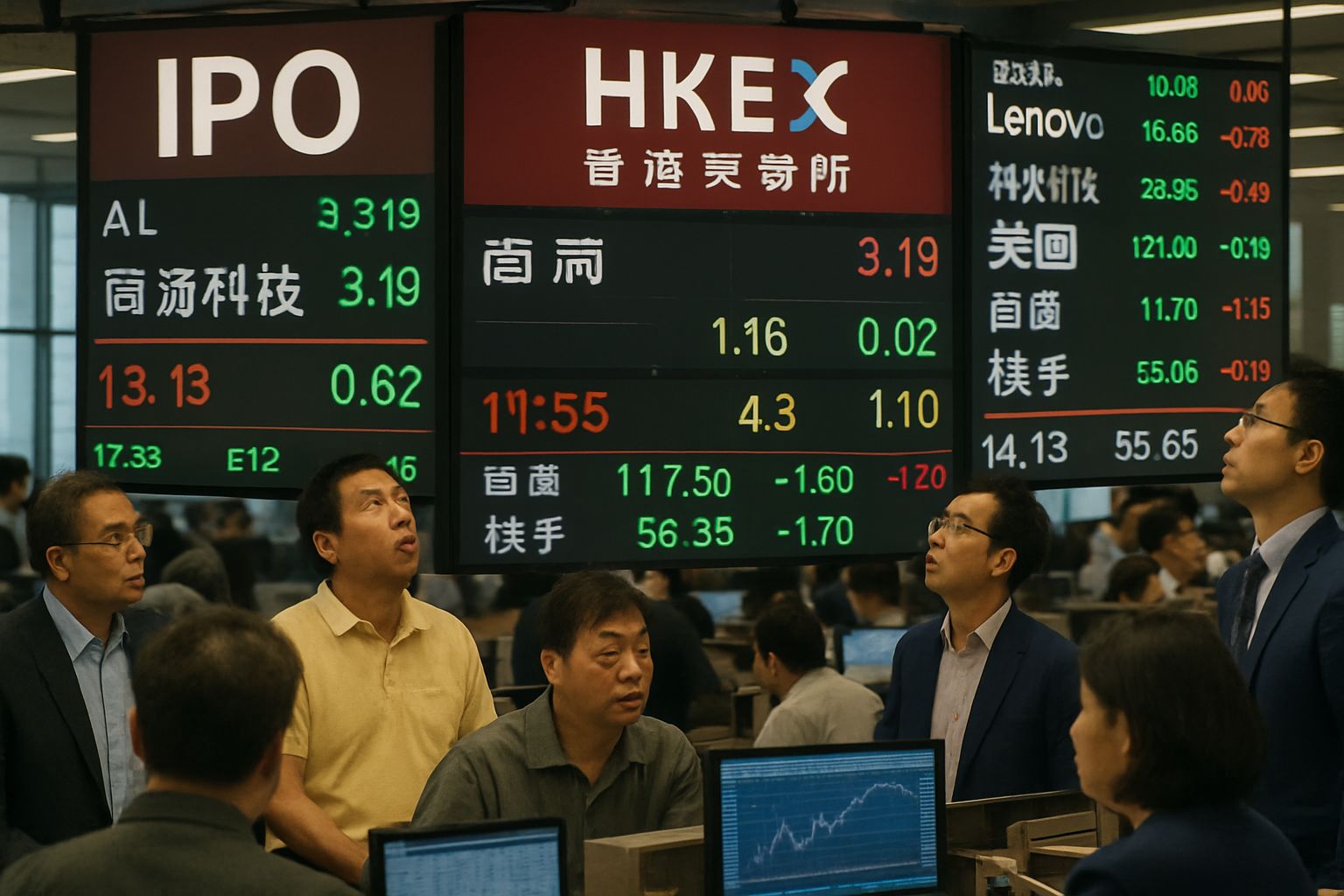
Over the last 18 months, names from Alibaba to Biren have captured headlines. However, the trigger was DeepSeek’s breakout launch that showed how quickly killer apps can scale. Subsequently, capital sought exposure to every layer of the stack, from GPUs to industry chatbots.
Throughout, we highlight data points, expert views, and certifications that keep professionals ahead of the curve.
Capital Floods Inward Now
Capital allocations accelerated after policymakers doubled down on tech self-reliance. Consequently, Hong Kong raised a hefty HK$272 billion from newcomers during 2025, the highest since 2022.
Furthermore, two AI-linked ETFs logged roughly US$3.8 billion of net inflows over six months. In contrast, several broad China funds continued to leak assets.
These fresh funds concentrate on Chinese AI Applications that demonstrate near-term revenue. Therefore, companies able to showcase working apps gained outsized investor favor.
The influx has also boosted liquidity for related stocks, tightening spreads and reducing volatility on busy trading days.
Capital is abundant and still searching for thematic vehicles. However, selective positioning remains essential before momentum fades.
Next, we examine the IPO surge that crystallized sentiment.
IPO Surge Details Emerge
Biren Technology’s debut on 2 January 2026 raised HK$5.58 billion. Moreover, its shares opened 119 percent above issue price, underlining relentless retail demand.
Subsequently, MiniMax doubled on its first trading day and secured a valuation exceeding US$10 billion. These sizeable pops sparked instant social-media buzz, further pulling retail traders toward AI stocks.
Retail appetite proved remarkable.
- Biren IPO: HK$5.58 billion raised; 119% first-day gain.
- MiniMax IPO: HK$4.8 billion raised; 100% first-day gain.
- Retail oversubscription: Biren tranche hit 2,348× demand.
Meanwhile, cornerstone investors included state-backed funds that traditionally tilt toward profitable industrial names. Their presence signaled policy endorsement and drew additional institutional favor.
Blockbuster listings provide liquidity events but also set lofty benchmarks. Consequently, upcoming issuers must present compelling Chinese AI Applications, or risk harsh price discovery.
Recent IPO wins validate demand yet raise valuation questions. In contrast, secondary market performance of large caps offers another barometer.
Therefore, our next section reviews that large-cap momentum.
Large-Cap Momentum Builds Steadily
Alibaba’s 2025 rally illustrated how narrative change can rerate entrenched giants. Moreover, Qwen integration across e-commerce and cloud indicated monetization paths.
Consequently, option flows tilted bullish, lifting implied volatility surfaces for related stocks.
Baidu and Tencent followed similar patterns, unveiling industry specific Chinese AI Applications for advertising, search, and messaging.
Additionally, ByteDance’s Volcano Engine expanded enterprise offerings, showing how diversified platforms can stay profitable while scaling AI services.
Large caps provide revenue proof and balance sheet resilience. Nevertheless, hardware supply remains a gating factor, which we explore next.
Hardware challenges move us into the compute race.
Hardware Race Intensifies Rapidly
Domestic GPU designers, including Biren and Moore Threads, chase parity with Nvidia’s flagship accelerators. However, export controls restrict high-end imports, creating a captive market.
Therefore, investors assign strategic value premiums to compute suppliers despite limited profitable track records.
Meanwhile, data-center operators scale capacity under the East-Data-West-Computing blueprint. Consequently, demand for Chinese AI Applications will rise alongside local hardware availability.
Industry insiders stress that successful apps need low latency inference. In contrast, supply chain delays could erode favor with enterprise customers.
Hardware capacity underpins sustainable growth. Subsequently, valuation risk climbs if chip yields disappoint.
The next section scrutinizes those wider risks.
Risks And Valuations Diverge
Despite enthusiasm, some analysts flag bubble dynamics. Valuations on certain stocks exceed 20-times forward sales.
Moreover, monetization uncertainty persists because many Chinese AI Applications remain pre-revenue or freemium.
Geopolitical shocks could hit sentiment. Additionally, possible restrictions on U.S. investor participation may curb future favor.
Execution risk looms. Nevertheless, firms demonstrating profitable unit economics could weather volatility better than speculative peers.
Risks call for disciplined selection and hedging. Consequently, investors watch upcoming earnings for clarity, which shapes our final outlook.
Hence, we turn to 2026 projections.
Outlook For 2026 Market
UBS strategists project mid-teen returns for balanced AI allocations. However, they emphasize selective exposure to apps with direct revenue.
Consequently, proof of monetization from Alibaba, Baidu, and vertical specialists will drive sentiment toward Chinese AI Applications across sectors.
Meanwhile, new thematic ETFs should broaden access, supporting liquidity for profitable innovators.
- Q1 earnings from leading platforms.
- Domestic GPU production milestones.
- Changes in export control rules.
Professionals keen to contribute can upskill through the AI+ UX Designer™ program, aligning design thinking with Chinese AI Applications in real products.
Subsequently, a virtuous loop could emerge: stronger apps boost cash flow, cash funds hardware, and hardware enlarges model capacity.
Market direction hinges on execution, policy, and valuations. Nevertheless, diversified portfolios can capture structural upside while containing downside.
In summary, the 2025-2026 rally shows that Chinese AI Applications have moved from concept to capital magnet. IPO booms, ETF inflows, and hardware advances confirm structural momentum.
However, lofty pricing, supply constraints, and regulatory shifts demand vigilance. Consequently, investors should focus on stocks with demonstrably profitable solutions within Chinese AI Applications and resilient balance sheets.
Professionals can therefore sharpen competitive positioning by mastering product design, data, and ethics via certifications like the AI+ UX Designer™ course.
Act now, deepen expertise, and participate responsibly in the next wave of AI value creation.
Disclaimer: Some content may be AI-generated or assisted and is provided ‘as is’ for informational purposes only, without warranties of accuracy or completeness, and does not imply endorsement or affiliation.


