

AI CERTs
4 months ago
Google AI taps personal data for smarter answers
Busy professionals often drown in scattered information. However, a new update promises relief. Google AI now offers “Personal Intelligence,” a feature that lets its Gemini assistant and AI Mode in Search draw insights directly from a user’s Gmail, Google Photos, YouTube history, and past Search activity. Introduced in January 2026 for U.S. subscribers, the opt-in capability combines private content with web knowledge to create precise, context-aware responses. Consequently, routine tasks like locating a license plate in photos or compiling travel confirmations from email may take seconds rather than minutes.
Although the upgrade remains a beta experiment, early reactions suggest significant productivity gains. Moreover, analysts view the move as a strategic escalation in the assistant race, leveraging Google’s vast app ecosystem. The company insists that personal data is not directly used to train models, yet privacy advocates continue to watch closely.
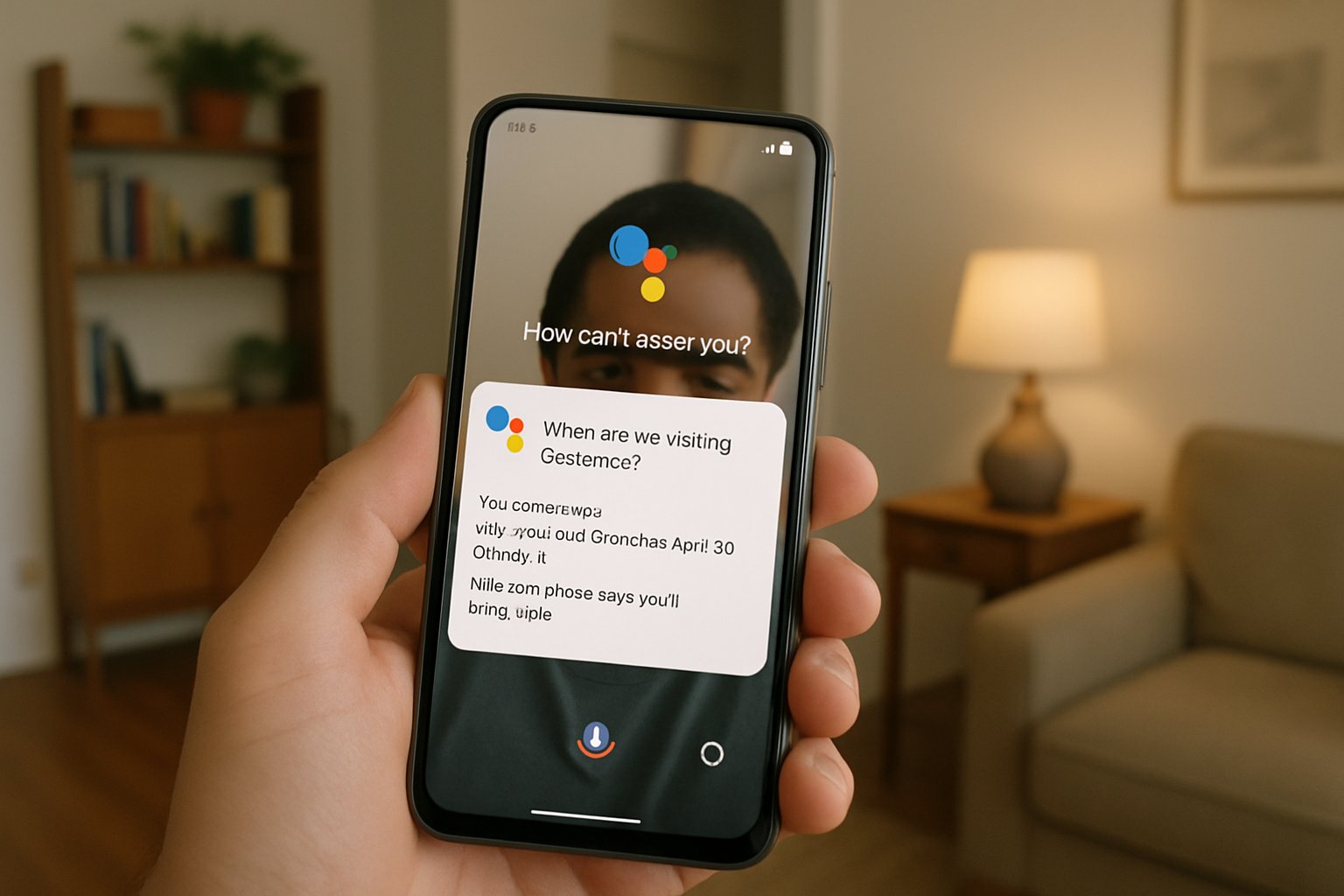
Personal Intelligence Feature Overview
Google positions Personal Intelligence as an optional layer on top of Gemini. Once enabled, the assistant can retrieve specific details, reason across sources, and present tailored suggestions. For example, it can cross-reference flight confirmations in Gmail with vacation snapshots in Google Photos to propose a day-by-day itinerary. Furthermore, it can use past Search queries to refine those plans in real time.
The rollout began on 14 January 2026 within the Gemini app and expanded to AI Mode in Search on 22 January. Initially, only Google AI Pro and Google AI Ultra subscribers can join the experiment. Nevertheless, Google promises a broader release later this year. The company highlights two technical pillars: accurate retrieval of private facts and the ability to synthesize those facts with open-web results.
These early capabilities showcase how Google AI moves beyond generic chatbots. However, the system’s full potential depends on user trust, which brings privacy controls into sharp focus. Therefore, understanding the opt-in mechanics is vital before enabling the feature.
How Gemini Extracts Details
Gemini 3 powers the experience and supports multimodal inputs. Meanwhile, its “fan-out” image analysis sends targeted sub-queries, often through Google Lens, to identify objects, text, and context inside pictures. Consequently, it can pull a license plate from a blurry photo or read tire dimensions hidden in an email signature.
The model then merges those findings with live web data. In contrast to traditional assistants, results include inline citations from both private and public sources. Users can tap citations to verify accuracy. Google AI appears tenacious yet transparent, a balance many rivals still chase.
Accuracy depends on three factors: the clarity of stored content, the relevance of connected apps, and the model’s reasoning skill. Users can regenerate an answer without personalization at any time, ensuring flexibility.
These design choices deliver fast, individualized insights. However, privacy safeguards decide whether the approach earns enduring trust. The next section reviews those controls.
Opt-In Privacy Control Details
Personal Intelligence is off by default. Additionally, users must grant separate permissions for Gmail, Photos, YouTube, and Search history. Granular toggles allow connections to pause or disconnect entirely. Google also offers temporary “incognito” chats that ignore personal data.
According to the company, private content is filtered before reaching the model. Training is limited to the immediate prompt and response, and the data never flows into broader datasets. Nevertheless, skeptics note the wording “not directly used” retains ambiguity.
Account security remains critical because data still lives on Google servers. Therefore, professionals should enable two-factor authentication and audit app permissions frequently.
- Launch dates: 14 Jan and 22 Jan 2026
- Current scope: U.S., English, paid tiers only
- Supported apps: Gmail, Google Photos, YouTube, Search history
- Training claim: “Not directly used”
These controls grant meaningful choice. However, they rely on clear communication, something tech firms often struggle with. Subsequently, competitive pressure intensifies the debate.
Competitive Market Context Today
OpenAI’s ChatGPT and Microsoft’s Copilot dominate headlines, yet neither owns a comparable consumer data trove. Consequently, Google AI enjoys a structural edge by integrating Search and Emails/Photos under one roof. Analysts suggest this synergy could anchor long-term loyalty, especially among busy users seeking unified answers.
Moreover, the subscription model brings predictable revenue. Although Google has not disclosed subscriber counts, executives hint at growing demand for premium tiers that bundle extra storage, security, and AI perks.
Independent outlets, including TechCrunch and Ars Technica, praise the convenience but caution that privacy missteps could erode trust. Meanwhile, rivals experiment with partnerships to compensate for their data gaps. Therefore, market dynamics remain fluid.
These developments underscore the strategic stakes. However, benefits do not erase legitimate concerns about data usage, which we explore next.
Risks And Open Questions
Privacy watchdogs worry that giving an assistant access to sensitive items increases exposure. Additionally, phrases like “not directly used” create room for doubt about future model training.
Another risk involves edge cases. For instance, could Gemini surface medical records stored in Emails/Photos without proper safeguards? Google states certain categories remain excluded unless explicitly requested, yet independent verification is scarce.
Regulatory scrutiny also looms. The EU’s privacy framework and upcoming U.S. rules may demand clearer disclosures or audits. Consequently, Google might need to publish technical whitepapers or invite third-party reviews.
These uncertainties highlight why professionals must stay informed. Nevertheless, proactive safeguards and transparent roadmaps could mitigate many fears.
Fan-Out Image Method Explained
The fan-out approach breaks an image into targeted questions. Subsequently, Google AI asks the vision system to read text, detect objects, and infer context separately. Each micro-result feeds the broader reasoning chain.
This modular architecture improves accuracy and offers an audit trail. Furthermore, it allows engineers to insert policy checks at each stage, blocking sensitive content proactively.
However, attackers could still exploit screenshots containing private data. Therefore, robust account security and clear user education remain essential.
These technical guardrails advance safety, yet policy oversight will further refine them. The following section shows how professionals can deepen their expertise.
Key Takeaways And CTA
Google AI now delivers personalized answers by unifying Search and Emails/Photos. Consequently, productivity gains appear within reach for early adopters. Privacy controls, competitive positioning, and technical safeguards form the pillars of this release.
Professionals can enhance their expertise with the AI Customer Service Strategist™ certification. Moreover, staying certified ensures an informed voice in policy and design discussions.
Adoption decisions should weigh convenience against privacy tolerance. Nevertheless, the ability to disable connections at any time offers reassurance.
These insights outline immediate benefits and lingering doubts. Therefore, ongoing scrutiny will determine whether the feature becomes mainstream.
Conclusion
Personal Intelligence marks a pivotal step for Google AI. By merging Search, Emails/Photos, and other apps, the assistant delivers context no rival can match today. Furthermore, opt-in controls, citation links, and modular image analysis aim to protect user trust. However, skeptical regulators and privacy advocates will demand proof, not promises. Consequently, enterprises and individuals should test the beta, review settings, and monitor forthcoming audits.
Ready to lead informed conversations on customer-centric AI? Explore the linked certification and stay ahead of rapid innovation.
Disclaimer: Some content may be AI-generated or assisted and is provided ‘as is’ for informational purposes only, without warranties of accuracy or completeness, and does not imply endorsement or affiliation.


