

AI CERTs
2 months ago
Google vs OpenAI: Ad Clash Redefines AI Revenue
Advertisers finally have a front-row seat to an unprecedented duel. The Google vs OpenAI rivalry just escalated with a single blog post. On 16 January 2026, OpenAI confirmed that ads will enter ChatGPT’s Free and Go tiers. Google executives swiftly framed the move as a sign of mounting Revenue Pressure inside the startup. Industry leaders now ask what this means for AI Monetization strategies across the entire ecosystem. Furthermore, billions of advertising dollars may soon chase conversational inventory previously seen as experimental. Consequently, trust, privacy, and product design principles have become top boardroom agenda items. This article explains what happened, why it matters, and how each side plans to defend its turf. Along the way, we dissect numbers, expert quotes, and strategies driving the Google vs OpenAI showdown. Prepare for a data-rich, concise briefing designed for technology and advertising professionals.
Ad Battle Rapidly Intensifies
In just five days, coverage about ChatGPT ads ballooned across Wired, Axios and Business Insider. Meanwhile, Google spokespeople repeated that Gemini will stay ad-free, at least for now. Demis Hassabis told Davos audiences he felt "a little bit surprised" by OpenAI's timing and strategy. He added Google felt no immediate pressure to follow, because search surfaces remain its core ad engine. Consequently, the Google vs OpenAI narrative shifted from technology leadership to monetization urgency. These contrasting statements heightened media interest. The first public volley focused attention on motives and timing. However, divergent revenue models reveal deeper strategic rifts.
Monetization Paths Rapidly Diverge
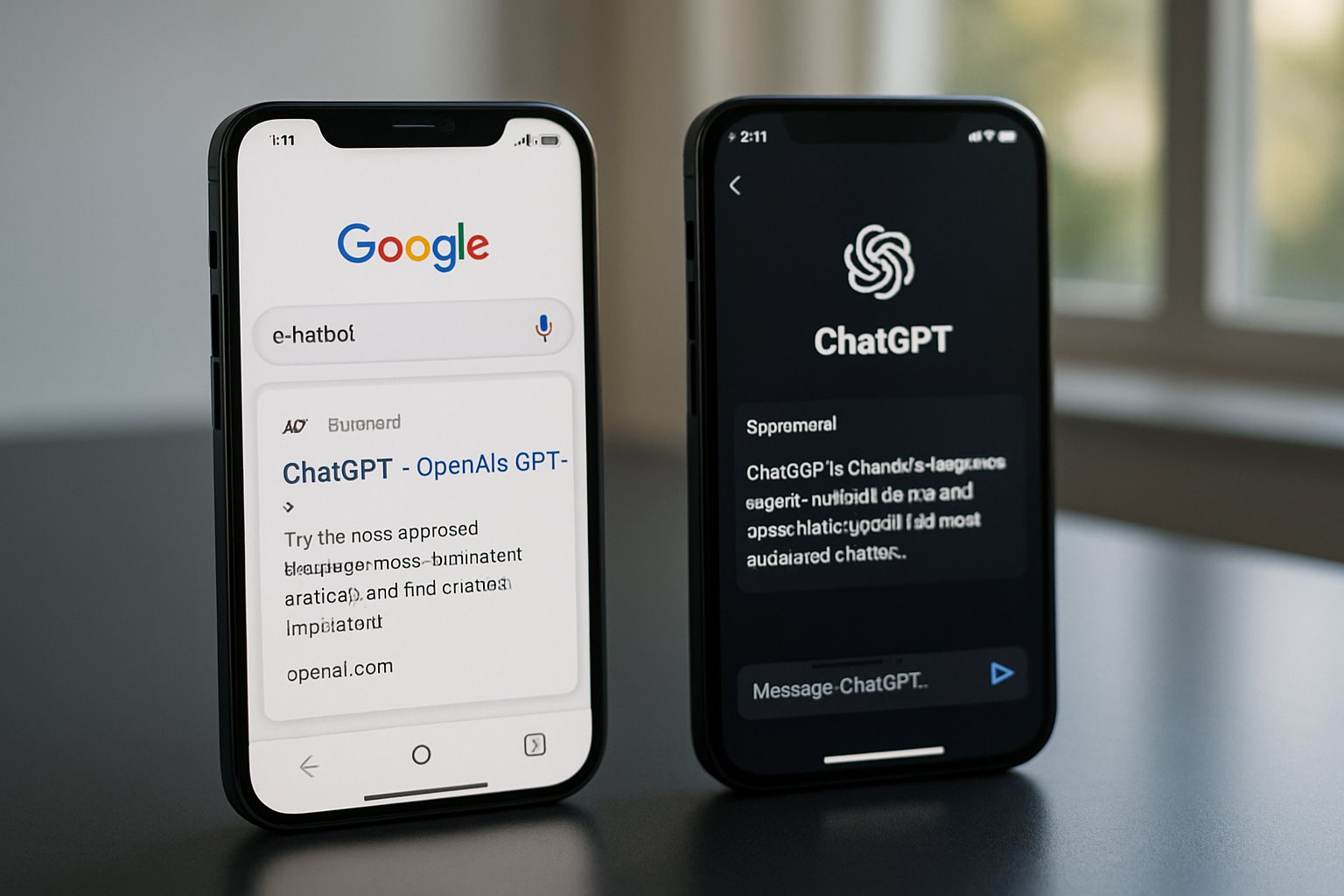
OpenAI hopes advertisements will subsidize free access and reduce dependence on premium subscriptions. Moreover, executives insist that sponsored content will never influence model answers, preserving conversation integrity. Google already monetizes AI Overviews inside Search, where commercial intent is historically strong. Therefore, Alphabet can delay embedding ads in Gemini without sacrificing short-term income. Analyst Mark Mahaney projects OpenAI could earn $25 billion in ad revenue by 2030 if adoption scales. In contrast, Google enjoys hundreds of billions from Search and YouTube, giving buffer against Revenue Pressure. That war chest influences the Google vs OpenAI power balance. AI Monetization strategies therefore hinge on existing cash flows, user expectations, and regulatory climates. Divergent paths point to opposite risk profiles. Next, trust concerns complicate execution for both giants.
Trust And Privacy Stakes
Users rely on assistants for personal, sometimes sensitive tasks. Consequently, any hint of biased answers could erode confidence overnight. Hassabis warned that ads placed inside conversations risk undermining perceived neutrality. OpenAI counters that ads will remain clearly labeled and will not depend on chat history. Additionally, the company promises no sale of conversation data, aiming to pre-empt regulators.
Privacy Regulation Watchlist Items
Regulators worldwide already study algorithmic transparency, data retention, and targeting fairness. Meanwhile, privacy watchdogs may scrutinize OpenAI’s pilot, especially around children and sensitive topics. Professionals can deepen expertise through the AI Security Level 2™ certification. These safeguards may satisfy regulators initially. Nevertheless, enforcement will depend on measurable outcomes and public perception. Trust remains the fragile currency of conversational AI. Market forecasts for Google vs OpenAI turn on that single variable.
Market Size Scenarios Ahead
Hard numbers illustrate why ad tests attract intense attention. OpenAI claims 800 million weekly active users, offering enormous reach even with modest ad load. Google reported 650 million monthly Gemini users, underscoring the Google vs OpenAI scale gap. Evercore’s scenario model suggests OpenAI could capture 3-4% of global digital ad spend by 2030. Furthermore, incremental intent data could push effective CPMs above many social platforms.
- 800M weekly ChatGPT users (OpenAI, Oct 2025)
- 650M monthly Gemini users (Alphabet, Q3 2025)
- $25B potential annual ChatGPT ad revenue by 2030 (Evercore)
- Hundreds of billions existing Google ad revenue, 2025
Such figures explain why investors follow AI Monetization narratives so closely. Consequently, modeling teams stress sensitivity analysis across adoption, CPM, and retention variables. Nevertheless, assumptions rely on user tolerance for ads and platform performance parity. Revenue Pressure will intensify if pilots miss early benchmarks, especially given rising infrastructure costs. Scenario models show upside yet equally large uncertainty for Google vs OpenAI valuations. Expert commentary refines that picture next.
Expert Voices Weighing In
Stakeholders across academia, advertising, and finance debated the pilots during Davos panels. Hassabis stated there were "no plans" for Gemini ads, doubling down on assistant purity. Dan Taylor echoed that stance, noting Google’s ad products stay inside Search where intent is clearer. Fidji Simo countered that clear labeling will preserve neutrality and fund broader access. Analyst Mark Mahaney described a credible path to multi-billion revenue if targeting aligns with high-value intent. Additionally, agency executives report early brand curiosity but caution that measurement standards must mature.
- Benefit: Subsidized free tiers, expanded reach
- Risk: Potential trust erosion, privacy scrutiny
- Unknown: Conversion rates for conversational ads
Meanwhile, venture capital firms revisit exit timelines amid shifting valuation benchmarks. These viewpoints highlight the multidimensional stakes of AI Monetization debates. Consequently, the Google vs OpenAI discourse now includes ethical, financial, and operational lenses. Expert alignment remains elusive. Strategic implications surface in the following forward outlook.
Strategic Outlook And Risks
Both companies must balance growth, trust, and regulation simultaneously. OpenAI needs fresh income to fund model training and global roll-outs. Therefore, Revenue Pressure will likely persist despite new investor interest. Google can wait, yet competitive dynamics may force reevaluation if ChatGPT ads outperform. Moreover, antitrust authorities could scrutinize cross-product data use within Alphabet’s vast portfolio. For OpenAI, user backlash would quickly drive audiences toward Gemini or Anthropic offerings. Meanwhile, platform interoperability rules emerging in Europe may change profit calculations for everyone. Continual scenario testing should inform board decisions across marketing, product, and compliance teams. Ultimately, Google vs OpenAI will define acceptable playbooks for conversational advertising worldwide. Risks are real, yet opportunities remain massive. Decision makers should watch early pilot metrics closely.
AI leaders finally face a critical monetization crossroads. OpenAI’s ad pilot marks a bold, high-risk experiment. Google still bets on search-centric revenue, preserving Gemini’s ad-free status. Consequently, the Google vs OpenAI duel will shape market norms, privacy expectations, and investment flows. Advertisers should watch conversion data, regulatory signals, and user sentiment during the rollout. Boards must align AI Monetization goals with transparent governance to avoid costly backlash. Industry clarity will emerge as Google vs OpenAI business metrics reach the public domain. Professionals can pursue the AI Security Level 2™ certification to strengthen oversight and stay ahead. Moreover, continued scenario planning will help firms pivot quickly as evidence emerges.


