

AI CERTs
4 months ago
HCL Technologies, Carahsoft Fast-Track AI Tools for U.S. Agencies
Government buyers crave generative AI that improves services without derailing compliance or budgets. Yet procurement hurdles often slow adoption more than technical gaps. Consequently, vendors now look for channel partnerships that shortcut contracts and approvals. HCL Technologies and distributor Carahsoft believe they have found that accelerator. On 20 January 2026, the firms unveiled a deal making the AI Force platform widely available. Moreover, the agreement promises faster access for federal, state, local, and education buyers. This article analyzes the move, the mechanics, and what US Agencies should watch next. Additionally, Carahsoft will list AI Force on cooperative contracts such as NASPO ValuePoint and OMNIA Partners. Therefore, agencies can order the software without launching new solicitations. Industry analysts view this step as a classic product-plus-channel play aimed at rapid AI Distribution. Nevertheless, questions around security authorizations and pricing remain unanswered. The following sections examine benefits, risks, and strategic implications in detail.
Market Context And Timing
Global public spending on AI keeps rising, yet procurement cycles remain notoriously lengthy. Furthermore, watchdogs demand robust governance frameworks before new models enter production. In contrast, political leaders expect visible service improvements within months, not years. This gap pressures vendors to simplify contracting and deployment. Consequently, Carahsoft's aggregator model has become a favored route for accelerated adoption.
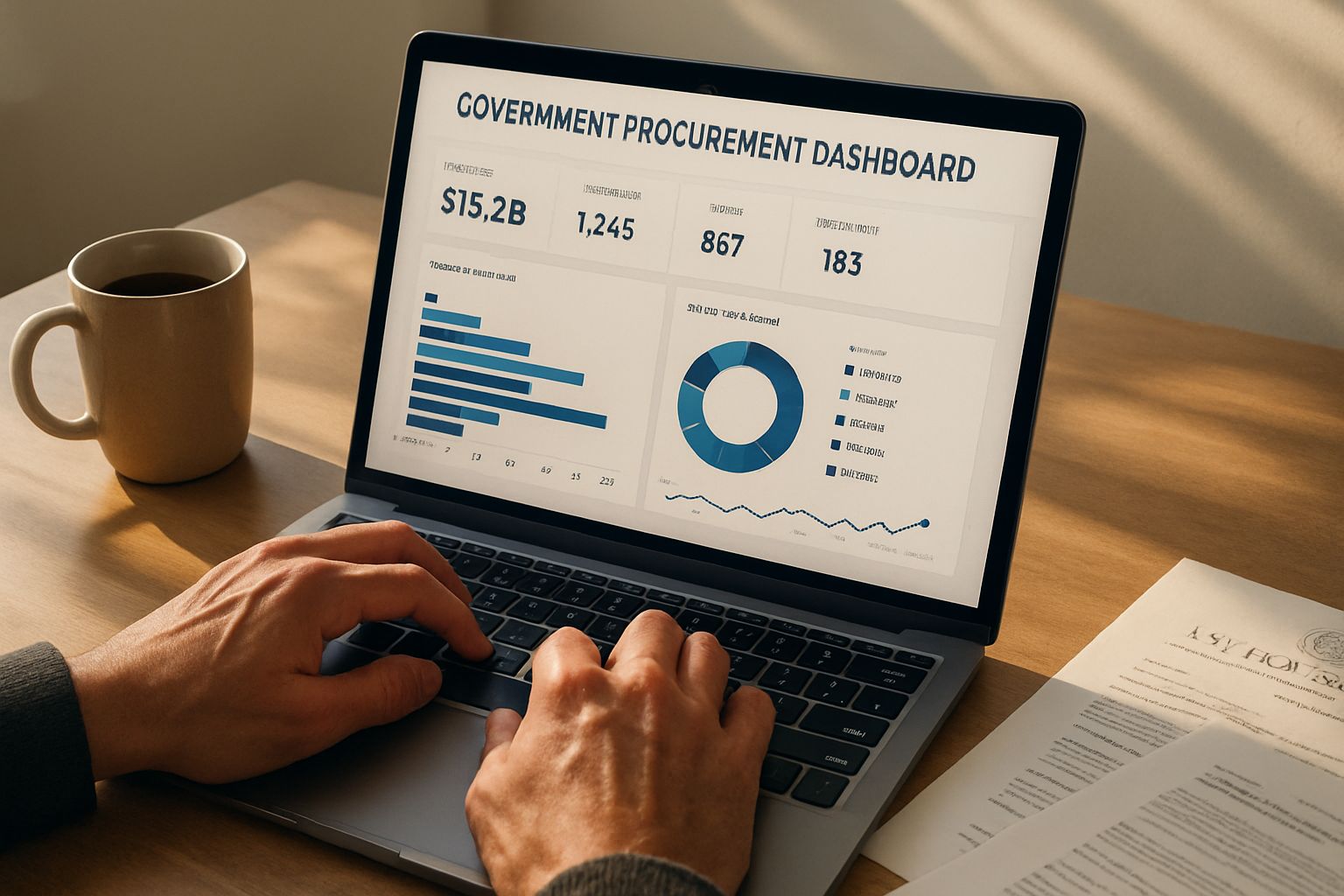
HCL Technologies entered the equation after forming its Public Sector Solutions unit in 2025. Subsequently, the company integrated AI Force with external large language models, including Google Gemini. The January 2026 partnership thus arrives during heightened interest and budget allocations for automation. Moreover, Deloitte surveys show 60% of state technology chiefs plan fresh AI pilots within 12 months. HCL Technologies reported fourteen-point-five billion dollars in annual revenue, underscoring financial stability. Those timelines align well with Carahsoft's contract vehicle lead times.
The market now rewards suppliers that unite compliant tech with quick purchasing routes. Therefore, the timing favors the new alliance as we explore next its structure.
Partnership Speeds Agency Procurement
Carahsoft acts as a master government aggregator, holding more than 220 contract vehicles. Additionally, its reseller ecosystem covers thousands of small and large integrators. Under the deal, Carahsoft will market AI Force through NASPO, OMNIA, E&I, and The Quilt. Consequently, contracting officers can place orders using familiar paperwork and pre-negotiated discounts. US Agencies now receive a unified catalogue page consolidating support documents.
HCL Technologies supplies the platform, implementation teams, and ongoing support. Meanwhile, Carahsoft handles order processing, invoicing, and partner enablement. In contrast to direct sales, this split shortens sales cycles by several months. Moreover, it scales outreach across SLED and federal markets without multiplying headcount.
Michael Shrader of Carahsoft said the goal is deployment at required speed and scale. Arjun Sethi from HCL Technologies emphasized driving IT efficiencies for mission outcomes. These messages underscore a go-to-market plan built around rapid AI Distribution.
Procurement acceleration sits at the partnership's core. Next, we unpack the platform enabling that promise.
AI Force Platform Explained
AI Force is HCL Technologies' flagship generative AI and automation suite. Furthermore, the stack remains large-language-model agnostic, integrating Google Gemini and other providers. Modules cover software engineering, IT operations, business analytics, and data management. Moreover, governance controls enforce responsible AI, cost telemetry, and audit trails.
Deployment options include cloud, on-premises, or embedded instances for classified workloads. Consequently, agencies can align hosting with existing FedRAMP or agency authority-to-operate processes. In contrast, many SaaS competitors insist on single-tenant clouds. Additionally, AI Force ships with policy templates for executive orders on trustworthy AI.
Professionals can enhance their expertise with the AI+ Data Robotics™ certification. Therefore, in-house teams gain skills to configure and govern the platform effectively.
The technology foundation appears flexible and compliance-ready. Consequently, the platform supports rapid AI Distribution across heterogeneous clouds. However, purchasing pathways also determine real adoption, as the next section details.
Key Procurement Vehicles Overview
The agreement lists four cooperative contracts agencies can leverage immediately. NASPO ValuePoint Master Agreement AR2472 covers most state and local requirements. OMNIA Partners Contract R240303 extends reach to higher-education buyers. Meanwhile, E&I Cooperative contract EI00063-2021MA simplifies purchases for university systems. The Quilt MSA05012019-F targets research networks and regional optical backbones.
Consequently, US Agencies avoid drafting new solicitations or conducting lengthy competitions. Carahsoft processes the paperwork while resellers handle delivery and invoicing. Additionally, pricing schedules built into each vehicle impose ceiling rates and volume discounts. HCL Technologies will supply price lists aligned with each schedule.
These vehicles compress lead times from months to weeks. Next, we examine tangible benefits this speed unlocks for public buyers.
Benefits For Public Buyers
Faster procurement leads the list of advantages. Moreover, fixed pricing and predefined terms simplify budgeting cycles. Agencies also gain turnkey access to technical support and governance templates. Therefore, project teams can focus on mission use cases rather than contract mechanics.
HCL Technologies brings a workforce of 226,300 professionals across 60 countries. In contrast, many startups lack that implementation scale for nationwide rollouts. Additionally, Carahsoft's 2,000 public-sector specialists provide local account coverage. Consequently, agencies receive one-call escalation for licensing, hosting, and training issues.
- Total HCL revenue 2025: $14.5 billion
- Carahsoft contract vehicles: 220+
- AI Force modules: 4 core suites
- Deployment options: cloud, on-prem, embedded
The combined scale translates into reduced operational risk for early adopters. However, concentration also introduces concerns explored next.
Risks And Key Watchpoints
Vendor lock-in remains the foremost worry. Although AI Force claims modularity, agencies must test interoperability before enterprise rollout. Furthermore, no FedRAMP authorization currently exists for the SaaS deployment. Consequently, each agency will pursue its own authority to operate. HCL Technologies has pledged open APIs to counter these concerns.
Past scrutiny of Carahsoft partners has raised diligence questions. Nevertheless, the company cooperated with investigators and maintained contract eligibility. Moreover, agencies should insert data-use clauses to prevent unintended model training. Therefore, careful pilot scoping and metrics remain essential.
Risks appear manageable with proactive governance. Subsequently, we consider the longer-term strategic outlook.
Strategic Outlook Moving Ahead
Analysts predict intensified competition as other vendors pursue similar aggregator relationships. However, early movers often capture limited agency mindshare and pilot budgets. HCL Technologies therefore gains a visibility advantage during 2026 budget cycles. Moreover, the company can upsell cloud modernization and cybersecurity services through the same contracts.
US Agencies will judge success by mission outcomes rather than technology novelty. Consequently, HCL Technologies must demonstrate measurable improvements in cost, accuracy, or citizen experience. Additionally, the firm should publish security milestones, including any FedRAMP progress. In contrast, silence on compliance could stall deployments. Successful AI Distribution will depend on transparent performance dashboards.
The outlook hinges on execution and transparency. Consequently, stakeholders will monitor pilot results throughout 2026.
Government buyers confront tight deadlines to modernize services safely. Therefore, the HCL Technologies and Carahsoft partnership offers a compelling shortcut. Familiar contract vehicles and an enterprise-grade platform reduce procurement and operational friction. However, agencies should demand concrete compliance roadmaps before scaling workloads. US Agencies that move early could influence roadmap priorities. Pilot metrics, data-use clauses, and interoperability testing will mitigate lock-in fears. Moreover, staff training boosts internal capacity to govern advanced models effectively. Professionals can start by pursuing the linked AI certification to deepen practical skills. Consequently, organizations align people, process, and technology for sustainable transformation. Explore the certification and watch pilot announcements to stay ahead of the curve.
Disclaimer: Some content may be AI-generated or assisted and is provided ‘as is’ for informational purposes only, without warranties of accuracy or completeness, and does not imply endorsement or affiliation.


