

AI CERTS
4 hours ago
MechStyle Reinvents Manufacturing Personalization With Simulation
Digital creators love adding eye-catching textures to 3D prints. However, those visual tweaks often weaken parts, leading to frustrating breakage moments after assembly. A new MIT CSAIL study proposes a remedy called MechStyle. The system blends generative AI stylization with real-time stress simulation. Consequently, personalized objects look fresh yet survive daily drops and twists. For Manufacturing, the advance signals a smoother bridge between design curiosity and shop-floor reliability.
Meanwhile, makers gain confidence that prints will work on the first try. This article unpacks the technical recipe, benchmarks, limitations, and future implications for industry teams. Moreover, readers will find links to upskill through certified AI education resources. Understanding how the tool balances aesthetics and mechanics can shape upcoming product strategies. Therefore, engineering leaders should track this research before competitors implement similar safeguards. In contrast, ignoring structural feedback could expose brands to costly warranty claims. Subsequently, we will evaluate its runtime economics and adoption hurdles.
Personalization Pain Point Trends
Custom prints enter households faster than ever. Yet, surfaces sculpted by AI rarely respect hidden load paths. Consequently, handles snap, lamp shades crack, and assistive grips deform after minimal stress. Community surveys on Thingiverse echo the frustration.
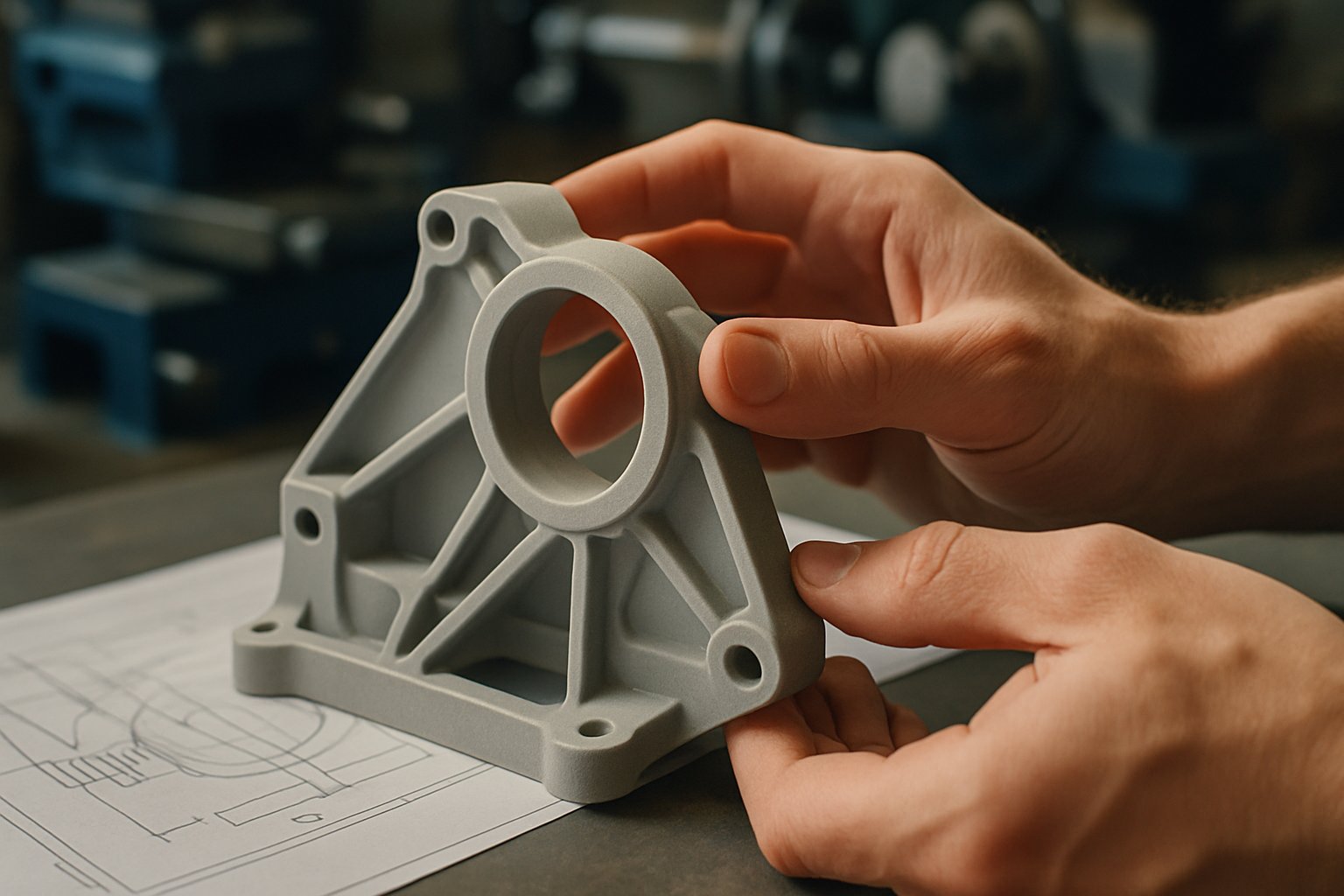
The research team quantified the issue using 30 popular models and six visual styles. Only 25.55% of stylized variants remained structurally viable under a simulated drop. Therefore, three out of four prints risk immediate failure.
Key weaknesses clustered around thin edges and ornamental protrusions, as summarized below.
- Average tensile stress exceeded PLA yield by 32% on stylized pillboxes.
- Grip thickness dropped below 2 mm on 41% of utensil handles.
- Impact energy concentrated on decorative fins in 67% of lamp designs.
These numbers expose the design gap between appearance and endurance. However, the next section details how MechStyle narrows that gap.
Inside The MechStyle Engine
MechStyle builds on text-to-mesh algorithms that respect Fabrication constraints while obeying style prompts. Importantly, the pipeline inserts finite element analysis inside the iterative loop. Consequently, every risky displacement triggers mechanical feedback before export.
The surface mesh converts into a tetrahedral volume of roughly 28,000 elements. FEA then simulates a one-meter drop using PLA material properties. If von Mises stress tops 45.6 MPa, control masks throttle further edits. Moreover, an adaptive scheduler decides when to rerun simulation, saving hours of compute.
Four scheduling heuristics were tested: two temporal, one geometry, and one stress based. Stress-based scheduling paired with selectively frozen masks delivered the best strength-to-speed ratio. Subsequently, runtime dropped from 15.5 hours to minutes while keeping safety intact.
The engine therefore offers targeted physics feedback without killing creative iteration speed. Next, we examine how this translates into measurable outcomes.
Simulation Meets Stylish Geometry
Benchmark experiments covered 2,160 configurations across objects, styles, masks, and schedules. Results showed dramatic viability gains. Best setups achieved 100% survivability, while worst remained near 80.2%. In contrast, baseline stylization managed only 25.55%.
Style fidelity also remained competitive. CLIP-based metrics indicated negligible loss for most parts. Nevertheless, a few cactus patterns softened to preserve joint strength.
Fast Fabrication remains possible because schedules cut simulation overhead.
Key experimental highlights include:
- Adaptive scheduling cut FEA calls by 88% on average.
- Selective masks reduced high-stress vertex edits by 62%.
- GPU acceleration kept iteration time near 2.7 seconds.
These findings prove that physics-aware stylization is not merely academic. Consequently, attention turns to industrial adoption.
Performance Numbers In Context
Manufacturing leaders care about cycle time and scrap rates. MechStyle’s runtime profile answers both concerns. Stylization iterations average 2.67 seconds, negligible versus slicer computation. FEA weighs heavier, but adaptive calls push total runtime below 25 minutes for typical models.
Material costs drop because fewer failed prototypes reach the trash. Moreover, operators reclaim printer hours that would have produced defective parts. Therefore, small-batch Manufacturing operations gain immediate savings.
Overall, the tool scales favorably relative to existing CAD repair workflows. The following section explores broader workflow integration.
Impact On Manufacturing Workflows
Today, most Manufacturing pipelines separate styling, simulation, and slicing into distinct phases. Iterative handoffs slow projects and obscure accountability. By contrast, the workflow embeds mechanical checks within the creative step.
Consequently, designers can visualize risky zones during texture experimentation. Tooling manufacturers anticipate new plugins for Blender and commercial CAD suites. Google researchers already collaborate with MIT to test cloud deployment models.
Downstream, quality engineers import approved meshes directly into slicers without extra verification. Therefore, Manufacturing cells avoid redundant test prints yet maintain compliance documentation.
Integrated workflows speed prototypes from concept to packaging. Nevertheless, some limitations remain, as discussed next.
Limits And Future Steps
The system assumes the seed model is already sound. It cannot repair a fundamentally flawed hinge. Moreover, simulations use isotropic PLA values, ignoring printer layer anisotropy. Real-world fatigue or UV exposure remains outside the loop.
Computation cost still challenges hobbyists without GPUs. However, cloud FEA services may offset hardware gaps. Licensing terms and open-source timelines are yet unannounced.
These caveats temper expectations but do not overshadow the core advance. Subsequently, strategic takeaways guide next moves.
Strategic Takeaways And Action
Physics-aware stylization is crossing from labs into storefronts. Manufacturing leaders should evaluate pilot projects with internal design teams. Furthermore, software vendors could embed similar feedback loops inside future CAD releases.
Product managers must balance artistic freedom against regulatory load cases. In contrast, ignoring structural metrics risks warranty escalation and brand damage. Consequently, early adopters may capture market share by delivering durable personalized goods.
Professionals can deepen relevant skills through the AI Educator™ certification. Additionally, that program covers generative design ethics and physics simulation fundamentals. Therefore, a certified staff can accelerate safe Manufacturing rollouts. Finally, consider forming cross-functional task forces to monitor standards and intellectual property.
MechStyle showcases a mature fusion between creative AI and engineering discipline. Moreover, the system lifts structural viability from 25% to near perfection in best scenarios. Adaptive scheduling trims simulation calls, keeping design feedback loops brisk. Consequently, teams can integrate safety checks earlier, reducing scrap and warranty claims. Manufacturing roadmaps should therefore budget for integrated physics engines within generative toolchains. Agile Fabrication lines will benefit from reduced rework and stronger parts. Nevertheless, users must validate real-world fatigue, anisotropy, and changing materials. Meanwhile, certification programs equip professionals with the interdisciplinary mindset required for rollout. Furthermore, open discussions with MIT researchers can clarify licensing timelines and support adoption. Subsequently, align procurement, IT security, and training schedules before scaling production use.


