

AI CERTS
5 months ago
Jagex Bets Big: RS25 Investment Transforms Runescape Gaming
A quarter century after launch, RuneScape still commands attention. Moreover, its developer Jagex now prepares the franchise for another era of growth. The British studio has unveiled RS25, a record investment program backing new content, infrastructure, and community initiatives during 2026. Consequently, industry analysts view the move as a bold signal that long-running MMORPGs can still scale without predatory monetisation. Gaming insiders also note the concurrent removal of the controversial Treasure Hunter system, a decision driven by a 125,000-player vote. Meanwhile, Jagex’s leadership is taking an openly sceptical stance toward generative AI, positioning RuneScape as a “safe haven” that safeguards artistic integrity. These intersecting choices set the stage for a transformational year that may reframe commercial expectations across live-service Gaming.
Investment Strategy Unpacked Now
RS25 represents the studio’s largest single-year investment in two decades, yet Jagex has not disclosed exact figures. Nevertheless, executives promise expanded content for RuneScape, Old School RuneScape, and the spinoff Dragonwilds. Furthermore, the studio will modernise core systems, including UI and combat responsiveness, while upgrading its back-end APIs for community plugins. CVC Capital Partners and Haveli Investments, owners since 2024, supply the financial muscle. In contrast to typical private equity tactics, the backers appear willing to prioritise long-term retention over short-term margin maximisation. For context, Jagex cites more than 300 million lifetime accounts and 2.4 million active subscribers across its portfolio. These numbers justify robust reinvestment, according to board chair Marc Allera. The upcoming Havenhythe landmass alone underlines the content ambition.
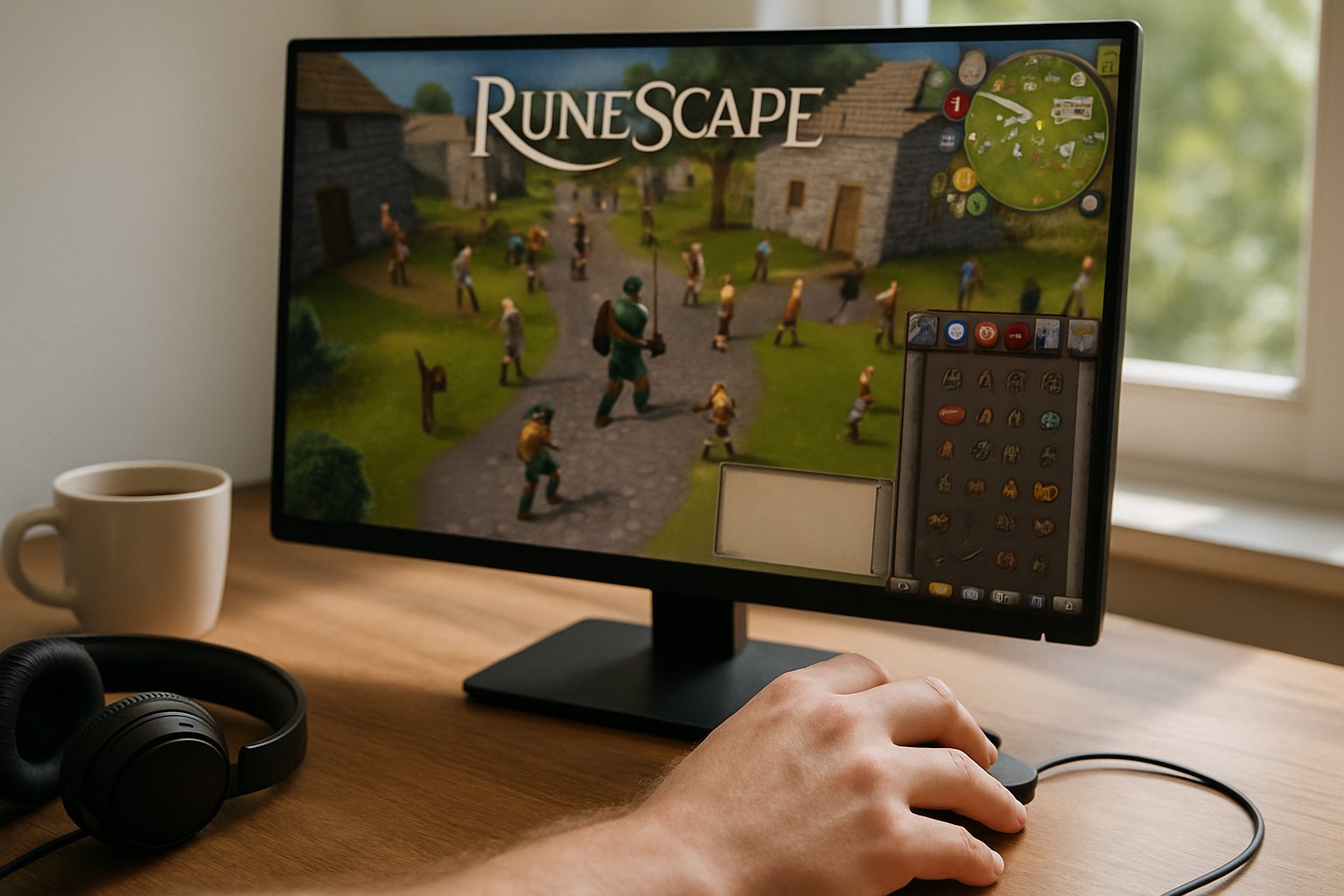
Players can therefore expect faster release cadences during 2026. Additionally, the studio confirms renewed live events to celebrate the anniversary year. These commitments illustrate how capital injections can refresh even mature properties. However, meaningful execution remains essential.
These strategic pledges underline the scale of RS25. Consequently, the next section explores how community trust shapes every design decision.
Community Trust Comes First
Jon Bellamy, Jagex’s CEO, repeatedly frames the direction as “player-first.” Moreover, he stresses transparency when discussing monetisation and design. The management team published an Integrity Roadmap outlining promised updates and accountability checkpoints. Additionally, quarterly livestreams will show progress metrics, inviting immediate feedback. Such openness directly addresses past criticism that RuneScape communication lacked clarity. In contrast, many live-service titles hide balance changes behind jargon-heavy patch notes. Bellamy’s approach appears intent on rebuilding confidence eroded by years of microtransaction controversies.
Independent commentators applaud the pivot. PC Gamer highlights how rare it is for an established MMORPG to remove revenue-rich mechanics voluntarily. Meanwhile, community creators on Twitch and YouTube report improved sentiment scores since the January announcements. Sustained goodwill can translate into higher subscription renewals and merchandise sales, offsetting lost microtransaction revenue.
Trust therefore emerges as a strategic asset. However, trust only endures when supported by tangible policy moves, a topic the following section addresses.
Microtransaction Era Concludes Dramatically
Treasure Hunter launched in 2014 and faced criticism almost immediately. Critics argued that the loot-box style minigame allowed players to purchase power, diminishing skill-based progress. Subsequently, legislators worldwide began scrutinising similar mechanics across Gaming. Jagex finally placed the feature’s fate in community hands during October 2025. The turnout exceeded expectations: roughly 125,000 votes demanded removal. Consequently, the system disappeared on 19 January 2026.
The studio acknowledged potential revenue declines. Nevertheless, leadership views the sacrifice as crucial to franchise health. Analysts at Ampere estimate Treasure Hunter once generated a double-digit share of annual earnings. Therefore, retiring it demonstrates unusual conviction from a private equity-owned firm.
- Vote threshold: 100,000
- Votes in favour: ≈125,000
- Removal date: 19 Jan 2026
Community advocates hail the outcome as proof that organised feedback matters. Moreover, regulators may cite RuneScape as a case study for responsible monetisation. Yet, reduced cash flow could pressure other budget areas if subscription growth stalls.
The removal underscores Jagex’s new priorities. Furthermore, it intersects with the studio’s stance on generative AI, explored next.
Generative AI Firm Stance
While many studios embrace AI tools to accelerate asset creation, Jagex publicly voices caution. Bellamy recently told reporters the company is “openly against generative AI” within player-facing content. He argues that hand-crafted quests and art sustain RuneScape’s personality. Additionally, artists inside the studio worry about potential IP and employment risks linked to automated pipelines. Consequently, the firm limits AI experimentation to strictly internal efficiency tasks, far from customer eyes.
Industry reaction remains mixed. Some developers applaud the ethical focus; others fear Jagex may miss productivity breakthroughs. Nevertheless, the stance aligns with the franchise’s emphasis on authenticity. Moreover, it differentiates the brand amid escalating debates surrounding AI-generated art theft and lore dilution.
Professionals interested in structured upskilling can deepen their technical literacy through the AI Learning & Development™ certification. Such knowledge supports informed policy choices when evaluating AI tools.
This measured approach reinforces the studio’s integrity narrative. However, financial ownership still influences strategy, as the following section explains.
Private Equity Influence Grows
CVC Capital Partners and Haveli Investments completed their Jagex acquisition in February 2024. Traditionally, private equity seeks rapid returns, often via aggressive monetisation or cost cutting. In contrast, RS25 emphasises reinvestment and feature enhancement. Nick Clarry of CVC states the objective is “creating the exciting games of tomorrow.” Furthermore, the investors provide distribution expertise and capital reserves that smaller publishers lack. Such resources enable large-scale server upgrades supporting Old School RuneScape’s mobile surge.
Nevertheless, tensions can arise. Shareholders will eventually expect revenue acceleration. Removing Treasure Hunter creates a near-term gap that must be filled through subscriber growth, cosmetic sales, or new IP launches. Moreover, the broader MMO market faces saturation from rivals like Final Fantasy XIV and World of Warcraft Classic. Consequently, balancing community goodwill with financial targets will test leadership discipline.
Stakeholder alignment therefore remains pivotal. The next section weighs associated risks and potential rewards.
Market Risks And Rewards
Analysts outline several upside scenarios. Firstly, enhanced trust could reduce churn, lifting lifetime value per subscriber. Secondly, content expansions like Havenhythe may attract lapsed veterans, reigniting nostalgia. Thirdly, the spinoff Dragonwilds already sold more than one million early-access units, proving demand for fresh experiences.
However, downside risks persist. Reduced microtransaction income may constrain event budgets if subscriber targets slip. Additionally, technological refresh projects can overrun deadlines, especially when legacy code meets modern frameworks. Moreover, the AI-sceptical approach might limit pipeline scalability relative to competitors automating asset generation.
- Revenue impact: unknown magnitude
- Development complexity: high
- Competitive landscape: intensifying
- Community expectations: elevated
Effective project governance will therefore determine whether RS25 delivers its promised value. Consequently, observers now watch the anniversary timeline for delivery signals.
These risk-reward dynamics frame the importance of the final section, which looks ahead to upcoming milestones.
Looking Ahead To RS25
The RS25 calendar features quarterly content drops, live celebratory events, and a technical overhaul preview in July 2026. Moreover, Old School RuneScape will pilot a new “Iron Legacy” mode focused on cooperative progression. Meanwhile, Dragonwilds exits early access with an expanded endgame loop. Jagex also prototypes cross-platform account linking, targeting console players later this year. Such moves could broaden total addressable audience beyond PC and mobile.
Progress checkpoints arrive through monthly “RuneScape Ahead” streams. Additionally, the studio will publish KPI snapshots, including active subscribers and average playtime. These disclosures aim to maintain transparency and sustain momentum.
Delivering every milestone will prove challenging. Nevertheless, early community surveys indicate optimism not seen since the 2013 Evolution of Combat overhaul. If Jagex meets even 80 percent of stated goals, analysts expect franchise revenue to surpass previous records within two years.
These forthcoming activities mark the culmination of a historic investment cycle. The conclusion now summarises core insights and recommends next steps.
Conclusion And Call-To-Action
Jagex is rewriting the live-service playbook. Moreover, the RS25 plan channels unprecedented capital into content while discarding profit-heavy, player-unfriendly systems. Consequently, community trust rises as a measurable asset. The studio’s cautious AI posture further reinforces its integrity narrative. Meanwhile, private equity backers appear committed to long-term franchise health, though revenue pressures will inevitably mount.
Industry professionals should monitor subscriber trends, KPI disclosures, and delivery pace across 2026. Additionally, leaders evaluating responsible technology adoption can enrich their expertise through the linked certification. Therefore, seize the chance to learn, adapt, and shape the future of Gaming by embracing transparent, player-centric strategies.
Disclaimer: Some content may be AI-generated or assisted and is provided ‘as is’ for informational purposes only, without warranties of accuracy or completeness, and does not imply endorsement or affiliation.


