

AI CERTS
3 months ago
Media Law Meets Celebrity AI: McConaughey’s Trademark Defense
Matthew McConaughey wants fans to hear only approved versions of his iconic voice. Consequently, the Oscar winner has turned to Media Law for a novel defensive move. In January 2026, his team announced eight federal registrations covering voice clips and a famous Catchphrase. Moreover, the portfolio includes a motion mark protecting short video vignettes. Observers view the filings as a strategic pushback against Deepfakes that mimic celebrities. Meanwhile, McConaughey aims to license authorized AI uses through partners such as ElevenLabs.
His lawyer calls the step proactive, fast, and enforceable across the United States. However, some experts question whether courts will accept the marks as source identifiers. This article analyzes the filings, the surrounding Media Law context, and the broader industry implications. Readers will learn what powers the strategy offers and where its limits may emerge.
Celebrity trademarks confront deepfakes
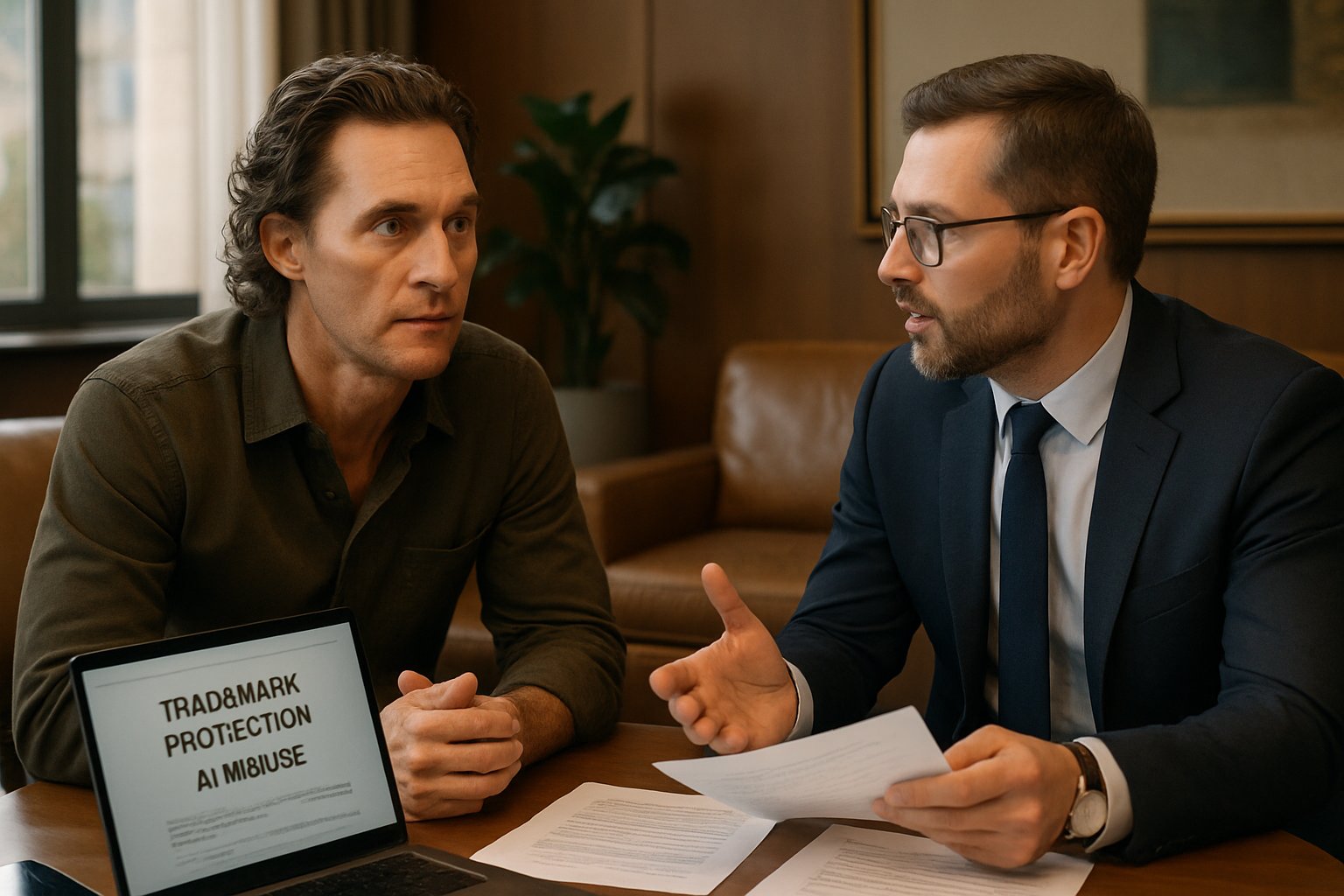
Actors have fought impersonation since Hollywood’s dawn. However, AI has amplified the risk, producing photoreal Deepfakes within minutes. Consequently, McConaughey filed for a Trademark that protects specific sonic patterns. The U.S. Patent and Trademark Office accepted eight marks between 2023 and 2025. One covers the whispered Catchphrase “alright, alright, alright” with detailed pitch notation. Additionally, two motion marks capture signature gestures from well-known commercials. Lawyer Kevin Yorn says the filings let them stop violators “in their tracks.” Meanwhile, academics see the portfolio as a test case for future performers. In Media Law circles, the registrations highlight a shift from patchwork state publicity rules. These developments reveal celebrities’ evolving toolkit. McConaughey’s portfolio illustrates an assertive stance against AI misuse. Nevertheless, legal clarity will depend on courtroom tests still to come.
Sound marks gain traction
Traditional branding once relied on logos and slogans. Now, sound marks give personalities another protective layer. Moreover, the USPTO increasingly accepts precise audio descriptions, including cadence and pitch. McConaughey’s application describes how each syllable rises or falls in tone. Therefore, forensic experts can compare an AI output to the registered waveform. If the resemblance matches, plaintiffs may allege infringement under Media Law frameworks. Catchphrase protection also bolsters public recognition, strengthening the likelihood of courtroom success. In contrast, generic phrases without distinctive delivery rarely qualify. Below are core reasons companies pursue sound marks:
- They provide federal jurisdiction and nationwide remedies.
- They deter copycat Deepfakes before publication.
- They open licensing revenue streams for approved uses.
These advantages explain why registries recorded a 28% rise in non-traditional filings last year. Consequently, performers beyond Hollywood are studying similar options. Sound marks convert a familiar voice into enforceable intellectual property. The next frontier involves visual motion, which we examine below.
Motion clips strengthen claims
Video marks operate like animated logos. However, they encode a living performer’s gestures rather than abstract graphics. McConaughey registered a seven-second porch lean and a quick Christmas-tree nod. Each clip links to specific product classes, from apparel to digital media. Thus, an unauthorized ad that deploys the clip invites immediate legal action. Deepfakes often splice visual snippets into composite videos, hoping viewers accept authenticity. With a motion mark in place, the artist can allege statutory infringement without arguing vilification. Media Law scholars note that visual evidence persuades juries faster than waveform comparisons. Yet, enforcement still demands expert testimony on frame-by-frame similarity. Catchphrase licensing packages now bundle these clips, creating multi-modal brand kits. Professionals can deepen expertise through the AI+ Customer Service™ certification. Motion marks give courts tangible footage, yet practical hurdles persist. Next, we explore strategic Media Law considerations shaping enforcement.
Media Law strategic considerations
Trademark doctrine traditionally guards symbols that indicate a single commercial source. Therefore, plaintiffs must prove that a defendant’s use confuses consumers about endorsement. McConaughey’s team argues that his voice already signals origin, satisfying that requirement. Nevertheless, courts have not yet ruled on AI impersonations under Lanham Act theories. Right-of-publicity suits could supplement claims, yet these vary by state. By contrast, federal registration supplies nationwide injunction power and statutory damages. Consequently, practitioners view the portfolio as a clever jurisdictional shortcut. However, First Amendment defenses may arise where uses are parodic or journalistic. Media Law balances consumer clarity against expressive freedoms, making outcomes unpredictable. Experts like Dr. Alina Trapova predict split circuit decisions before Supreme Court guidance. Meanwhile, legal firms prepare evidence protocols to demonstrate acoustic fingerprint overlap. The following checklist outlines essential preparatory steps for rights holders:
- Create timestamped master recordings and high-resolution video masters.
- Retain independent forensic analysts for authenticity reports.
- Monitor AI platforms for emerging impersonation models.
Collectively, these tasks raise costs but improve courtroom prospects. As the next section shows, uncertainty has not slowed adoption across entertainment. The legal framework remains unsettled despite bold filings. Yet, many stakeholders are moving quickly to replicate the approach.
Enforcement challenges ahead
Launching a lawsuit demands time and money. Moreover, defendants can operate overseas beyond U.S. jurisdiction. Technical proof also complicates matters because AI outputs seldom match inputs exactly. Therefore, plaintiffs must show substantial similarity, not pixel perfection. Media Law practitioners expect battles over admissible spectral evidence. Trademark dilution claims could supplement infringement theories, yet standards remain high. In contrast, platforms may voluntarily honor takedown requests to avoid liability. Subsequently, rights holders often see faster results through notice-and-stay-down agreements. Deepfakes creators may reappear under new domains, keeping the arms race alive. Still, early deterrence can push infringers toward licensed alternatives that share revenue. These hurdles underline why robust preparation matters. However, celebrity interest continues to climb, as the next section explains.
Industry adoption signals rise
Studios once relied mainly on contract clauses to protect talent likeness. Now, several agencies are drafting bulk applications for vocal and gesture marks. Taylor Swift, Tom Hanks, and Scarlett Johansson are reportedly exploring similar filings. Furthermore, game publishers see value in safeguarding beloved characters against synthetic voice mods. McConaughey’s partnership with ElevenLabs, valued near $6.6 billion, exemplifies authorized monetization. Consequently, investors view voice rights as a future asset class. Catchphrase bundles are already marketed to advertisers seeking recognizable audio hooks. Media Law advisers caution clients to balance protection with fair-use considerations. Professionals pursuing these deals can validate skills through the linked AI qualification above. Such credentials help negotiators understand both technical and legal perspectives. Momentum favors proactive registration, yet ethical debates intensify. We now conclude by distilling the key lessons.
Key takeaways and outlook
McConaughey’s filings signal a new hybrid between publicity rights and federal registration. Consequently, celebrities gain faster access to nationwide remedies against impersonation. Sound and motion marks translate familiar performances into definite legal property. However, enforcement still faces jurisdictional gaps, technical proof burdens, and free-speech limits. Practitioners must track forthcoming rulings that clarify confusion criteria. Meanwhile, brands will pursue licensed voice packs to avoid costly disputes. Nevertheless, over-registration could chill parody and commentary if courts fail to balance interests. To stay ahead, readers should review their content policies and pursue specialized AI certifications. Take action today by exploring the linked credential and preparing for the next legal wave.


