

AI CERTS
6 months ago
Boston Dynamics Atlas Roadmap Signals Industrial Robotics Shift
CES 2026 delivered more than flashy gadgets. Boston Dynamics revealed a product-ready Atlas, turning demonstration dreams into operational reality. Consequently, the announcement set off intense debate across manufacturing floors and boardrooms. Atlas now anchors Hyundai Motor Group’s “Physical AI” agenda and attracts heavyweight partners such as Google DeepMind and NVIDIA. Furthermore, commitments for the first production year are already locked, signaling confidence in the technology pipeline. This article examines the complete Humanoid roadmap, key milestones, and market implications. It also evaluates risks, workforce impact, and skill requirements for engineering leaders. Throughout, Robotics professionals will find data-driven insights for strategic planning.
Humanoid Roadmap Details
Boston Dynamics published explicit milestones for its Humanoid Atlas platform. Jan 5, 2026 marked the public reveal and the start of production. Moreover, the firm confirmed that every 2026 delivery slot is allocated to Hyundai’s RMAC and Google DeepMind. The plan then phases Atlas into parts sequencing in Hyundai’s Savannah Metaplant by 2028. Subsequently, Hyundai targets scalable production reaching 30,000 units per year. Beyond 2030, Atlas should graduate to component assembly and broader tasks. Robert Playter framed this phased approach as pragmatic, stressing reliability and rapid task onboarding.
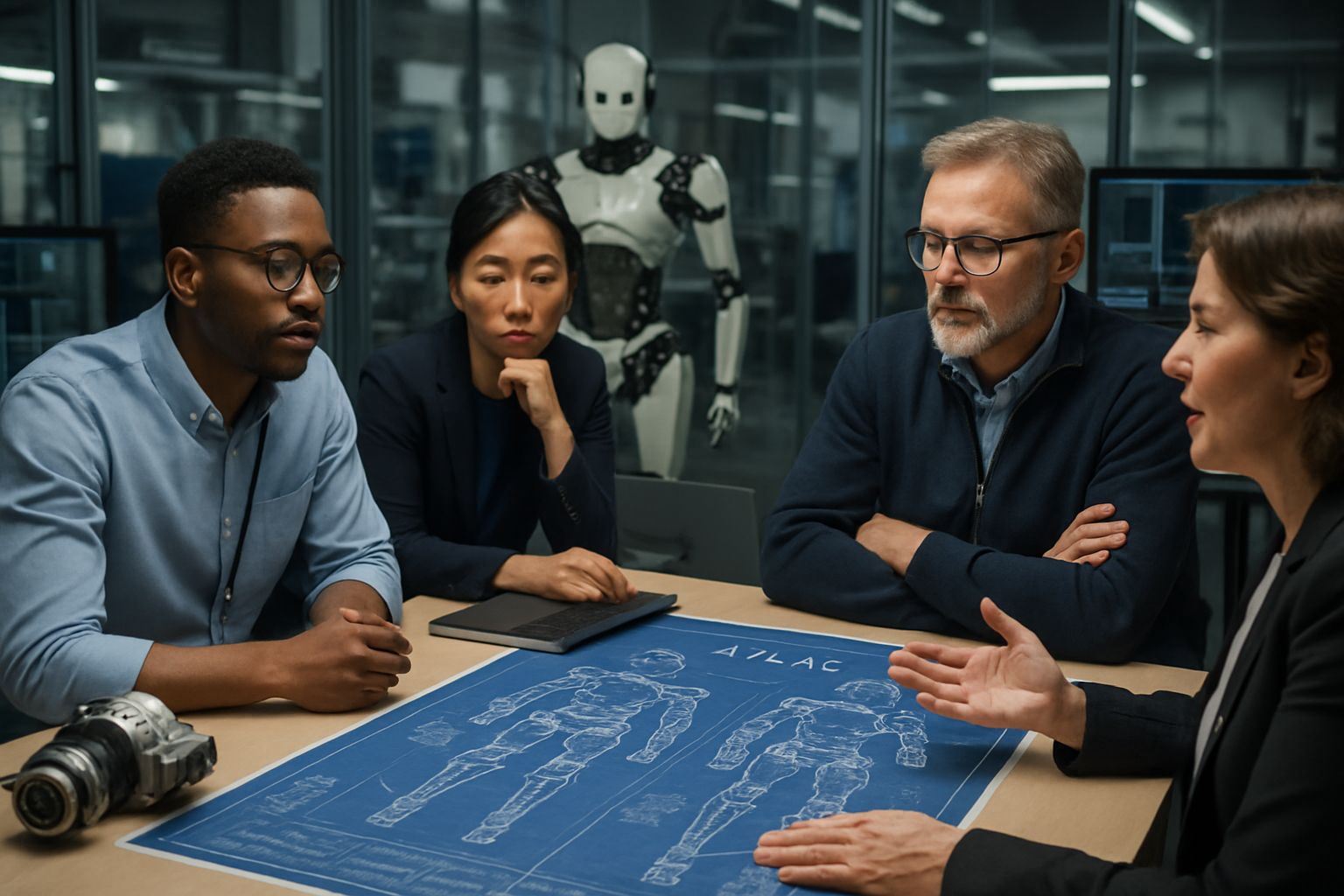
These milestones illustrate a disciplined escalation strategy. However, timelines depend on manufacturing scale and AI maturity, which the next section explores.
Production Timeline Highlights
Production has technically started, yet volumes remain small pilot batches. Nevertheless, Hyundai’s investment in the Robot Metaplant Application Center intends to industrialize the process quickly. In contrast, industry analysts argue that motor supply chains and sensor procurement could slow the ramp. Boston Dynamics counters by emphasizing modular electric actuators requiring fewer unique parts. Robert Playter also points to Orbit fleet software, which distributes learned skills across units, shortening validation cycles. Meanwhile, Hyundai engineers say the Metaplant will support hot-swap battery logistics, enabling near-continuous operation.
Factory readiness remains a critical gating item. Consequently, Hyundai is retrofitting existing lines to accept human-scale robots without expensive retooling. The Humanoid form factor lets Atlas reach tools, doors, and bins already present on the floor. Therefore, early pilots focus on parts sequencing where uptime and path predictability can be measured precisely. Such pilot volumes allow Robotics engineers to validate uptime before scaling.
Early production appears feasible, yet supply and certification hurdles persist. Furthermore, partnerships will shape how quickly those hurdles fall.
Partnerships Fueling Advancement
NVIDIA supplies Jetson compute and Isaac simulation tools that accelerate policy training. Consequently, Atlas can iterate control loops virtually before touching hardware. Google DeepMind contributes Gemini Robotics foundation models, giving the robot richer perception and reasoning. Moreover, Hyundai offers mass-production expertise and a global supplier network. Robert Playter describes the trio as “hardware, brain, and scale” working in concert.
Boston Dynamics also works with pilot customers to refine deployment toolkits. For instance, DeepMind researchers plan to test multi-stage picking tasks that require abstract planning. Consequently, lessons learned feed back into Orbit, shortening rollout times for every subsequent Factory.
These alliances create an ecosystem that could accelerate capability uplift. Nevertheless, real value emerges only when Atlas proves itself on the Factory floor, as the following strategy section explains.
Factory Integration Strategy
Hyundai’s integration blueprint starts with parts sequencing. Workers currently drag carts and sort bins, an ergonomic pain point. Atlas will handle that repetitive lift, while human operators supervise and troubleshoot. Moreover, hot-swap batteries allow four-hour runtime without halting the cell.
Boston Dynamics plans a tight digital thread. Orbit connects Atlas to Manufacturing Execution Systems and Warehouse Management Systems. Consequently, once one robot masters a motion, the skill propagates fleet-wide within minutes. Additionally, line engineers can adjust safety envelopes in software rather than moving cages, preserving Factory flexibility.
Industrial Robotics traditionally required fixed tooling. In contrast, a mobile Humanoid offers adaptable automation that coexists with shifting product mixes. Therefore, capital payback could shorten, provided reliability reaches the 99.9% target Playter cites. Atlas also tests collaborative Robotics safety interlocks in shared zones.
This integration playbook blends software orchestration with human oversight. Consequently, market dynamics merit closer examination in the next section.
Market Outlook Uncertain
Market forecasts for industrial Humanoid robots differ wildly. ResearchAndMarkets projects a compound growth rate above 30%, yet other firms remain cautious. Moreover, Hyundai’s 30,000-unit goal by 2028 invites skepticism from suppliers tracking magnet shortages.
Nevertheless, several tailwinds support expansion:
- Global labor shortages in aging economies
- Corporate sustainability mandates favoring electric automation
- Rapid AI cost declines
- Growing venture interest in Robotics startups
Conversely, headwinds include safety certification delays, high unit costs, and social acceptance barriers. Consequently, analysts debate breakeven timelines that range from three to eight years per Factory deployment. Industrial buyers view Robotics as a hedge against labor volatility.
Forecast divergence underscores both promise and uncertainty. However, understanding the principal risks offers clearer context for decision makers.
Risks And Mitigations
Reliability remains the foremost risk. Robert Playter admits that many Machine Learning policies still require human intervention. Nevertheless, simulation pipelines and Gemini Robotics models aim to bridge the gap.
Safety is another concern. Humanoid robots share space with people, so new ISO standards must evolve. Moreover, Boston Dynamics designs redundant sensors and plans third-party audits to meet regulatory thresholds.
Cost inflation also threatens schedules. Therefore, Hyundai positions vertical integration as a hedge, building actuators and gearboxes in-house to stabilize supply.
Effective mitigations appear feasible yet unproven at scale. Subsequently, professionals need updated competencies to navigate this transitional period.
Skills For Robotics Professionals
The Atlas era reshapes workforce requirements. Control engineers should upskill in reinforcement learning and simulation workflows. Meanwhile, operations managers must understand fleet orchestration and safety compliance. Professionals can enhance their expertise with the AI for Everyone™ certification.
Furthermore, facilities planners require familiarity with digital twins that combine MES data and Robotics kinematics. Consequently, cross-functional teams become vital to translate AI insights into safe Factory layouts.
These evolving skills strengthen competitiveness across industries. Therefore, the concluding section distills strategic priorities.
Boston Dynamics and Hyundai have shifted the humanoid conversation from viral videos to verifiable roadmaps. Moreover, committed 2026 deployments, aggressive scale goals, and heavyweight partnerships suggest tangible momentum. Nevertheless, reliability, safety, and cost factors could still delay mass adoption. Market forecasts stay volatile, reflecting both unprecedented potential and unresolved challenges. Therefore, leaders should monitor pilot metrics closely while investing in workforce reskilling and standards development. Consequently, strategic automation investments should align with measurable productivity goals. Finally, those aiming to lead the next automation wave should explore specialized certifications and stay engaged with evolving guidelines.
Disclaimer: Some content may be AI-generated or assisted and is provided ‘as is’ for informational purposes only, without warranties of accuracy or completeness, and does not imply endorsement or affiliation.


