

AI CERTS
6 months ago
Apple-Google AI Partnerships Redefine Siri Intelligence
Few technology announcements have jolted the enterprise landscape like the January 2026 Apple-Google collaboration. The multi-year Partnerships deal positions Google’s Gemini models at the core of Apple Foundation Models and, consequently, a reimagined Siri. Moreover, analysts agree the pact signals a strategic realignment for both firms as they race to commercialize trustworthy generative AI at global scale.
Consequently, executives across industries now study the agreement for lessons on vendor selection, cloud economics, and privacy engineering. This article dissects the facts, estimates, and controversies, offering professionals clear guidance on what to expect next.
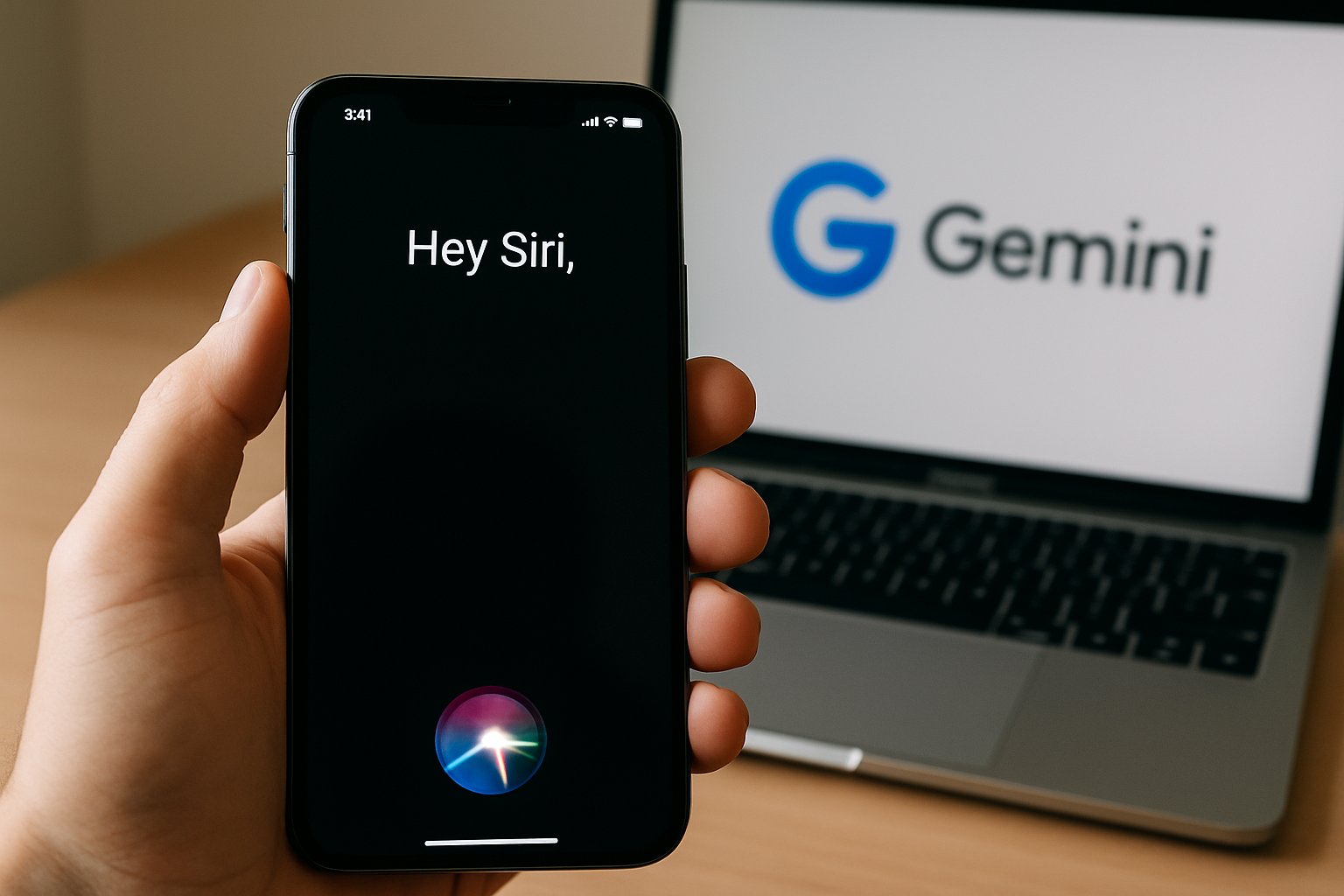
Joint Deal Overview Facts
On 12 January 2026, Apple and Google issued a rare joint statement. The notice confirmed that Apple’s next generation foundation models will be “based on Google’s Gemini models and cloud technology.” In contrast to smaller collaborations, this Partnerships move spans multiple years and targets billions of active devices.
Apple stressed that runtime will remain on its devices and within Private Cloud Compute. Meanwhile, Google highlighted the validation of Gemini’s multimodal capabilities. Bloomberg earlier reported an annual licensing figure of roughly US$1 billion, yet neither company disclosed contractual numbers.
These official notes establish the framework. However, many technical and commercial details remain undisclosed, keeping market watchers alert.
Key points indicate a shared ambition to accelerate time-to-market while preserving Apple’s privacy brand. This dual objective underpins every subsequent decision.
These foundational facts anchor the discussion. Subsequently, we explore how integration will actually work.
Technical Integration Details Unpacked
Gemini’s reported 1.2-trillion-parameter variant dwarfs Apple’s internal 150-billion-parameter server model. Therefore, Apple chose external scale over exclusive in-house development. The plan places Gemini weights inside Apple’s Private Cloud Compute, isolating user prompts from Google’s infrastructure.
Additionally, lighter on-device models continue handling latency-sensitive tasks. Heavy computations defer to cloud instances fortified with end-to-end encryption and remote attestation. Consequently, users gain richer answers without surrendering personal context to third parties.
Each phase requires fine-grained orchestration between iOS schedulers, Secure Enclave keys, and Google-maintained model updates. Moreover, Apple retains runtime control, limiting telemetry that might otherwise feed Google analytics.
These mechanics illustrate how technical trust is brokered between rivals. Nevertheless, real-world audits will be essential once features ship.
Thus, engineers now watch for the promised whitepaper that clarifies hosting specifics. In contrast, financial analysts focus on cost implications, our next topic.
Financial Context Estimates Discussed
Because official numbers stay private, observers rely on reputable leaks. Bloomberg’s Mark Gurman pegs the annual outlay near US$1 billion. Further, Financial Times commentators project “several billion” over the contract term.
For perspective, Apple’s services revenue exceeded US$85 billion in fiscal 2025. Consequently, even multi-billion licensing costs appear manageable against potential upsell of AI-enhanced devices and subscriptions.
Google likewise secures a significant new revenue stream while expanding Gemini’s market footprint. Moreover, Wall Street interprets the deal as a confidence signal during intensifying AI platform competition.
- Apple active devices: ~2.2 billion
- Reported annual license: ~US$1 billion
- Gemini model scale: ~1.2 trillion parameters
- Projected rollout: iOS 26.4, spring 2026
The figures underscore high-stakes economics. However, value ultimately depends on adoption metrics, not headlines alone.
These monetary insights set expectations for stakeholders. Meanwhile, privacy remains the decisive adoption variable.
Privacy Safeguards Explained Clearly
Apple insists that no raw user data reaches Google. Instead, Private Cloud Compute processes prompts in ephemeral memory, verified through publicly inspectable logs. Furthermore, model updates must pass Apple-signed attestation before production release.
Google gains no persistent access to personal context, preserving Apple’s differential privacy promise. Nevertheless, regulators may still probe data-flow diagrams, given historical scrutiny of search defaults between the companies.
Independent experts call the architecture “privacy-preserving in principle.” However, they urge continuous third-party audits once Gemini weights operate inside Apple’s environment.
These safeguards reassure corporate adopters prioritizing confidentiality. Consequently, competition analysts shift attention toward broader market effects.
In summary, privacy features appear robust, yet verification will dictate trust. Subsequently, we assess competitive dynamics.
Competitive Market Impact Analysis
Industry reaction split quickly. Fortune labeled the alliance a “validation moment” for Gemini, while xAI’s Elon Musk condemned it as excessive concentration. Moreover, antitrust scholars predict heightened regulatory interest due to existing search revenue ties.
Meanwhile, Microsoft must navigate a scenario where Azure rivals host Apple traffic, and Amazon faces pressure to match multimodal breadth. Additionally, Samsung could intensify its own Gemini integrations for Galaxy devices, escalating competition.
For enterprise buyers, these Partnerships shifts may diversify AI sourcing strategies. Vendors building on OpenAI, Anthropic, or open-source stacks must now articulate clear differentiation.
Professionals therefore monitor API pricing, latency benchmarks, and compliance certifications. Flexibility emerges as a critical hedge against platform risk.
These market ripples underscore the transformative scope. Consequently, the timeline for feature delivery becomes the next strategic milestone.
Future Rollout Timeline Expectations
Media outlets tie the first public release to iOS 26.4, expected in spring 2026. Apple has not confirmed the date; however, beta identifiers already reference “SiriNext” build flags.
Furthermore, leaks suggest tiered rollout across product lines. Recent code strings imply flagship iPhones and M-series Macs receive full functionality first. Older hardware may retain current on-device models with limited cloud fallback.
Subsequently, watchOS and Vision Pro platforms could gain multimodal voice support through phased updates. Meanwhile, enterprise mobile device managers prepare testing workflows to validate security posture.
These staged deployments help Apple manage compute demand. Nevertheless, they could frustrate users on unsupported devices.
The timeline clarifies immediate priorities for developers. Next, professionals must ready their skills for the coming wave.
Upskilling Opportunities For Professionals
Organizations will soon integrate Gemini-backed Siri features into customer service flows, productivity apps, and developer tools. Therefore, teams need prompt-engineering fluency and model evaluation expertise.
Professionals can enhance their expertise with the AI Prompt Engineer™ certification. Moreover, such programs offer hands-on labs that mirror Apple’s Private Cloud Compute privacy constraints.
Continual education ensures teams translate headline-grabbing Partnerships into practical enterprise value. Additionally, certified staff signal due diligence to regulators and clients.
These opportunities close the capability gap. Consequently, businesses position themselves to exploit the new ecosystem efficiently.
Conclusion: Apple and Google’s bold Partnerships reshape the AI landscape. The agreement injects Gemini power into Siri, maintains Apple’s privacy stance, and challenges competitors to respond. Financial stakes are high, yet projected scale justifies the investment. However, success relies on transparent audits, timely rollouts, and skilled practitioners. Therefore, forward-thinking leaders should monitor beta releases and pursue targeted training. Ready to lead the next AI wave? Enroll in a certification today and turn strategic Partnerships into operational excellence.
Disclaimer: Some content may be AI-generated or assisted and is provided ‘as is’ for informational purposes only, without warranties of accuracy or completeness, and does not imply endorsement or affiliation.


