

AI CERTS
2 months ago
Cloud Computing Gets Transparent With Silicon Data GPU Index
Price certainty remains elusive for teams training large GPU models. However, parallel demand growth has forced managers to scrutinize every compute invoice. Silicon Data believes transparency can fix that problem. The start-up publishes a daily rental index tracking NVIDIA H100 spot prices across clouds and marketplaces. Consequently, procurement officers finally gain an objective market signal. Cloud Computing budgets now hinge on real-time price discovery rather than negotiated anecdotes. This article unpacks Silicon Data’s index, supply forces, and the path toward treatable compute commodities. Additionally, it examines potential hedging tools, governance challenges, and the skills leaders require next. The stakes are rising as workloads multiply and capital markets eye new instruments. Meanwhile, understanding the data is the first defense against margin erosion.
GPU Pricing Transparency Shift
Historically, spot instance rates varied widely across providers and regions. Consequently, Cloud Computing buyers struggled to benchmark costs or time bulk purchases. Silicon Data aggregates 3.5 million rental datapoints spanning roughly 50 chipsets. Its flagship SDH100RT index averaged $2.36 per hour in June 2025, down from $3.06 months earlier. Therefore, executives can observe directional moves before negotiating multi-month capacity blocks. IEEE Spectrum notes that such signals level the playing field for smaller labs lacking internal telemetry. These gains illustrate why transparency matters. However, market context enriches that headline number.
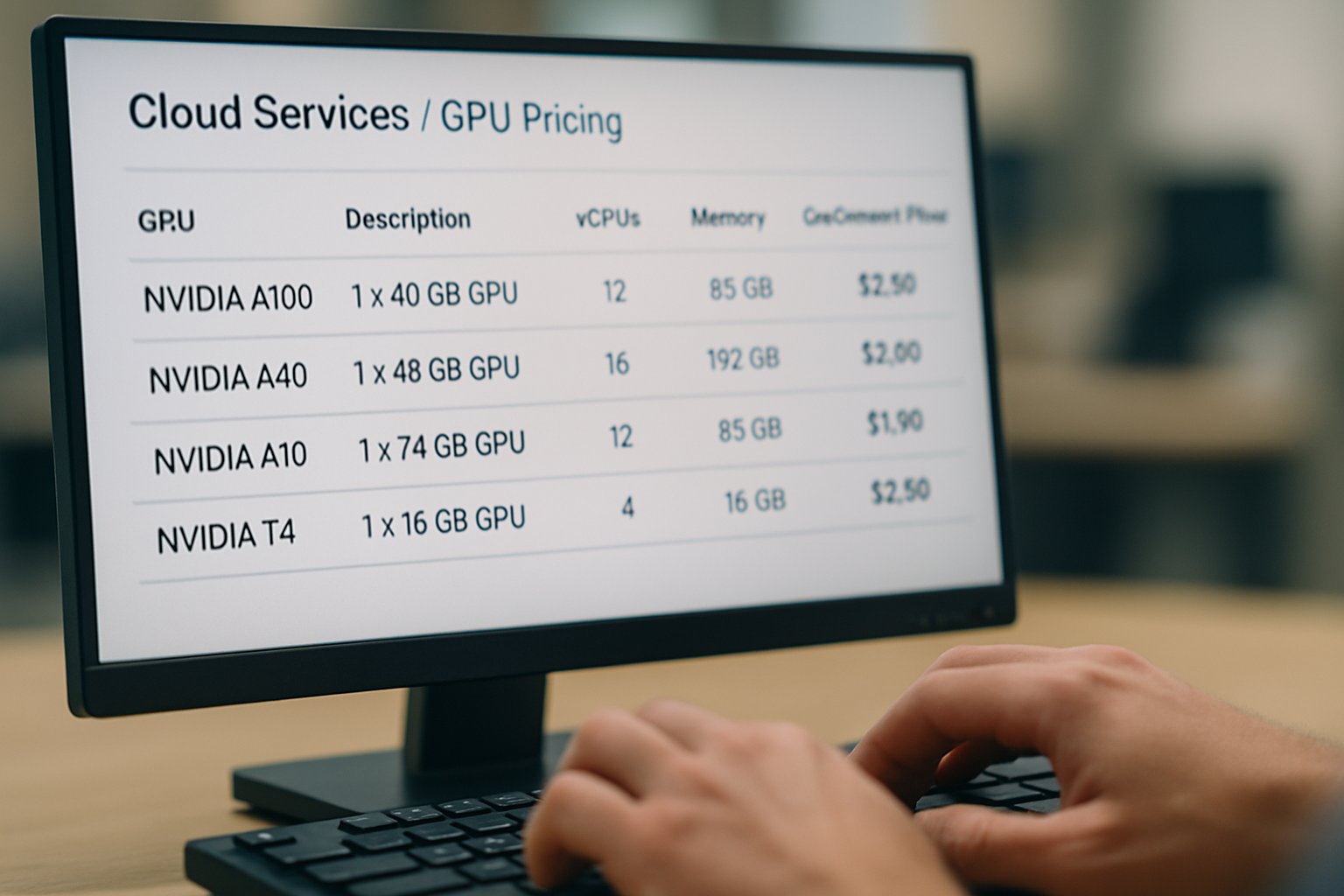
Price visibility reduces budgeting surprises. Meanwhile, macro forces still steer volatility. Understanding those forces is the next priority.
Recent H100 Index Milestones
Silicon Data launched the index publicly in May 2025 after a $4.7 million seed round. Subsequently, dxFeed integrated the feed into Refinitiv terminals and the emerging Compute Exchange ecosystem, extending reach worldwide. Meanwhile, methodology updates on 3 December 2025 restated historical values, underscoring governance importance. Furthermore, the company released sample scripts enabling teams to pull live index values in under ten minutes. Each milestone pushes the benchmark closer to institutional acceptance.
The trajectory shows momentum. Therefore, supply trends now deserve focus.
Spot Market Supply Drivers
Expansion of hyperscaler Cloud Computing fleets eased the acute H100 shortage that gripped 2023. In contrast, specialized providers such as CoreWeave and Lambda added niche capacity, accelerating price pressure. Marketplace entrants list idle GPU servers at aggressive discounts, forcing convergence toward marginal costs. Consequently, Silicon Data recorded a steady rental decline through mid-2025.
- Hyperscaler spot GPU instances: ceiling rates still above $3 per hour.
- Marketplace hosts: median offers under $2 per hour by June 2025.
- Index coverage: 50 chipsets across Cloud Computing and bare-metal channels.
These figures reveal how liquidity multiplies once supply fragments. More servers mean falling rents. However, pricing dynamics also open hedging possibilities. Analysts predict that new Blackwell chips will compound this oversupply through 2026. Consequently, vendors may introduce creative commitment discounts to preserve margins.
Marketplace Competition Trend Impact
Vast.ai now reports host counts surpassing 50,000 cards, dwarfing early 2024 participation. Moreover, ThunderCompute and RunPod advertise regional arbitrage tools that let buyers shift quickly when prices spike. Such tools create de facto spot liquidity and strengthen data inputs feeding Silicon Data indices.
Competitive tension pushes rates lower. Consequently, risk analytics gain urgency.
Indices Enable Risk Tools
Procurement desks long relied on spreadsheets and public dashboards. Now, programmatic APIs provide daily time series suitable for value-at-risk models within Cloud Computing finance teams. Therefore, Cloud Computing teams can simulate budget exposure to hourly volatility before signing hosting contracts. Trading firms DRW and Jump view the index as a prerequisite for derivatives or swaps. Compute Exchange proponents argue that standardized references enable forward contracts similar to power markets. Early adopters already embed daily index feeds into Monte Carlo simulations for cash-flow planning. Moreover, insurers evaluating service-level guarantees request historical volatility bands before underwriting outages.
Better data underpins smarter hedges. Financialization becomes the logical next debate.
Financialization Path Takes Shape
Commodity desks increasingly discuss Cloud Computing in the same breath as metals or power. Consequently, Silicon Data’s transparent benchmark is being tested as a settlement reference for pilot swaps. DRW’s Donald Wilson calls compute "the world's largest future commodity" once risk tools mature. However, Financialization demands stable governance, deep liquidity, and regulatory clarity. Compute Exchange backers claim these conditions will emerge as capacity scales and data quality improves. Moreover, a carbon-intensity subindex could price sustainability premiums into contracts. Singapore and Chicago exchanges reportedly reviewed draft term sheets for weekly rental futures. Nevertheless, significant data history will be required before regulators approve listing.
Financialization promises cost certainty. Nevertheless, methodology gaps could erode confidence.
Methodology And Data Gaps
Silicon Data discloses only high-level weighting rules to non-subscribers. In contrast, sample provider lists remain proprietary, complicating academic replication. Additionally, December 2025 restatements revised several months of index history. Such changes can unsettle Cloud Computing CFOs reviewing variance explanations. Therefore, independent verification against public trackers like GPUCompare becomes essential. Observers note that competing benchmarks could emerge if visibility does not improve quickly. Standardization bodies may step in to harmonize definitions of rentable compute hour.
- Data sampling bias across regions and smaller marketplaces.
- Quality control when providers offer promotional discounts.
- Latency between transaction capture and published index value.
Transparency gaps invite scrutiny. Consequently, skills development can hedge internal risk.
Skills And Next Steps
Organizations need new talent comfortable with market data, procurement, and quantitative risk. Moreover, finance and engineering leaders should share a common glossary to avoid mispricing commitments. Professionals can enhance their expertise with the AI Learning Development™ certification. Compute Exchange literacy also deserves board-level attention. Meanwhile, Cloud Computing stewardship teams must track index methodology updates and liquidity metrics monthly. GPU cost hedging playbooks should include stop-loss triggers and cross-provider migration runbooks. Cross-disciplinary workshops help align procurement, finance, and engineering objectives around price risk. Additionally, open dashboards foster shared situational awareness during supply crunches.
Prepared teams convert volatility into advantage. Therefore, next fiscal plans should incorporate index scenarios.
Silicon Data’s young benchmark marks a turning point for transparent compute economics. Consequently, Cloud Computing buyers gain real-time signals, while traders explore novel derivatives. Spot supply growth, marketplace rivalry, and governance enhancements will determine how far Financialization progresses. Nevertheless, index revisions and provider opacity still warrant careful due diligence. Market transparency rarely arrives fully formed; it matures through iterative community feedback. Equip your teams with quantitative procurement know-how today. Explore the linked certification and subscribe for future coverage of compute pricing innovation.


