

AI CERTS
6 months ago
Energy Economics of Hyperscale Data Center Builds
Hyperscale builders are racing to pour concrete, secure transformers, and source GPUs. Consequently, record capital commitments now reshape regional markets. However, understanding the real financial math behind these vast campuses remains difficult. This article dissects the architecture costs that dominate board discussions. Energy consumption, build premiums, and supply constraints all matter.
Moreover, investors must track per-megawatt metrics, not headline billions. Recent disclosures from Google and Amazon signal unprecedented scale. Meanwhile, analysts warn of diverging cost curves between conventional shells and AI-dense halls. Therefore, clear benchmarks help executives negotiate with contractors and utilities. The following sections provide those numbers and the associated strategic context.
Capital Cost Snapshot 2025
Construction cost variability dominates early budget conversations. Additionally, recent guides place shell prices between $8M and $15M per megawatt across the United States. In contrast, optimized repeatable programs have touched $6M per megawatt when volume discounts exist. Furthermore, analysts at Bank of America peg all-in builds near $38M per megawatt once servers are installed. That figure shows hardware swallowing roughly two-thirds of capital allocation.
Key 2025 benchmarks appear in many reports:
- $8M–$15M/MW shell average in Western markets
- ~$6M/MW best-practice industrialized target
- $37.6M–$38M/MW all-in including IT stack
- $30M–$40M/MW for AI-ready liquid cooled halls
Consequently, boards need precise scope definitions before approving spend. Energy provisioning contracts often drive final numbers upward because capacity charges add hidden premiums. Overall, separating shell and IT costs clarifies risk sharing between landlords and cloud tenants. These insights ground negotiations. However, schedule realities complicate planning, prompting a closer look at AI premiums next.
AI Premium Explained Clearly
High-density GPU clusters require unconventional cooling. Moreover, liquid systems introduce specialized manifolds, CDUs, and leak detection lines. Industry reports place liquid-cooled shell costs between $15M and $22M per megawatt. Meanwhile, all-in estimates often climb beyond $30M where immersion tanks support ultra-dense racks. Consequently, each additional watt of thermal load multiplies both mechanical and electrical outlays.
Operators evaluate three principal methods:
- Rear-door heat exchangers for moderate densities
- Direct-to-chip cold plates above 30 kW per rack
- Immersion baths for peak GPU utilization
In contrast, traditional air systems struggle above 20 kW per rack, adding Infrastructure complexity. Additionally, resilient configurations demand redundant pumps and sensors, raising Infrastructure complexity. Energy efficiency improves when liquid absorbs heat close to the chip, yet capital recovery timelines may stretch. Therefore, decision makers should model depreciation against rapid server refresh cycles. These AI premiums reshape total cost forecasts. Subsequently, supply constraints make timelines just as critical.
Supply Chain Bottlenecks Today
Lead times for transformers and switchgear now run beyond 24 months. Furthermore, certain high-capacity generators face 48-month queues, according to Cushman & Wakefield. Such delays force owners to lock capital early, increasing interest costs. Therefore, total project cash requirements grow even without design changes.
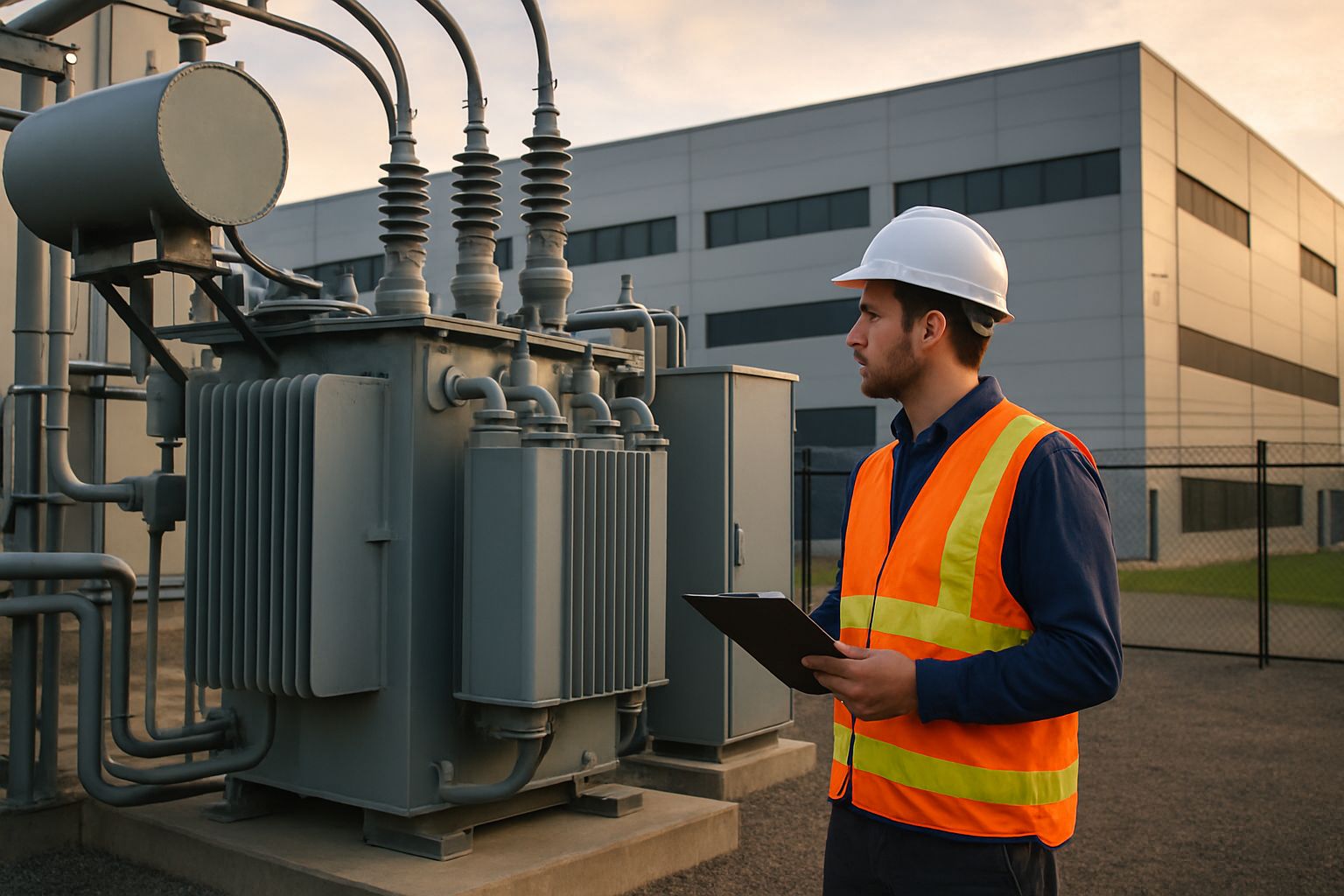
Utilities share the pain. However, substation upgrades often depend on regional funding cycles, adding unpredictable milestones. Meanwhile, contractors adopt cost-plus agreements to hedge material inflation. Consequently, delayed Infrastructure delivery jeopardizes lease commencements and customer commitments. Energy procurement contracts sometimes expire before equipment arrives, triggering renegotiations at higher market rates.
These challenges stretch contingency budgets. Nevertheless, proactive component forecasting and diversified vendor pools reduce exposure. The next section quantifies operating economics once facilities finally energize.
Operating Economics Drivers Now
Once live, hyperscale campuses face ongoing cost pressures. Electricity averages between $0.04 and $0.15 per kilowatt hour, depending on region. Moreover, PUE figures between 1.1 and 1.6 determine how much extra Energy actually reaches cooling systems. Consequently, a one-tenth PUE improvement can save millions annually on a 100 MW site.
Opex also includes maintenance staff and water treatment. Additionally, analysts cite $1M to $3M of yearly spending per megawatt. Data Centers that optimize automation reduce labor intensity and downtime. In contrast, AI-heavy halls often increase technician headcount for coolant management.
Power sourcing strategies matter. Therefore, many hyperscalers lock multi-decade renewable PPAs to stabilize rates. Infrastructure investments in on-site batteries further protect against grid events. These moves improve Energy resilience while supporting corporate sustainability goals. The operational profile sets the backdrop for risk evaluation.
Risk Factors Increasing Costs
Financial models rarely survive first contact with regulators. Consequently, permitting reviews can add years and millions in carrying charges. Environmental groups challenge water consumption as liquid cooling scales, especially in arid regions. Moreover, grid capacity shortfalls push utilities toward moratoria that freeze new connections.
Hardware evolution adds uncertainty. Nevertheless, GPU generations refresh every three years, requiring continuous capital injections. Stranded shells risk obsolescence if workload locations shift closer to users. Therefore, some builders design modular wings that accept future Power densities without demolitions.
Insurance premiums also climb. Additionally, cyber events at high-profile Data Centers attract attackers and regulators alike. Energy reliability requirements therefore drive redundant feeds, extra transformers, and hardened substations. These protections inflate budgets yet safeguard reputation. The following summary links risk to investment strategy.
Strategic Investment Takeaways 2026
Large builders still pursue scale because demand outpaces supply. Moreover, per-megawatt costs decline when blueprints standardize equipment rooms and yard layouts. Investors who internalize the shell versus IT split negotiate better lease terms. Additionally, municipalities welcome tax revenue, yet Infrastructure grants often hinge on local job commitments.
Consequently, executives should align capital phases with equipment delivery windows. Energy hedges must match construction milestones to avoid exposure. Meanwhile, professionals can deepen their knowledge through the AI+ Ethics™ certification, sharpening governance over rapidly growing AI estates.
These actions position portfolios for resilient returns. The conclusion distills the essential numbers and next steps.
Conclusion And Next Steps
Hyperscale economics now hinge on disciplined scope control, accurate lead-time forecasts, and flexible cooling designs. Consequently, shells often land near $10M per megawatt, while full AI halls approach $40M. Moreover, integrated financial models must include server refresh cycles and rising Power tariffs. Data Centers that secure low-carbon contracts protect margins and public trust. Additionally, proactive engagement with utilities mitigates interconnection delays. Therefore, leaders should revisit cost assumptions each quarter as supply dynamics evolve. Professionals seeking deeper governance frameworks can enroll in the linked certification. Ultimately, informed capital planning converts headline billions into reliable, scalable compute capacity.
Disclaimer: Some content may be AI-generated or assisted and is provided ‘as is’ for informational purposes only, without warranties of accuracy or completeness, and does not imply endorsement or affiliation.


