

AI CERTs
4 hours ago
World-Model R&D Race Intensifies After Hassabis Warning
Google DeepMind CEO Demis Hassabis says frontier models still lack scientific understanding. Consequently, he calls for renewed R&D focusing on world models, planning, and memory. The remarks came during CNBC’s new Tech Download podcast released on 15 January 2026. Hassabis claimed another major breakthrough or two remains before true AGI emerges. However, investors, rivals, and researchers debate which missing capabilities matter most. This article unpacks that debate for technology leaders overseeing strategic R&D programs. Moreover, it explains market signals, technical hurdles, and practical steps toward secure AGI Development. Finally, resource links and certification guidance support professionals seeking competitive advantage.
Hassabis Flags Missing Skills
During the podcast, Hassabis listed three neglected abilities. Specifically, he cited reasoning, hierarchical planning, and long-term memory. In contrast, scaling parameters alone will not unlock those faculties, he argued.
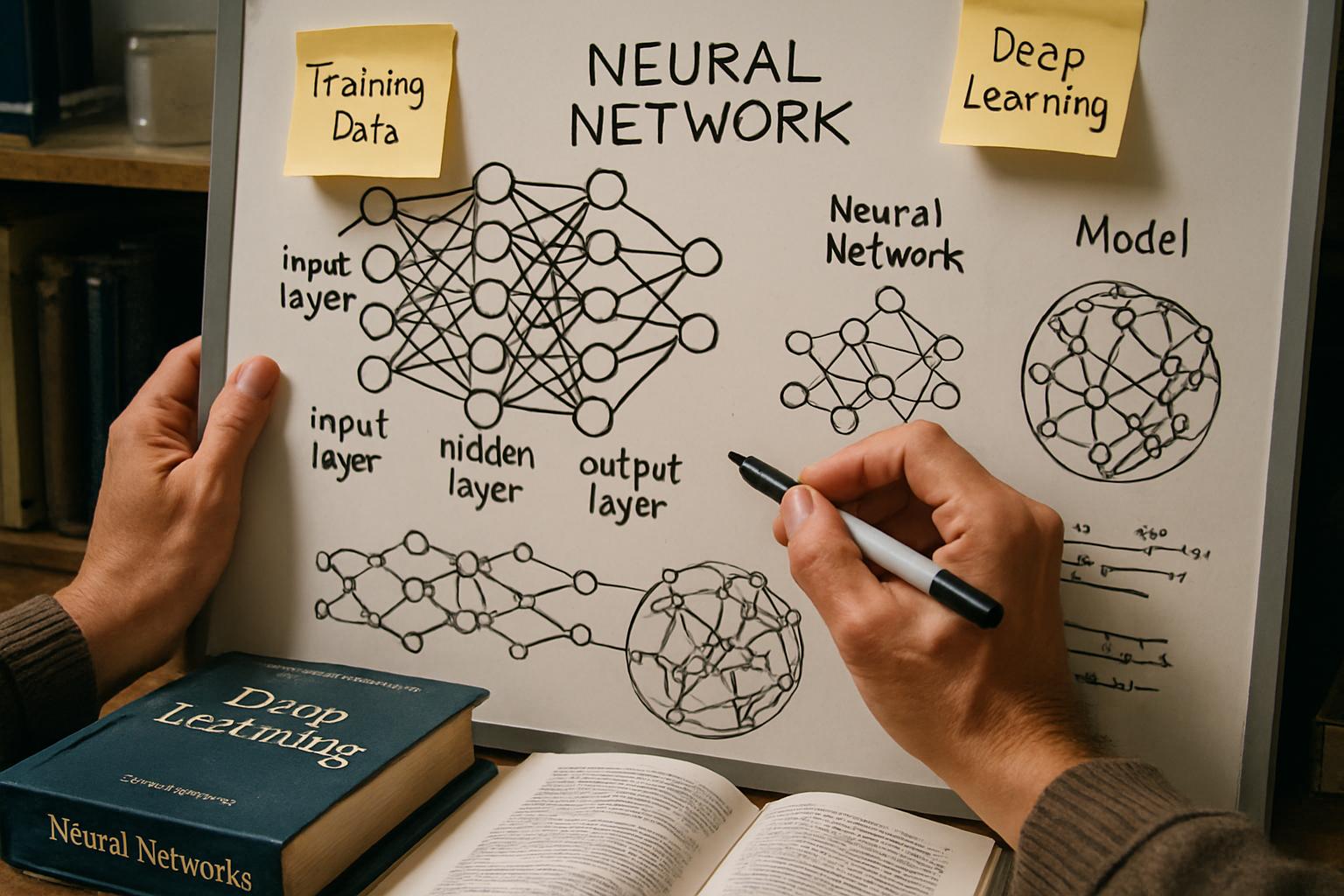
Hassabis also stressed the need for internal simulators called world models. These simulators would enable scientific hypothesis testing inside an agent’s mind. Therefore, future research must blend language prowess with grounded causal understanding. Such blending demands coordinated R&D across algorithm, data, and hardware teams.
Hassabis’ comments outline a roadmap beyond pure scale. However, recent funding trends reveal whether that roadmap gains traction.
World Models Research Surge
Venture investment signals suggest a rapid pivot toward world-model architectures. Moreover, Google unveiled Gemini 3 in November 2025 with stronger multimodal reasoning benchmarks. However, critics argued the launch still lacked physical causality understanding.
In December 2025, Yann LeCun confirmed AMI Labs, a startup dedicated to world models. Reports indicated potential funding near €500 million and a multibillion valuation. Consequently, R&D budgets are shifting toward simulators, synthetic data, and agentic evaluation.
Academic work also accelerates. DeepMind’s Physics-IQ benchmark shows language models failing intuitive physics tasks. Meanwhile, arXiv hosts hundreds of new world-model papers seeking generalizable simulation techniques.
Investment and publication momentum underline the strategy’s momentum. Nevertheless, rival camps still favor memory-centric plans, which we examine next.
Memory First Strategy Debate
OpenAI CEO Sam Altman offers a contrasting thesis. He promotes persistent memory, sometimes branded “infinite memory,” as the critical missing component. Additionally, he claims larger context windows deliver immediate product impact for consumers.
Proponents say scale plus memory improves chat continuity, codebases, and enterprise knowledge retrieval. Therefore, some boards prioritize R&D that extends context length rather than building full simulators. In contrast, Hassabis warns such gains plateau without true causal reasoning.
The standoff shapes AGI Development roadmaps worldwide. CIOs must weigh near-term revenue against foundational capability gaps. Consequently, many firms adopt hybrid research portfolios spanning both directions.
Memory advocates promise quick wins, yet risks of stagnation persist. Our next section explores how investors interpret those risks.
Market Signals And Investment
Generative AI spending continues its upward trajectory. Grand View Research forecasts a 40.8% CAGR through 2033, reaching roughly $325 billion. Moreover, corporate disclosures reveal double-digit increases in internal R&D allocations for advanced AI.
- December 2025: AMI Labs seeks €500 million for world-model research.
- November 2025: Google launches Gemini 3, bundling agentic tooling inside Vertex AI.
- January 2026: DeepMind expands SIMA 2 simulator team to 200 researchers.
Investors favor teams that connect research breakthroughs to revenue pathways. Consequently, startups highlight enterprise pilot programs alongside laboratory milestones. Nevertheless, technical uncertainty still drives portfolio diversification.
Capital is available, yet disciplined execution remains mandatory. The next section reviews engineering challenges that threaten execution.
Technical Barriers Still Loom
Building accurate world models introduces heavy data demands. Simulation datasets must capture high-resolution physics across countless scenarios. Furthermore, transferring simulated skills to real environments remains difficult.
Compute requirements also climb sharply. Industry estimates suggest training full-fidelity simulators may cost hundreds of millions in cloud spend. Therefore, only organizations with substantial R&D budgets can attempt such projects today.
Safety oversight adds further complexity. More agentic systems demand rigorous evaluation frameworks to catch harmful emergent behaviors. Consequently, cross-functional governance between security, compliance, and engineering becomes essential.
Technical and governance hurdles slow progress yet spur creative solutions. One practical solution involves upskilling staff, as the next section outlines.
Security Skills And Certification
Talent shortages threaten even well-funded programs. Teams require specialists who understand both machine learning and adversarial attack vectors. Additionally, governance bodies want proof of practitioner competence.
Professionals can enhance their expertise with the AI Ethical Hacker™ certification. The program covers threat modeling, red-team techniques, and compliance frameworks for agentic AI. Moreover, graduates often lead internal R&D security reviews within three months.
Upskilling mitigates specific safety gaps and accelerates trustworthy releases. Finally, we assess the broader outlook for AGI Development.
Outlook For AGI Path
Experts generally agree that major breakthroughs remain. Nevertheless, progress in both world models and memory systems is accelerating. Forecasts suggest prototype AGI Development milestones could arrive within five years.
Boards should fund diversified R&D portfolios spanning simulation, memory, and safety. Furthermore, clear evaluation metrics will help prioritize resources as evidence emerges. Regularly revisiting strategy ensures alignment with the fast-moving research frontier.
The path remains uncertain, yet deliberate experimentation keeps options open. Consequently, leaders must balance ambition with responsible governance.
Demis Hassabis reignited the debate over AI’s next leap. He argues that world models, planning, and memory must converge. Meanwhile, investors back parallel approaches to hedge uncertainty. Consequently, sustained R&D funding has become a competitive necessity. Moreover, AGI Development roadmaps demand cross-disciplinary talent and rigorous security. Certifications like AI Ethical Hacker™ provide immediate workforce leverage. Therefore, executives should review portfolios, upskill teams, and pilot world-model prototypes now. The frontier remains open; proactive leaders will shape its trajectory.


