

AI CERTs
4 months ago
HealthTech blood test brings early Alzheimer’s detection to India
Alzheimer’s care is entering a pivotal era. On 19 January 2026, India witnessed a landmark launch. Mahajan Imaging & Labs unveiled an AI-powered blood biomarker assay for early dementia detection. The announcement places India within a global wave of HealthTech innovation targeting neurodegenerative disease.
However, professionals still question regulatory clarity, clinical pathways, and cost. This article unpacks the science, market forces, and implementation stakes.
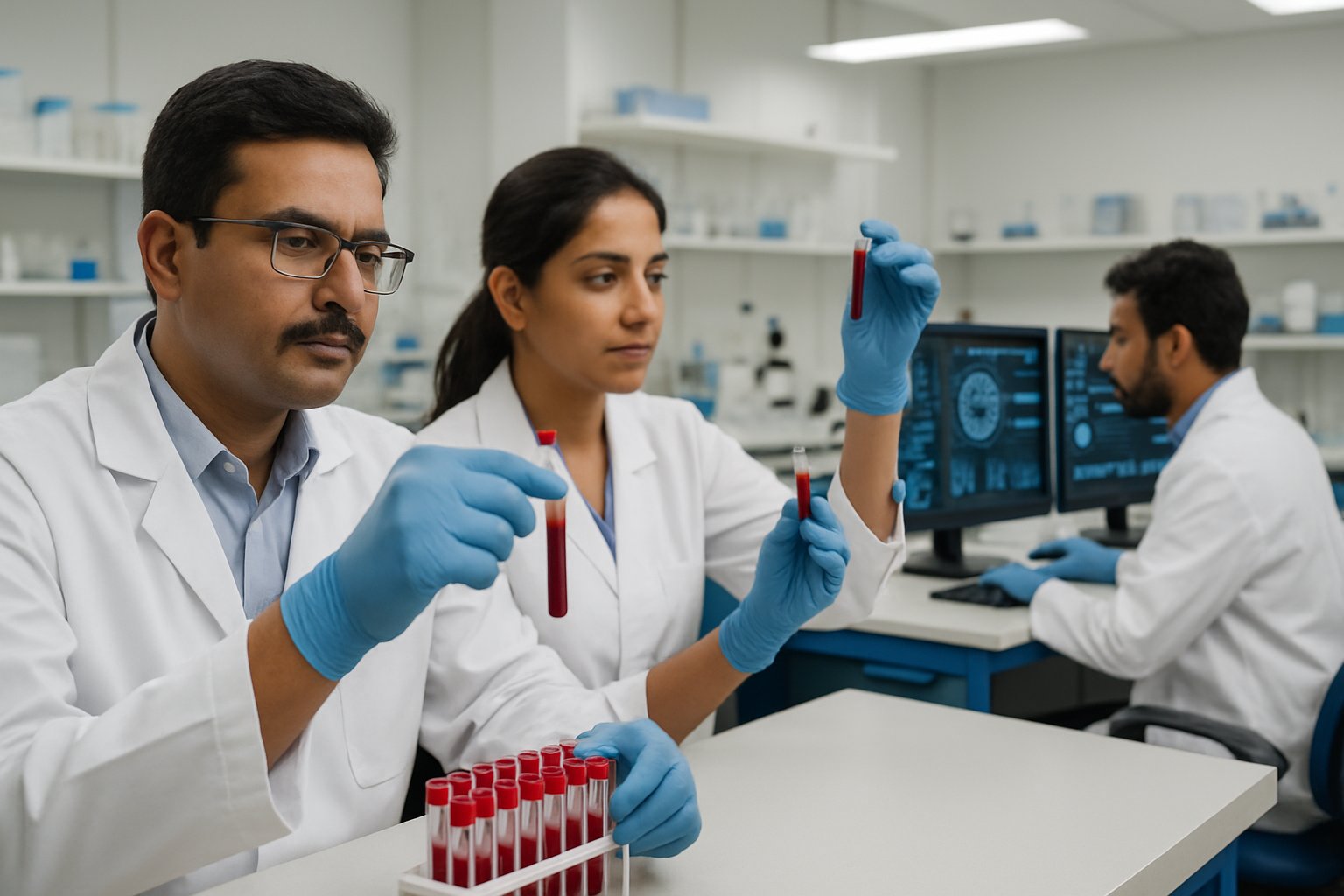
Additionally, it examines how the blood test complements imaging Diagnostics while highlighting gaps demanding verification.
Global Testing Momentum Rise
Consequently, worldwide interest in plasma biomarkers surged after the U.S. FDA clearance in May 2025. The Lumipulse G pTau217/β-Aβ1-42 ratio demonstrated 91.7 percent positive agreement with PET findings.
Meanwhile, negative agreement reached 97.3 percent, reinforcing confidence among laboratories and investors.
- 91.7% of positives matched amyloid PET or CSF.
- 97.3% of negatives showed no plaque signal.
- <20% of samples returned indeterminate status.
Moreover, large U.S. reference labs such as Labcorp and Quest integrated the assay into commercial menus. These moves signaled that HealthTech could scale Alzheimer biomarker testing beyond academic centers.
In Europe, Roche and Quanterix are advancing complementary panels, underscoring competitive momentum. Subsequently, market analysts project the plasma biomarker segment to reach USD 1.8 billion by 2028. Investors favor platforms that integrate cloud reporting APIs, enabling near real-time clinician alerts. Moreover, payers appreciate the possibility of gate-keeping expensive PET scans through upfront triage.
Global acceleration sets the competitive scene. However, localized regulation shapes each country’s adoption curve.
Indian Launch Key Facts
On 19 January, Mahajan introduced India’s first AI-integrated plasma pTau/Aβ ratio service. Furthermore, the company framed the offering within a "Dementia Diagnostic Series" that integrates MRI and PET.
Prof. V.S. Mehta stressed that early biology-first diagnosis enables timely care and therapy eligibility. In contrast, PET scans may cost up to Rs 2 lakh, limiting rural and middle-income access.
Mahajan claims U.S. FDA and Indian CDSCO approvals, yet independent documents remain unavailable. The launch promises wider reach. Nevertheless, verification gaps underline due-diligence needs. Consequently, stakeholders must examine the underlying science.
The provider operates seven imaging centers across northern India and plans nationwide franchise extensions. Consequently, the company expects to process 10,000 plasma samples in the first operational year. Clinician outreach programs include webinars, CME credits, and referral kits to accelerate adoption.
Biomarker Science Explained Simply
β-Amyloid peptides aggregate into plaques that precede overt cognitive decline. Additionally, phosphorylated tau accumulates alongside, disrupting neuronal transport and signaling.
Therefore, the pTau/Aβ plasma ratio mirrors plaque burden detected through imaging or CSF taps. AI algorithms within Mahajan’s workflow normalize values, flag indeterminate zones, and suggest follow-up imaging.
In contrast, stand-alone CSF tests require lumbar puncture, while PET needs radioisotopes and high capital equipment. Consequently, blood sampling lowers patient anxiety, turnaround times, and operational overhead.
HealthTech entrepreneurs view such algorithm-guided assays as gateways to personalized therapeutics as drugs reach market. Diagnostics companies worldwide see the assay as a gateway product within broader HealthTech service bundles.
Recent peer-reviewed studies show area under the ROC curve exceeding 0.92 for pTau217 assays. Nevertheless, cut-off thresholds vary by ethnicity and comorbidity, necessitating local calibration studies. For example, diabetes alters plasma protein glycation, potentially shifting baseline amyloid measurements.
Scientific rationale appears strong. However, validation across diverse Indian cohorts is still limited. Subsequently, potential benefits meet practical challenges.
Opportunities And Challenges Ahead
Cost, access, and counseling dominate stakeholder debates. Moreover, diagnostic accuracy must translate into actionable clinical decisions to justify reimbursement.
Alzheimer’s Association cautions that false positives can trigger distress if clinicians lack structured counseling protocols. Meanwhile, false negatives risk delaying disease-modifying therapy initiation.
- Pros: minimal invasiveness, faster triage, lower cost.
- Cons: interpretation complexity, regulatory variation, ethical counseling load.
Indian neurologists also highlight insurance ambiguity around biomarker-driven care. Nevertheless, expanding HealthTech ecosystems could drive volume discounts and improved rural sample logistics.
Opportunities are tangible, yet responsibility remains shared. Therefore, implementation strategy deserves focused attention.
Rural outreach programs could deploy mobile phlebotomy units linked to cloud labs. However, sample transport integrity must maintain two-hour plasma separation to preserve analyte stability. Additionally, informed consent materials must address genetic privacy and potential insurance implications.
Implementation Pathways In India
Mahajan proposes a three-step pathway starting with the blood test for symptomatic adults aged over fifty. Subsequently, MRI screens structural brain changes, while FDG-PET confirms metabolic patterns before therapy enrollment.
Additionally, AI tools harmonize imaging reports, reducing inter-reader variability across centers. However, many Indian laboratories still lack validated assay platforms or trained molecular technologists.
Quality assurance requires external proficiency testing and robust sample tracking to prevent preanalytic errors. Consequently, collaboration with national accreditation boards will be essential.
- Secure reagent supply and cold chain.
- Train staff on result interpretation.
- Establish counseling and consent workflows.
- Audit data privacy compliance.
Robust Diagnostics reporting formats must map biomarker values to standardized cognitive staging scales. Professionals can enhance governance skills through the AI Executive™ certification. Such programs align clinical HealthTech leadership with global best practices.
Implementation hinges on training and oversight. Meanwhile, regulators must clarify approval status. Therefore, rigorous verification is next.
Pilot projects in Delhi and Bengaluru will benchmark turnaround times against PET benchmarks. Furthermore, outcome tracking dashboards will capture cognitive scores six and twelve months post-test. Early adopters hope these data persuade insurers to reimburse biomarker-guided care pathways.
Future Outlook And Steps
Market analysts expect Indian plasma Alzheimer testing volume to double within two years. Moreover, emerging disease-modifying drugs will heighten demand for biomarker-guided patient selection.
Start-ups are already bundling cognitive apps, remote sampling kits, and cloud dashboards into integrated HealthTech packages. In contrast, payers may push for real-world evidence before covering widespread blood testing.
Subsequently, outcome registries linking biomarker status with therapy response will shape reimbursement models. Policy makers must also address data sovereignty and genetic privacy.
Nevertheless, AI, biomarker assays, and imaging together position India as a regional innovation hub. HealthTech stakeholders should coordinate pilots, publish local validation data, and share best practices openly.
Digital therapeutics firms aim to integrate longitudinal biomarker data into cognitive training platforms. Consequently, a closed feedback loop between blood tests and intervention modules could emerge. Researchers also explore multiplex panels combining NfL, GFAP, and amyloid ratios for richer phenotyping.
Growth appears likely yet contingent on evidence and trust. Consequently, multi-sector collaboration will define trajectory.
Conclusion And Action Plan
India’s entry into plasma Alzheimer testing reflects rapid maturation of neuro Diagnostics. Furthermore, HealthTech innovation, AI analytics, and falling assay costs could democratize early detection.
Nevertheless, regulatory transparency, clinician training, and ethical counseling remain urgent priorities. Stakeholders who address these gaps will unlock clinical value and commercial momentum. Moreover, cross-sector alliances will speed the transition from pilot projects to national protocols.
Therefore, now is the moment to explore certifications, strengthen laboratory readiness, and shape policy dialogue. Take the lead by enrolling in the AI Executive™ program and advance responsible HealthTech adoption.
Disclaimer: Some content may be AI-generated or assisted and is provided ‘as is’ for informational purposes only, without warranties of accuracy or completeness, and does not imply endorsement or affiliation.


