

AI CERTs
3 months ago
BHASHINI Boosts Health Platform Accessibility with 22-Language AI
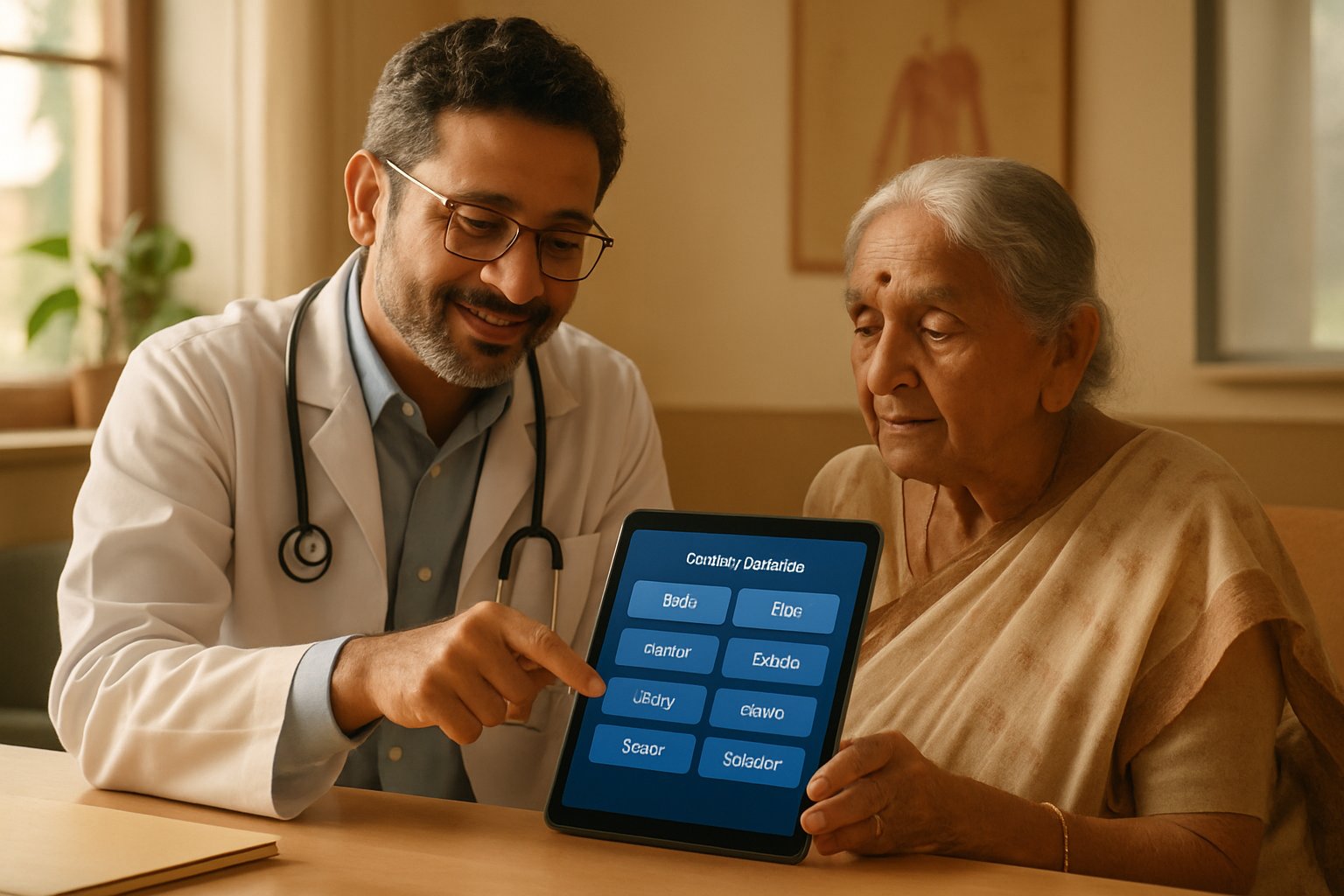
India’s latest digital push is quietly reshaping public health. Specifically, the government has folded its BHASHINI language AI into major health platforms. Consequently, eSanjeevani and the wider Ayushman Bharat Digital Mission now support 22 scheduled Indian languages. This upgrade centers on Accessibility, ensuring patients interact in familiar tongues rather than defaulting to English. Moreover, officials say the move could lower clinical errors caused by miscommunication. Meanwhile, developers gain unified APIs for translation, speech recognition, and synthesis. Those capabilities rest on more than 300 AI models curated under BHASHINI. Additionally, the platform now executes about 100 million monthly inferences according to government dashboards. Observers view the rollout as a major test of large-scale NLP (Language AI) in public service. The following analysis unpacks the integration timeline, scale metrics, benefits, and unresolved challenges.
BHASHINI Language AI Mission
Launched in July 2022, BHASHINI serves as the National Language Translation Mission. However, the project delivers far more than static translation. It bundles text, speech, and converse APIs into an open Digital Public Infrastructure layer. Therefore, ministries and private innovators can plug vernacular features into apps with minimal code rewrites.
The stack currently exposes over 300 reusable models covering text-to-text, speech-to-text, and text-to-speech. In contrast, comparable commercial services rarely optimize for low-resource Indian dialects. MeitY officials emphasise open benchmarks, sandbox testing, and community datasets exceeding 1,200 curated corpora. Subsequently, BHASHINI crossed the symbolic threshold of 100 million inference calls each month. These fundamentals position the mission as the backbone for health-focused NLP (Language AI) experiments.
In brief, BHASHINI supplies scalable vernacular tooling. Consequently, health agencies can build multilingual workflows without recreating base models.
Health Platforms Integration Progress
eSanjeevani sits at the center of India’s telemedicine push. Furthermore, official dashboards list almost 280 million cumulative consultations across its two service variants. Beginning late 2024, C-DAC engineers started weaving BHASHINI translation into patient chat modules. Subsequently, community health officers can now receive symptom descriptions in local scripts, yet view English summaries. Meanwhile, the Ayushman Bharat Digital Mission is adopting identical APIs for health record metadata.
Another milestone arrived when the rural eGramSwaraj portal became multilingual on 14 August 2024. Although not health specific, that proof reinforced confidence for medical adoption. Additionally, UNFPA’s JustAsk! adolescent health chatbot now handles Hindi, Bengali, Marathi, and more through BHASHINI connectors. Officials claim the tool doubled engagement within three months. Accessibility thus improves at each digital touchpoint, from appointment booking to post-consultation guidance.
Collectively, these deployments illustrate steady momentum. Nevertheless, module-level coverage still differs across speech and text layers. The numbers behind that momentum warrant closer scrutiny.
Scale And Impact Numbers
Telemedicine adoption places unique stress on translation systems. Moreover, eSanjeevani processed roughly 135.9 million sessions during 2024 alone. At projected growth, consultations may surpass 150 million by 2025. Consequently, even marginal efficiency gains ripple across millions of clinical minutes. BHASHINI’s current throughput of 100 million monthly inferences therefore appears sufficient for near-term demand.
Key statistics underline the programme’s breadth.
- 22 scheduled languages covered for text translation today.
- 100 million inferences executed every month on BHASHINI APIs.
- 300+ AI models and 1,200 domain datasets available to developers.
- eSanjeevani cumulative users approaching 280 million patients.
Importantly, these counts intersect with Accessibility goals in underserved regions. In contrast, earlier vernacular pilots never reached statewide scale. Therefore, numbers suggest the integration has moved beyond proof-of-concept status.
These metrics frame language AI as an integral utility. Subsequently, qualitative benefits deserve equal focus. Patient outcomes offer that qualitative lens.
Benefits For Patient Accessibility
Medical jargon already confuses laypersons, especially when delivered in an unfamiliar language. Consequently, BHASHINI driven interfaces supply immediate translations for prescriptions, diagnoses, and consent forms. Voice-based modules further read those outputs aloud, supporting elders and low-literacy communities. Moreover, early pilots like Voice Rx show 30% faster dispensing because pharmacists skip manual rewriting. Patients report improved Accessibility when chatbots clarify dosage schedules in regional phrases. This multilayer Accessibility bridges digital divides across generations.
Clinicians also gain confidence. In contrast, prior patchy translations demanded extra consultation time. Now, automatic summaries appear alongside original text, allowing quick verification. Additionally, structured translation logs create audit trails for medico-legal compliance. Such features illustrate how NLP (Language AI) transcends communication to enhance clinical safety.
Ultimately, better comprehension raises adherence and satisfaction. However, benefits mean little without trustworthy governance. The next section weighs those concerns.
Risks And Governance Challenges
Every health innovation carries downsides. Firstly, mistranslations can endanger patients when dosage units shift or contraindications vanish. Therefore, regulators insist on human-in-the-loop review for critical content. Nevertheless, resource constraints may tempt clinics to skip checks. MeitY has responded with sandbox guidelines and error benchmarks per language pair.
Data privacy forms a second fault line. India’s new DPDP Act mandates consent, purpose limitation, and fiduciary duties. Consequently, BHASHINI integrations within ABDM must encrypt payloads and maintain purpose tags. Atlantic Council analysts further warn about transparency in model training data. Moreover, dialect bias could erode Accessibility if minority variants perform poorly.
Governance gaps remain manageable with rigorous testing. Subsequently, capacity building for developers becomes essential. Industry programs offer structured upskilling routes.
Next Steps And Outlook
Several technical and policy threads still require closure. For example, speech-to-speech coverage has not yet hit the full 22 language mark. Meanwhile, C-DAC must publish module-level roll-out calendars for both eSanjeevani variants. Moreover, public evaluation reports on medical translation quality would strengthen confidence. Developers can prepare by adopting robust MLOps and evaluation harnesses.
Upskilling also accelerates safe deployment. Professionals can enhance their expertise with the AI Project Manager™ certification. Consequently, teams gain shared vocabulary around risk controls, bias testing, and data protection. NLP (Language AI) communities may also contribute open benchmarks through BHASHINI’s model repository. Accessibility improvements will then consolidate rather than fragment.
In sum, the roadmap depends on transparent metrics and skilled personnel. Therefore, momentum appears sustainable. The final section distills key insights.
India’s health digitization continues to mature through strategic language AI integration. BHASHINI now anchors multilingual workflows for eSanjeevani and complementary ABDM services. Moreover, scale metrics indicate readiness for national load. Nevertheless, governance diligence remains pivotal to protect patients and data. Accessibility gains already visible can expand if quality benchmarks and audits keep pace. Therefore, stakeholders should engage with open sandboxes, publish evaluations, and adopt certified project management practices. Explore the linked certification and advance Accessibility in India’s inclusive, safe, and scalable healthcare technology.


