

AI CERTs
3 months ago
Semiconductors Shortfall Hits AI Titans
Record AI demand has collided with finite factory space. Consequently, Taiwan Semiconductor Manufacturing Co. (TSMC) has warned Nvidia and Broadcom that 2026 capacity will not meet their full requests. The disclosure rattled investors because it underscores how Semiconductors production, not algorithms, now sets the pace of artificial-intelligence growth. Moreover, the warning exposes persistent Supply Chain bottlenecks even after a multiyear investment boom.
Industry veterans expected wafer shortages. Nevertheless, TSMC’s note highlights packaging as the sharper choke point. Therefore, engineers and procurement leaders must reassess timelines, budgets, and diversification plans immediately.
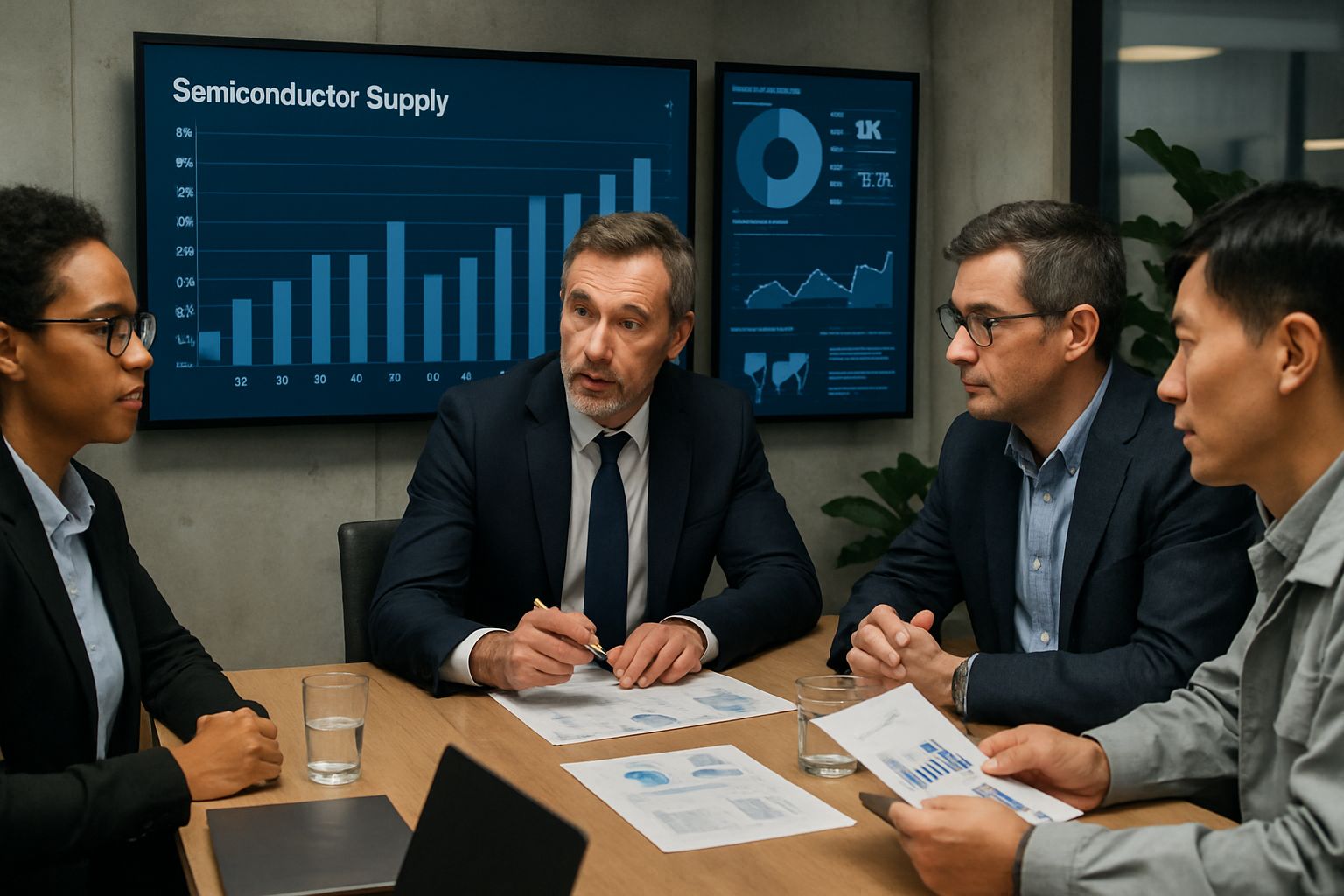
AI Demand Outpaces Capacity
Nvidia shipped more than one million H100 units in 2025. Meanwhile, hyperscalers locked future slots for updated B100 and TPU generations. Consequently, TSMC’s advanced node utilization reached 95% during Q4 2025. The foundry derived 55% of wafer revenue from high-performance computing, dominated by AI accelerators.
Analysts cite three reinforcing factors fueling demand:
- Generative-AI model sizes keep doubling every ten months.
- Cloud providers race to build sovereign clusters for each region.
- Enterprise proofs of concept are rapidly moving to production.
TSMC still produced 33.73 billion USD in Q4 revenue. However, executives admitted orders exceeded available slots. Semiconductors output will expand, yet lead times stretch toward 50 weeks for top modules.
These dynamics illustrate a widening gap. However, the next section explains why capacity cannot scale overnight.
Packaging Bottleneck Limits Output
Many outsiders equate foundry capacity with silicon wafers. In contrast, modern AI accelerators require CoWoS or similar 2.5D packaging. This back-end stage integrates high-bandwidth memory directly on interposers.
TrendForce estimates TSMC increased monthly CoWoS throughput from 15,000 wafers in 2023 to almost 80,000 by late 2025. Nevertheless, the queue remains oversubscribed through 2026. Furthermore, specialty substrate supply and HBM stacks lag wafer growth, creating a compound constraint across the Supply Chain.
Semiconductors leaders acknowledge that packaging tools differ from lithography lines. Consequently, additional clean-room space, bonding gear, and skilled operators are required. Each expansion round takes 12-18 months to qualify.
The bottleneck will restrain finished GPU shipments. Nevertheless, TSMC’s record capex signals an aggressive response, detailed below.
Capex Surge Targets Expansion
TSMC committed 52-56 billion USD for 2026 capital expenditure. Approximately 70-80% funds advanced nodes such as 3 nm, while up to 20% finances packaging ramps. CEO C.C. Wei told analysts the figure is “indispensable” for supporting customers’ growth curves.
Key allocation highlights include:
- New CoWoS lines in Taichung and Kaohsiung plants.
- Additional 3 nm capacity at Fab 18.
- Backend automation upgrades that shorten test cycles.
Moreover, suppliers like ASE and Amkor receive parallel tooling orders. Consequently, a broader ecosystem lift is underway. Semiconductors investors view the spending as proof of sustainable earnings.
Still, expansion cannot erase shortages instantly. The next section explores how customers adapt right now.
Customer Reactions And Strategies
Nvidia CEO Jensen Huang personally visited Taiwan in November 2025. He publicly pressed for more wafers but acknowledged the physical limits. Broadcom, which co-designs Google TPU dies, voiced similar concerns. Consequently, both firms pursue multiple mitigation steps.
Current tactics include:
- Pre-paying for multi-year packaging slots.
- Redesigning modules to reduce interposer area.
- Exploring alternate OSAT capacity in Korea and the United States.
Hyperscalers also stagger model rollouts to match delivery waves. Additionally, procurement teams monitor geopolitical risks because nearly all advanced packaging remains in Taiwan.
These moves demonstrate buyer urgency. However, alternative manufacturing paths hold promise, as explained next.
Alternative Paths And Risks
Intel Foundry Services markets EMIB and Foveros packaging as complementary to CoWoS. Samsung offers in-house Interposer-Cube technology. Furthermore, several OSATs plan 2026 capacity expansions. Semiconductors buyers welcome diversification, yet technical hurdles persist.
First, design migration requires new physical-verification flows. Secondly, thermal envelopes differ across packaging stacks. Additionally, qualification cycles may extend by six months. Nevertheless, early adopters report encouraging results for mid-range accelerators.
Professionals can enhance their expertise with the AI Foundation™ certification to evaluate these trade-offs effectively.
Diversification reduces geopolitical exposure. Yet, long-term success still depends on synchronized Supply Chain investments. The upcoming outlook section quantifies that timeline.
Outlook Through Twenty Eight
TrendForce forecasts monthly CoWoS capacity surpassing 140,000 wafers by late 2027. Meanwhile, memory vendors ramp HBM4 lines in parallel. Consequently, aggregate accelerator availability should improve from mid-2027 onward.
However, AI workloads will escalate. Goldman Sachs projects global AI server spend hitting 200 billion USD in 2028, up from 68 billion USD last year. Therefore, the equilibrium may remain fragile even after expansions.
Semiconductors dominance will hinge on integrated wafer-plus-packaging roadmaps. Customers that lock allocations early should secure competitive advantages. Others risk prolonged lead times.
These projections underline both optimism and caution. A concise summary follows next.
Key Takeaways And Action
TSMC’s capacity signal confirms fundamental supply tension. Packaging, not lithography, is the gating factor. Consequently, capital commitments, design flexibility, and strategic partnerships become critical levers.
Decision-makers should:
- Book multi-year slots across multiple vendors.
- Invest in design portability to alternate packages.
- Track geopolitical developments affecting the Supply Chain.
Semiconductors stakeholders that act early will mitigate disruption. Conversely, delayed moves may forfeit market windows. The final section distills these insights and recommends next steps.
Conclusion And Next Steps
TSMC’s warning spotlights a historic inflection. AI growth now depends on balanced Semiconductors manufacturing and packaging throughput. Furthermore, record capex and emerging alternatives offer relief, yet timelines remain tight. Consequently, engineers, investors, and policymakers must coordinate bold, immediate actions.
Nevertheless, knowledge remains the most scalable asset. Therefore, deepen your technical command and strategic foresight with industry credentials. Explore the linked certification and position yourself to navigate the next wave of AI hardware evolution.


