

AI CERTs
2 months ago
India-UAE Infrastructure Pact Spurs AI
The 19 January 2026 meeting between Prime Minister Narendra Modi and President Sheikh Mohamed bin Zayed signalled a pivotal shift. Consequently, the two leaders agreed to co-develop a supercomputing cluster in India, deepen data-centre investment, and explore digital embassies. The announcement cements a high-stakes Infrastructure collaboration that could redefine regional compute capacity. Moreover, analysts frame the initiative as a Strategic Alliance marrying UAE capital with India’s vast talent pool.
India currently hosts 151 data centres. However, national AI ambitions demand far larger horsepower. The UAE, meanwhile, is funding gigawatt-scale facilities such as G42’s Stargate campus. Therefore, the new pact promises mutual advantage. It also sets an ambitious bilateral trade target of US$200 billion by 2032 alongside a 10-year LNG supply deal.
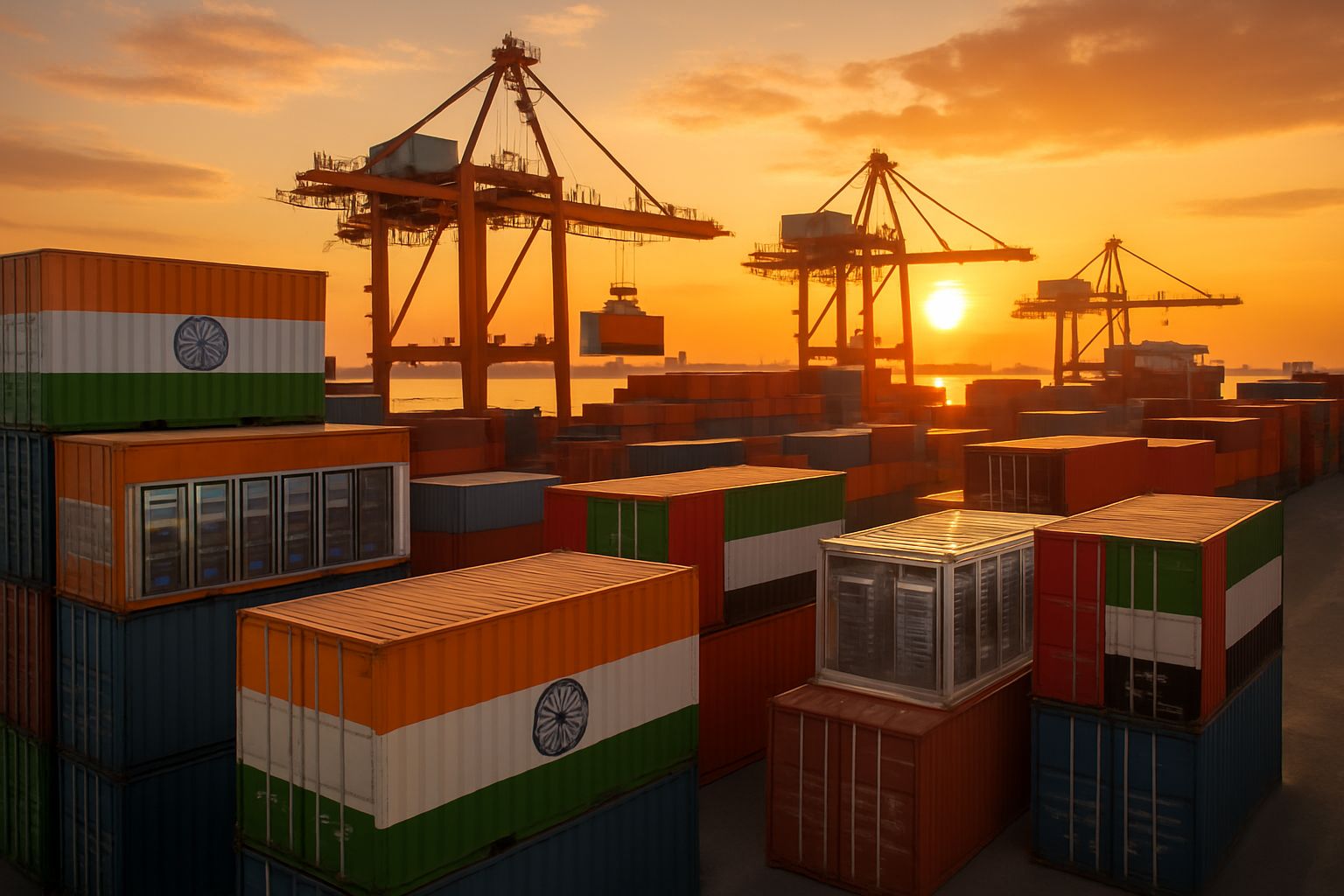
Deal Signals Tech Shift
The joint statement welcomed collaboration on an India-based supercomputing cluster. Subsequently, officials identified C-DAC and UAE-owned G42 as prospective technical partners. Foreign-secretary briefings emphasised AI as a “priority area” for both economies. In contrast, earlier MoUs only scoped possibilities; this week’s accord fast-tracks delivery.
Leaders also tasked teams to examine digital embassies. Such arrangements host sovereign data abroad under specialised legal frameworks. Nevertheless, diplomats cautioned that governance details remain under discussion. The Strategic Alliance now enters an execution phase demanding detailed design, financing, and regulatory clarity.
These decisions underline geopolitical intent. Furthermore, the pact diversifies India’s Infrastructure partners beyond traditional Western vendors.
Planned Compute Capacity Roadmap
The February 2024 MoU set exploratory targets: up to 2 GW of data-centre power and 8 exaflops of AI compute. Although January’s statement avoided exact numbers, officials confirmed those metrics still guide engineering teams. Consequently, the proposed cluster would rank among the world’s most powerful.
Scaling To Eight Exaflops
Eight exaflops equals one quintillion floating-point operations every second. Moreover, maintaining that throughput demands thousands of high-end GPUs, petabytes of fast storage, and ultra-low-latency networking. Energy analysts estimate multi-hundred-MW consumption, rivaling small cities.
UAE experience matters here. G42’s Stargate UAE will deliver a 1 GW cluster, with a 200 MW first phase completing in 2026. Therefore, engineering know-how, supplier relationships, and financing instruments can migrate to India. However, export controls on advanced chips remain a live risk.
Key technical milestones include site selection, power purchase agreements, and cooling design. Subsequently, procurement of accelerators, optical interconnects, and software stacks will follow. The Strategic Alliance must synchronise these threads to meet projected launch windows.
These roadmap elements demonstrate scale and complexity. Meanwhile, success could vault India into the global top tier of AI Infrastructure.
Investment And Governance Model
Financial structuring remains fluid. Nevertheless, officials hint at a blended model combining sovereign funds, private equity, and concessional state support. UAE’s Ministry of Investment and India’s MeitY lead negotiations, while commercial terms will shape access pricing for academia and industry.
Data Embassy Concept Explained
Digital embassies place critical workloads on foreign soil yet under home-state jurisdiction. Consequently, they raise sovereignty, cyber-security, and law-enforcement questions. Legal experts argue new treaties are required to protect encrypted assets and clarify dispute resolution.
Governance also covers chip allocation, research quotas, and intellectual-property rights. Moreover, carbon reporting frameworks will test transparency commitments. The partners must craft policies that reassure both democratic oversight and investor expectations.
Robust governance can unlock broad benefits. In contrast, weak rules could deter global clients from trusting the Infrastructure.
Key Risks And Challenges
Energy And Supply Constraints
High-performance clusters draw massive power and water for cooling. Consequently, site planners must secure renewable sources or risk public backlash. Additionally, advanced Nvidia or AMD accelerators face export-control hurdles that could delay deployment. Political shifts in Washington or Brussels may tighten regulations on technology flows to Abu Dhabi affiliates.
Cyber-security is another concern. Moreover, shared facilities increase the attack surface for state-sponsored actors. Therefore, zero-trust architectures and continuous monitoring become indispensable.
- Power demand: potential 2 GW across facilities
- Hardware lead times: 12-18 months for top GPUs
- Projected emissions: hundreds of kilotonnes CO2 annually without mitigation
These factors could inflate budgets and timelines. Nevertheless, proactive planning can contain risk and protect the Strategic Alliance.
Market And Talent Gains
Industry analysts forecast India’s internet economy hitting US$1 trillion by 2030. Furthermore, easy access to domestic supercomputing would empower start-ups, researchers, and public agencies. Lower latency and data-residency compliance could unlock sensitive use cases in healthcare, finance, and defence.
For UAE investors, the venture diversifies portfolios and extends soft power. Meanwhile, Indian engineers gain hands-on exposure to hyperscale operations, strengthening the local skills pipeline. Professionals can enhance their expertise with the AI Developer™ certification, aligning competencies with forthcoming job demand.
These gains reinforce long-term competitiveness. Consequently, the Infrastructure partnership may catalyse broader technology trade across the Indo-Abrahamic corridor.
Immediate Next Steps Timeline
Official teams will finalise feasibility studies within six months. Subsequently, funding structures and site selections are expected by year-end. Construction on the first data-hall could begin in early 2027, targeting partial operations by 2028.
MeitY plans stakeholder consultations covering security, access pricing, and environmental standards. Additionally, G42 aims to replicate its vendor consortium model that includes OpenAI, Oracle, Nvidia, and Cisco. Independent observers urge transparent milestones to maintain investor confidence.
These timelines provide a pragmatic pathway. However, sustained political commitment will determine whether the Strategic Alliance meets its transformative potential.
The India–UAE supercomputing collaboration illustrates how modern Infrastructure diplomacy blends technology, finance, and strategy. Moreover, the partnership aspires to deliver world-class compute, strengthen bilateral trade, and nurture skilled talent. Nevertheless, energy, governance, and supply-chain risks require vigilant management. Consequently, policymakers and industry leaders should monitor progress and engage proactively. For professionals, now is the time to upskill, pursue recognised certifications, and position for opportunities arising from this landmark venture.


