

AI CERTs
3 months ago
AI Drug Approval: FDA Trial Breakthrough Redefines Discovery
A historic AI Drug Approval moment is unfolding in pulmonary medicine. The United States Food and Drug Administration has cleared rentosertib for Phase II testing. Consequently, Insilico Medicine now holds the first end-to-end generative molecule with randomized clinical data. Nature Medicine published the 71-patient study showing a positive lung function signal. Meanwhile, venture capital and pharmaceutical strategists are reassessing timelines and risk models. This article unpacks the science, regulatory nuances, and market implications behind the headline. Furthermore, it evaluates opportunities for professionals seeking specialized skills. Nevertheless, caution persists because larger confirmatory trials remain essential. Experts highlight that early gains do not guarantee ultimate market authorization. In contrast, accelerated discovery could broaden pipelines across fibrosis and oncology. Therefore, comprehending the milestones and caveats is vital for informed strategic planning. Subsequently, we delve into discovery timelines, clinical evidence, and competitive dynamics. Finally, actionable insights guide readers toward continuous learning and certification pathways. Each section follows strict data sourcing to maintain analytical rigor.
AI Drug Approval Impact
Rentosertib targets TNIK, a kinase newly linked to idiopathic pulmonary fibrosis. Moreover, the molecule progressed from target discovery to human dosing in under 30 months. Such compression contrasts with traditional decade-long cycles. Consequently, analysts call the progress a tangible validation for AI Drug Approval momentum.
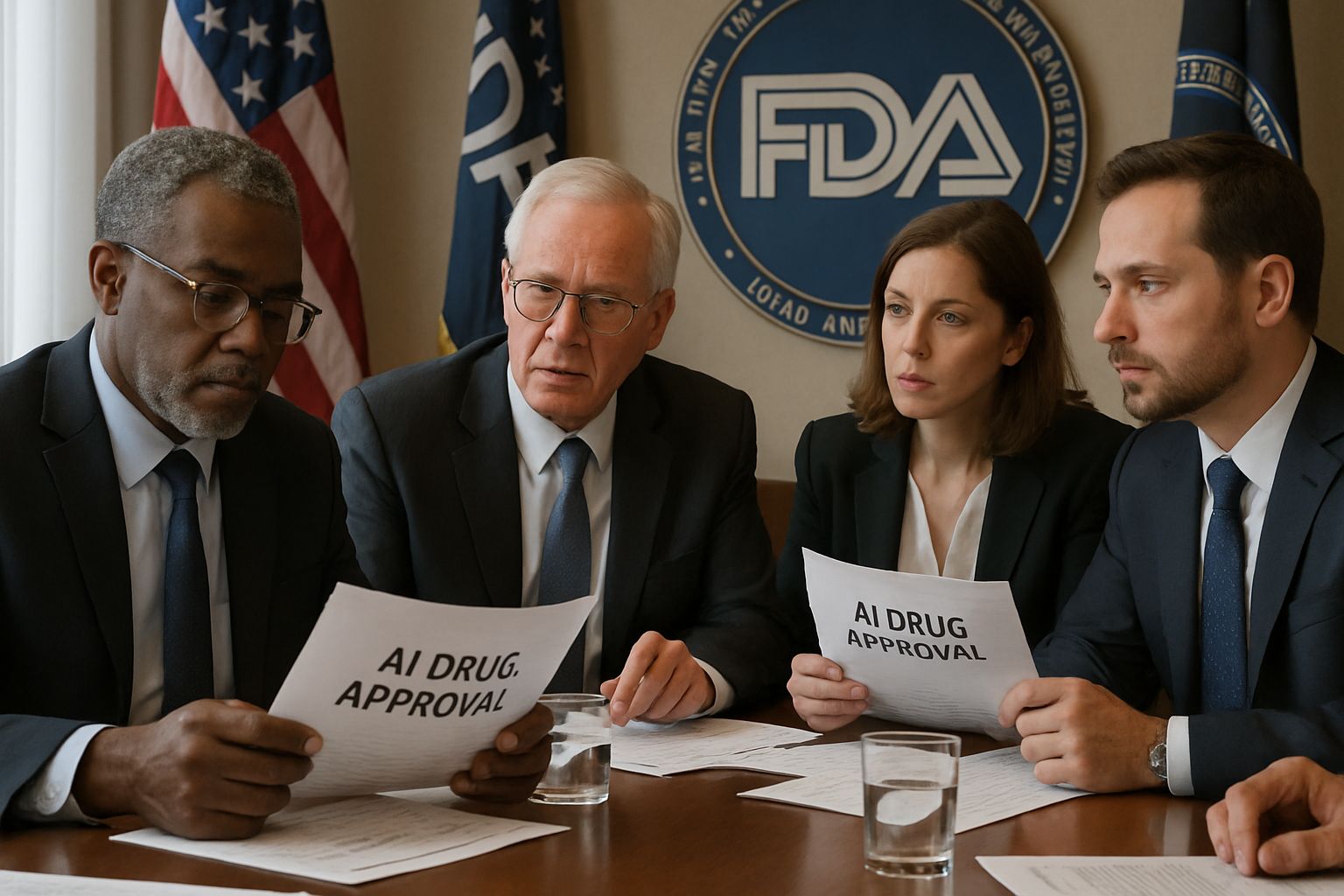
Early patient data hint at clinically relevant lung function preservation. However, broader studies will decide whether promise translates into practice, as explored next.
Generative Discovery Timeline Process
Insilico employed PandaOmics for target identification across multi-omics and literature datasets. Additionally, Chemistry42 generated millions of virtual molecules and prioritized synthesizable candidates. The winning scaffold required only 80 synthesized analogs before preclinical nomination. Therefore, the workflow shortened wet-lab iteration and reduced cost burn.
These efficiencies form the economic backbone for investors betting on AI Drug Approval projects. Meanwhile, attention shifts toward clinical evidence, detailed in the next section.
Phase Findings Explained Clearly
The Nature Medicine paper reports the randomized Phase 2a results for 71 IPF patients. Consequently, the 60 mg once-daily arm gained 98.4 mL FVC versus a 20.3 mL decline on placebo. Moreover, the FDA Trial identifier NCT05938920 documents every protocol detail. Safety events occurred at similar rates across all arms. Nevertheless, the study lasted only 12 weeks, limiting durability insights.
- 30 mg once daily: +34.1 mL FVC
- 30 mg twice daily: +46.2 mL FVC
- Placebo arm: −20.3 mL FVC
Collectively, the dose-response trend strengthens biological credibility. In contrast, statistical power remains modest, guiding regulators toward further trials covered next.
Regulatory Path Nuances Explained
Reporters sometimes misinterpret IND clearance as full drug approval. However, the FDA merely permits the clinical plan when no hold is issued. Orphan Drug Designation adds seven years exclusivity upon market approval. Furthermore, rentosertib secured that designation in February 2023 for idiopathic pulmonary fibrosis.
The company also launched a parallel FDA Trial in the United States alongside an overseas cohort. Consequently, data diversity may support future regulatory filings, as we discuss in broader context next.
Industry Context Overview Today
Insilico competes with Exscientia, Recursion, and Isomorphic Labs for AI leadership. Moreover, Exscientia already advanced DSP-1181 and other molecules into human testing. In contrast, DeepMind's spin-out focuses on antibody and small-molecule structure prediction. Capital continues flowing, illustrated by Isomorphic's recent $600 million raise.
- Shorter target discovery cycles
- Reduced synthesis requirements
- Early AI Drug Approval credibility
Collectively, these trends create opportunity yet intensify competition. Therefore, risk management remains pivotal, leading into a discussion of opportunities and challenges.
Opportunities And Risks Ahead
Generative design could rescue stalled pipelines by resurfacing overlooked targets. Additionally, data-centric workflows allow iterative model improvement across therapeutic areas. Professionals can enhance their expertise with the AI+ Data Robotics™ certification. Nevertheless, algorithmic bias, limited clinical data, and reproducibility gaps threaten value realization.
Meanwhile, lessons from each FDA Trial iteration refine safety monitoring algorithms. Investors demand stronger endpoints before pricing in future AI Drug Approval revenues. Subsequently, cross-disciplinary teams must integrate pharmacology, statistics, and ethics. The following section outlines practical pathways for such collaboration.
Future Outlook Actions Required
Multiple Phase 2b and Phase 3 studies are planned for 2026 and 2027. Consequently, definitive efficacy and long-term safety will emerge within three years. AI Drug Approval opportunities hinge on meeting those stringent endpoints. Moreover, platform providers must publish transparent datasets to foster trust.
Governance frameworks should clarify responsibility when automated design choices fail. In contrast, successful late-stage data could reformulate pharma valuation models overnight. Therefore, companies are building modular, auditable pipelines today. These strategic moves close the current innovation gap. Finally, leaders must prepare actionable roadmaps, as summarized below.
Rentosertib's progress signals a watershed for computational chemistry and clinical translation. However, rigorous evidence beyond Phase II remains compulsory. Generative methods shaved years off discovery, yet patient outcomes still dictate success. Consequently, firms pursuing AI Drug Approval must invest equally in trial execution and transparency. Meanwhile, regulators grow comfortable with algorithm-aided submissions, provided documentation matches traditional standards. Professionals can stay competitive by mastering data robotics and monitoring each FDA Trial milestone closely. Therefore, explore certification pathways and deepen interdisciplinary skills today. Start with the linked program and position yourself for the coming wave of AI Drug Approval breakthroughs. Such preparation ensures readiness when the next AI Drug Approval candidate reaches pivotal readout.


