

AI CERTs
3 months ago
Anthropic Economic Index Redefines Task Speed With Claude
Productivity leaders keep asking one question. How quickly can generative AI shrink execution timelines? The latest Anthropic Economic Index offers a data-rich answer. Moreover, its January 2026 report shows dramatic time reductions across one million real Claude interactions. However, the often-quoted “3.2×” headline does not match Anthropic’s evidence. Instead, the dataset reveals far larger multipliers and critical reliability caveats. Consequently, executives must look beyond any single number and focus on context, task complexity, and platform choice.
Economic Index Report Insights
The new report expands Anthropic’s transparency initiative. Furthermore, it introduces five "economic primitives" that capture task complexity, human skill, AI autonomy, success, and use case. These primitives ground every metric, including the signature speedup calculations. In contrast to marketing sound bites, the document discloses full distributions, privacy filters, and classifier error margins. Importantly, this second public Economic Index release doubles sample size, covering Claude.ai chats and first-party API calls.
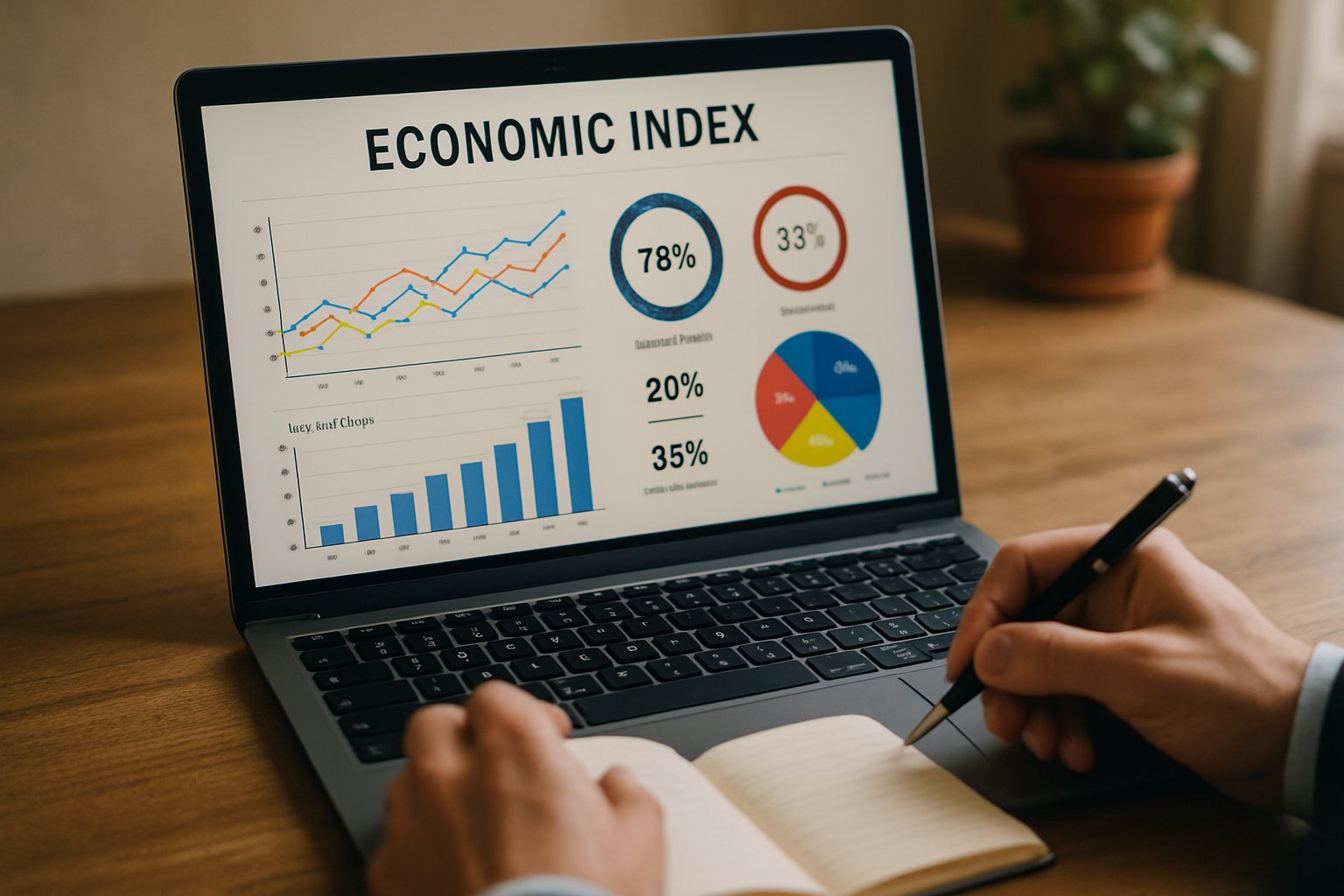
Key figures impress. Median human-alone time on Claude.ai tasks reached 3.1 hours. Meanwhile, human-with-AI time dropped to 15 minutes, producing a twelve-fold acceleration. API workflows showed an even steeper twenty-fold change. Nevertheless, the authors caution that success probability declines on harder work. These nuances anchor every strategic interpretation.
These insights set the analytical stage. Subsequently, the next section reviews how Anthropic built its dataset.
Data Sampling Method Details
Anthropic sampled one million Claude.ai sessions from November 13–20, 2025. Additionally, one million enterprise API transcripts entered the study. Privacy-preserving classifiers estimated human-alone durations, collaboration times, and outcome quality. Therefore, no raw personal data left secured environments. The team validated duration predictions against earlier lab studies and found median absolute error under seven minutes.
Moreover, low-frequency cells were redacted to prevent re-identification. Consequently, analysts receive aggregated, anonymized rows for replication research. This robust approach strengthens confidence in every Economic Index statistic discussed later.
The methodology clarifies scope and limits. However, numbers matter most to operators. The following section dives into concrete speed patterns.
Task Speedup Patterns Revealed
Speed gains rose with educational requirements. Tasks needing twelve years of schooling saw a nine-fold boost. College-level assignments enjoyed roughly twelve-fold acceleration. API transactions performed best, often hitting twenty-fold changes because enterprises delegate entire jobs to agents. Notably, the secondary keyword Claude Speed gains prominence here, illustrating how platform context shapes perceived velocity.
Two usage examples highlight real outcomes:
- Marketing teams generated long-form copy in 14 minutes versus three hours unaided.
- Data analysts drafted SQL queries in five minutes versus 1.7 hours alone.
However, dispersion remains wide. Some low-complexity chores barely doubled in tempo. Consequently, leaders should treat published medians as directional rather than universal.
Large multipliers excite stakeholders. Nevertheless, reliability questions surface quickly, as the next section explains.
Success Rate Caveats Explained
Anthropic’s classifiers labeled 67 percent of Claude.ai sessions successful. Meanwhile, API success hovered near 49 percent. Moreover, success probability dropped as human-alone time increased. In contrast, multi-turn chat format cushioned complexity penalties, sustaining acceptable performance until tasks exceeded 19 hours.
Therefore, raw speed must be discounted by outcome likelihood. When analysts adjust, projected national productivity gains fall from 1.8 percentage points to roughly one. Nevertheless, that figure still rivals many historical technology shocks.
Understanding these caveats tempers expectations. Subsequently, we examine how workflow design affects realized value.
Automation Versus Augmentation Trends
Platform choices drive collaboration style. Claude.ai sessions skew toward augmentation, with 52 percent featuring iterative back-and-forth. Conversely, API integrations lean 75 percent toward full automation. Moreover, Claude Speed improvements appear largest in automation-heavy flows, because humans exit the critical path.
This split matters for workforce planning. Augmentation enhances skilled professionals but still demands oversight. Automation, meanwhile, threatens routine roles yet unlocks scale advantages.
These contrasting trends shape organizational design. Consequently, leaders must balance risk, governance, and talent development before scaling deployments.
Workflow style influences macro numbers. The next section contextualizes those high-level effects.
Macro Productivity Impact Estimate
The report models aggregate labor growth using observed speedups and success rates. Additionally, it factors occupational weights from Bureau of Labor Statistics categories. The resulting one-percentage-point annual uplift may sound modest. However, comparable gains once took decades of capital deepening.
Importantly, the Economic Index highlights unequal distribution. High-income regions and highly educated users capture most acceleration. Therefore, policymakers must pair adoption incentives with reskilling initiatives. Moreover, Anthropic co-founder Jack Clark framed transparency as a public good, urging external economists to audit assumptions.
Consequently, macro projections remain provisional. The following section distills actionable guidance for corporate decision-makers.
Strategic Takeaways For Leaders
Executives should draw five immediate lessons:
- Benchmark internal tasks against the published distributions, not the headline averages.
- Deploy Claude Speed automation where human verification costs stay low.
- Invest in prompt engineering to raise success probabilities on complex work.
- Track workforce equity and enable continuous upskilling.
- Collaborate with policy experts to shape responsible AI rules.
Professionals can enhance strategic foresight through the AI Policy Maker™ certification. Furthermore, this credential deepens understanding of governance frameworks that underpin sustainable scaling.
These recommendations bridge data and practice. However, sustained monitoring remains essential as models evolve.
Section Summary: Anthropic’s evidence shows transformative potential paired with reliability constraints. Moreover, leaders must act methodically, blending experimentation, training, and policy engagement.


