

AI CERTs
3 months ago
OpenAI Acquisition of Torch reshapes healthcare
The OpenAI Acquisition of Torch, a four-person health data startup, has quickly captured industry attention.
Consequently, analysts view the move as another step in OpenAI’s aggressive healthcare expansion. Meanwhile, clinicians and policymakers weigh benefits against safety, privacy, and regulatory uncertainty.
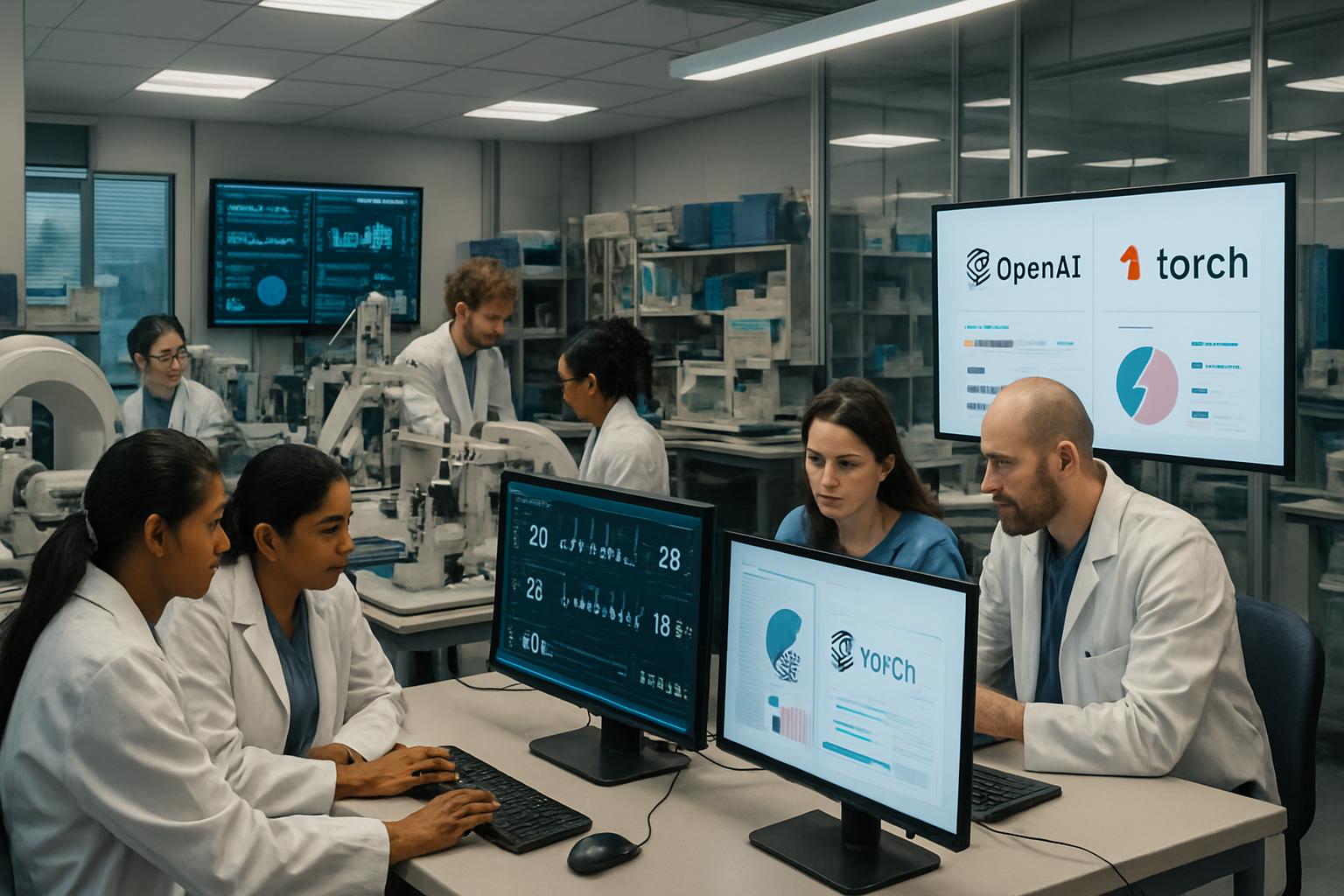
Torch built a context engine that unifies fragmented medical records for large language models. Therefore, folding that capability into ChatGPT Health could accelerate personalized, data-grounded health conversations at scale. This article dissects motives, technology, competitive context, and implications for professionals following the rapidly evolving Health AI market.
Inside The Deal Details
Press reports place the transaction price between $60 million and $100 million, with equity driving most consideration. However, neither OpenAI nor Torch has filed documents confirming an exact figure. TechCrunch cites The Information for the upper estimate, while CNBC sources mention a lower, partly upfront structure.
OpenAI confirmed the purchase on X, describing it as a talent and technology acqui-hire. Moreover, all four Torch employees will join the ChatGPT Health team. Fidji Simo, who leads consumer applications, framed the hire as a fast track for record normalization.
Independent analysts note that the OpenAI Acquisition signals serious commitment to owning the patient context layer. Consequently, the company can sidestep lengthy partner negotiations and build natively.
In summary, terms remain unverified, yet strategic intent appears unmistakable. Next, we examine why healthcare sits at the heart of this expansion.
Strategic Health Push Explained
OpenAI launched ChatGPT Health on January 7, 2026, after months of physician collaboration. Additionally, the company revealed that over 230 million weekly user interactions involve wellness or medical questions. Such volume highlights the commercial promise of advanced Health AI tooling.
By integrating Torch, OpenAI hopes to ground responses in verified lab data, medication lists, and wearable streams. Nevertheless, product leaders insist the chatbot will not diagnose or replace clinicians. OpenAI says the assistant offers education, preparation, and longitudinal insight instead.
The OpenAI Acquisition therefore aligns with a push to personalize advice and deepen platform stickiness. However, success depends on trust, regulatory clarity, and clinical validation.
These ambitions underscore a fierce strategic focus on healthcare. Yet technology alone cannot win, as competitive forces rapidly intensify.
Torch Technology Unpacked Clearly
Torch created a “medical memory” that ingests disparate clinical and consumer data feeds. In contrast, many existing integrations merely surface raw files without semantic structure. Subsequently, Torch normalizes records using standardized vocabularies before exposing them to language models.
Consequently, ChatGPT Health can reason across full histories, spotting drug interactions or lab trends in context. Health AI advocates call this longitudinal grounding crucial for safe conversational support. However, critics warn that hallucinations still lurk when models interpret imperfect inputs.
Key capabilities coming from Torch include:
- Unified ingestion of EHR, labs, wearables
- Schema mapping to HL7, FHIR standards
- Real-time context retrieval for queries
Ultimately, the OpenAI Acquisition gives OpenAI immediate access to this proprietary context engine. That edge matters greatly as rivals chase similar personalization goals. We now assess the broader competitive dynamics shaping those goals.
Market Competition Landscape Review
Anthropic recently introduced Claude Health features, while Google upgrades MedLM and Fitbit integrations. Meanwhile, smaller players like Hippocratic AI pursue specialized clinical chatbots. Therefore, acquisition activity accelerates as platforms seek differentiating data assets.
Analysts interpret the OpenAI Acquisition as pre-emptive, blocking rivals from enlisting Torch talent. In contrast, Google historically buys infrastructure scale rather than micro teams. Subsequently, competitive pressure may spur further niche purchases across the Health AI ecosystem.
Competitive dynamics underscore urgency for defensible data pipes and clinician partnerships. The discussion next turns toward regulation and privacy, factors that could reshape competition.
Regulatory And Privacy Challenges
ChatGPT Health currently avoids medical-device classification, positioning itself as an educational service. However, aggregating sensitive records raises new HIPAA and GDPR compliance questions. Alex Ruani and Dr. Elizabeth Deveny argue for independent audits and transparent safety benchmarks.
Moreover, privacy advocates fear centralization of personal context within one corporate ecosystem. Consequently, lawmakers could impose stricter consent, data residency, and liability provisions. OpenAI highlights encryption, isolated memories, and no-training defaults, yet detailed proofs remain limited.
The OpenAI Acquisition therefore magnifies scrutiny because personal data will directly feed model reasoning. Nevertheless, clear governance frameworks could convert scrutiny into competitive advantage.
Strong regulation may foster user trust if addressed proactively. With governance in mind, professionals should evaluate emerging career pathways.
Key Professional Growth Opportunities Ahead
Rapid product evolution creates fresh demand for interdisciplinary experts blending clinical knowledge, data science, and policy. Furthermore, organizations need architects who understand FHIR mapping, security, and conversational design. Certification programs can accelerate readiness for these hybrid roles.
Professionals can enhance expertise with the AI+ Government™ certification. Additionally, the OpenAI Acquisition highlights importance of governance literacy in technical leadership. Health AI roles will increasingly require audit skills alongside algorithmic insight. The OpenAI Acquisition also underscores the market value of certified regulatory strategists.
- Data interoperability specialists
- Clinical prompt engineers
- Regulatory compliance auditors
Career opportunities therefore expand across technical, clinical, and policy domains simultaneously. Next, we project how these dynamics could evolve in the coming year.
Future Outlook Analysis Ahead
Analysts expect rapid integration of Torch features into ChatGPT Health during the first half of 2026. Subsequently, international rollouts will depend on jurisdiction-specific privacy approvals. Moreover, continued investment in retrieval-augmented generation should reduce hallucination risk.
The OpenAI Acquisition could inspire parallel defensive deals among incumbents lacking longitudinal data engines. Health AI markets may consolidate around platforms offering end-to-end record aggregation and conversational agents. Nevertheless, open standards and public oversight will influence ultimate winners.
Overall, speed, trust, and data depth will define success. Professionals prepared today can thrive as the ecosystem sharpens its focus on responsible innovation.
Ultimately, the OpenAI Acquisition represents more than a headline purchase. Consequently, OpenAI gains proprietary context tooling, talent, and competitive momentum in one stroke. Torch secures a broader platform for its medical memory vision. Regulators and clinicians will, however, scrutinize every rollout for accuracy and privacy adherence. Meanwhile, users stand to benefit from richer, longitudinally aware Health AI guidance.
Nevertheless, sustained success hinges on transparency, independent validation, and robust governance. Therefore, professionals who master policy, data standards, and conversational design will be best positioned. Explore certifications, deepen cross-disciplinary skills, and join the conversation shaping next-generation digital health. Now is the ideal moment to translate emerging insights into impactful, patient-centered solutions. Act decisively to lead this transformative wave.


