

AI CERTs
3 hours ago
White House Boosts India AI Summit Planning for 2026
Global attention is pivoting toward New Delhi as planners finalize the India AI Summit scheduled for February 2026. However, the story now features a surprising partner: the White House, which has quietly shaped pre-summit strategy. Industry executives, policymakers, and researchers want clarity on what Washington’s involvement really means. Consequently, this article unpacks the multi-track collaboration, infrastructure promises, and policy debates driving the gathering.
Moreover, we highlight concrete statistics, expert opinions, and upcoming milestones. Each insight prepares professionals for critical decisions in the countdown to February’s sessions. Meanwhile, we maintain strict focus on verifiable sources to ensure reliability. Therefore, keep reading for a concise yet comprehensive roadmap.
Summit Momentum Accelerates Rapidly
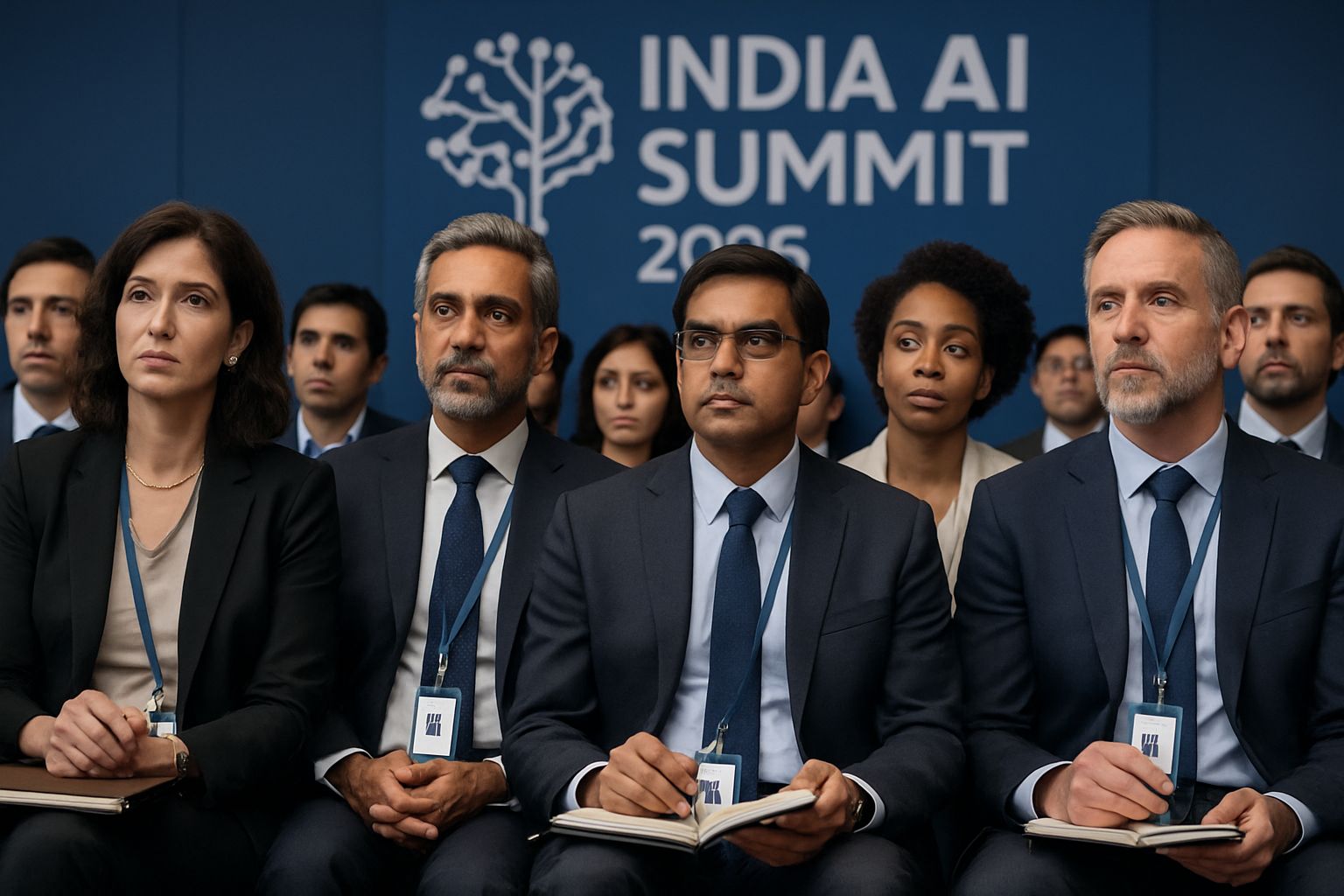
Planning for the February 19–20 India AI Summit main sessions has intensified since mid-2025. Additionally, India’s Ministry of Electronics and Information Technology confirmed dozens of pre-events between February 16 and 20. The overarching theme, "AI for People, Planet, and Progress," aligns with India’s Seven Chakras agenda. Organizers report almost 40,000 GPUs earmarked for research demonstrations during the showcase.
Furthermore, IndiaAI lists roughly 3,000 datasets and 240 tools within its AI Kosh repository. Such figures underscore the host’s ambition to display tangible, open resources. Nevertheless, observers caution that scale alone will not guarantee inclusive impact.
The summit’s timeline and assets signal serious intent. However, delivery will depend on cross-border cooperation. Consequently, attention turns to the United States.
U.S. Engagement Tracks Multiply
The White House’s presence unfolds across three parallel tracks. Firstly, the February 2025 leaders’ statement launched the TRUST initiative linking infrastructure financing to summit goals. Secondly, inter-governmental and Track-1.5 dialogues have served as official pre-summit inputs. Moreover, business groups like the U.S. Chamber coordinate delegations to shape commercial deliverables.
Meanwhile, consulate briefings in Seattle and Mountain View gathered engineers refining agenda drafts. In contrast, earlier summits often relied on last-minute industry participation. Consequently, analysts describe a more institutionalized American role than seen before.
Washington now influences agenda, finance, and private outreach simultaneously. Therefore, understanding the TRUST roadmap becomes essential. Subsequently, we unpack that framework.
TRUST Roadmap Explained Clearly
TRUST stands for Technology, Resilience, and United Secure Tech. It pledges a U.S.–India roadmap on accelerating AI infrastructure before year-end 2025. Furthermore, White House officials frame the document as a financing blueprint for compute, processors, and data centers. The roadmap’s draft, according to MeitY interlocutors, assigns milestones for public-private GPU provisioning. Nevertheless, the final text remains unpublished, heightening anticipation ahead of New Delhi announcements.
Analysts expect measurable targets on power availability, model-assurance guarantees, and open-source incentives for the India AI Summit. Moreover, negotiators seek export-control clarity to avoid supply disruptions.
The roadmap promises tangible infrastructure progress. However, missing details create policy uncertainty. Consequently, infrastructure capacity becomes the next focal point.
Infrastructure Capacity Push Intensifies
IndiaAI leaders spotlight compute shortfalls that hinder local model training. Therefore, the mission touts access to roughly 38,000–40,000 GPUs by 2026 for the India AI Summit. Additionally, 570 AI data labs and thousands of fellowships expand talent pipelines. Microsoft’s AI Diffusion Report shows national adoption at only 15.7 percent, strengthening urgency.
Key infrastructure figures:
- ~40,000 GPUs allocated for research and deployment
- 3,000 datasets and 240 tools inside AI Kosh
- 570 AI and data labs across universities
Consequently, these numbers guide investment pitches to venture funds and hyperscalers. Moreover, Google, Nvidia, and Microsoft have joined Chamber delegations to evaluate data-center sites. Nevertheless, power-grid upgrades and cooling requirements still present cost challenges.
Infrastructure plans appear ambitious yet feasible with external capital. In contrast, governance gaps could slow deployments. Subsequently, policy friction deserves closer scrutiny.
Policy Friction Points Emerge
Governance differences already complicate collaboration. The EU pursues stringent rules, while India favors adaptive regulation. Meanwhile, the White House depends on voluntary frameworks anchored in industry self-governance. Furthermore, summit advisers debate open-source access versus proprietary safeguards.
Track-1.5 conveners warn of an implementation gap if financing lags policy ambition. Moreover, model assurance guarantees remain undefined, worrying Global South delegates. Consequently, negotiators must align export controls, security reviews, and access commitments.
Divergent governance models threaten seamless partnerships. Nevertheless, structured dialogues could bridge positions. Therefore, economic incentives grow even more important.
These governance debates will dominate side events at the India AI Summit.
Economic Stakes Outlined Plainly
NITI Aayog estimates AI could add up to $600 billion to India’s GDP by 2035. Consequently, officials pitch the India AI Summit as a development accelerator, not solely a policy forum. Microsoft forecasts also highlight productivity gains once diffusion rises above 20 percent. Additionally, venture investors view sectoral deployments in health, education, and agriculture as near-term revenue paths.
For multinational firms, market share now outweighs regulatory headaches. In contrast, domestic startups hope easier compute access will lower entry barriers.
The financial upside reinforces broad participation. However, skills gaps could stall realized gains. Subsequently, professional development becomes vital.
Certification Pathways Forward Clarified
Talent shortages threaten to undermine lofty infrastructure goals. Therefore, professionals can enhance expertise with the AI Engineer™ certification. Furthermore, IndiaAI fellowship programs will complement private upskilling initiatives. Employers increasingly demand validated skills for model deployment, governance, and assurance tasks.
In contrast, generic courses seldom address emerging compliance requirements. Consequently, certification holders can command higher salaries and influence design decisions.
Skills development underpins sustainable ecosystem growth. Moreover, aligned credentials deepen bilateral talent pools. Finally, we recap main insights.
Graduates aim to apply learning during the India AI Summit hackathons.
The India AI Summit now stands at the intersection of infrastructure, governance, and talent. Moreover, the White House engagement adds political weight and potential financing muscle. Key uncertainties involve roadmap publication, export-control alignment, and power-grid readiness. Nevertheless, stakeholders recognize unprecedented momentum toward inclusive AI deployment. Consequently, readers should monitor roadmap releases, register for delegations, and pursue specialized certifications. Take action today to secure a seat at February’s most consequential technology gathering.


