

AI CERTs
6 months ago
Microsoft Anthropic spend nears $500M run rate
Azure budgets rarely create headlines, yet a fresh report now demands attention. However, industry insiders say Microsoft's latest procurement shift signals more than routine vendor diversification. The Information reports the company may spend almost $500 million annually with Anthropic. Consequently, the Microsoft Anthropic relationship has become a bellwether for enterprise AI purchasing power. This article examines the numbers, motivations, and implications behind the quiet yet massive commitment. Furthermore, it places the news within the broader context of hyperscaler competition and regulatory scrutiny. Technical leaders will gain clarity on cost dynamics, partnership terms, and future strategy. Meanwhile, Cloud Spending trends reveal how inference bills now rival traditional infrastructure budgets. Readers can also explore certification paths that strengthen decision-making in this fast-moving arena. Let's dive into the data driving this unprecedented procurement surge.
Record Spend Emerges Rapidly
The Information broke the spending story on 14 January 2026. Specifically, unnamed sources said Microsoft paid over $40 million for Anthropic models in July 2025. Therefore, analysts extrapolated an annualized run rate approaching $500 million. Moreover, that figure excludes forthcoming volume tied to new Copilot rollouts.
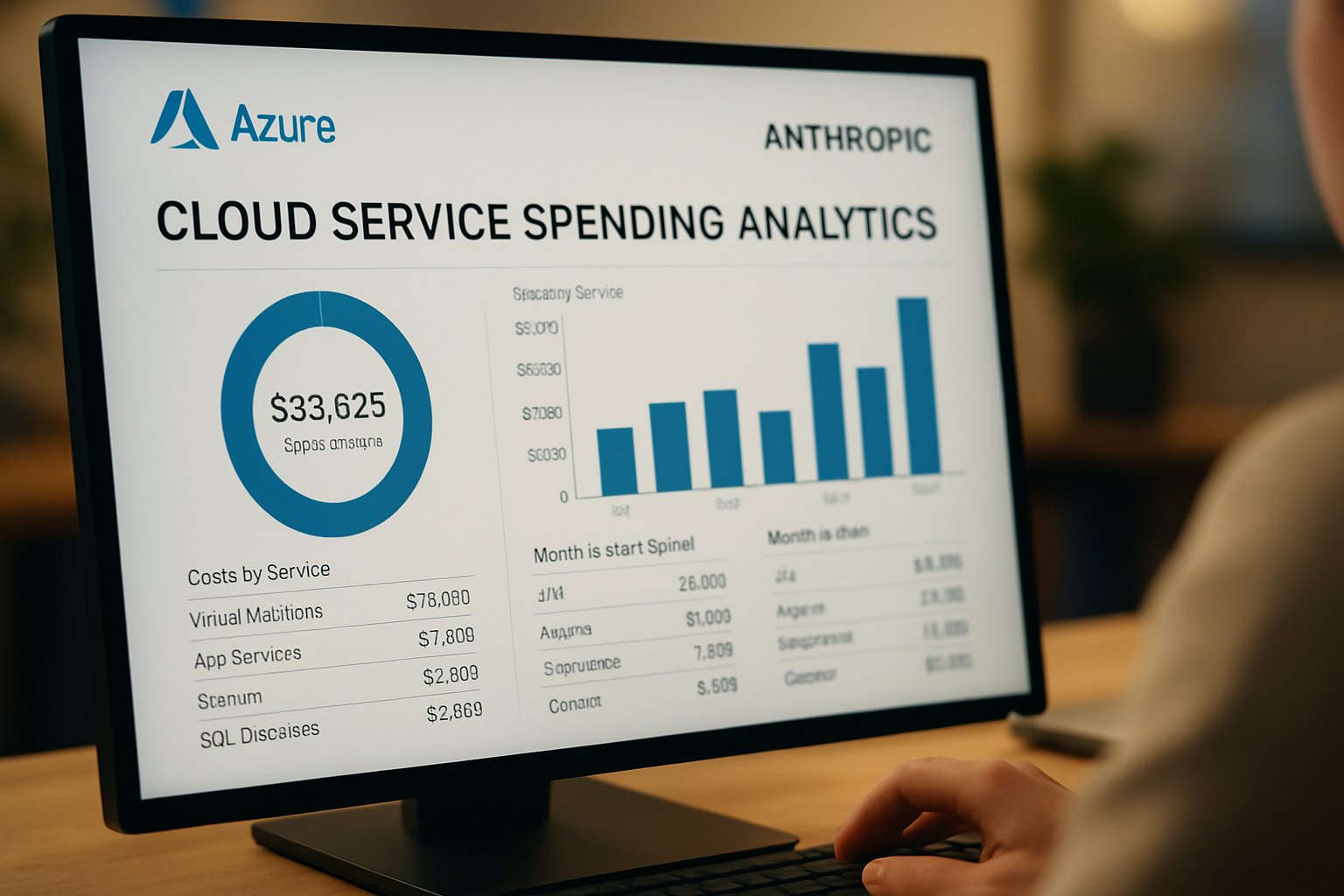
GitHub Copilot, Security Copilot, and Microsoft 365 Copilot already route select queries to Claude models. In contrast, earlier versions relied almost exclusively on OpenAI. Meanwhile, internal prototype groups reportedly consume Anthropic capacity for document reasoning and spreadsheet automation. Consequently, Cloud Spending forecasts inside Microsoft continue to rise.
Inference Cost Dynamics Explained
Training costs occur once, yet inference costs scale with every user interaction. Additionally, enterprises pay premium rates when models handle long context windows or high concurrency. Therefore, monthly bills climb quickly when a model becomes embedded in mass-market software. Microsoft Anthropic invoices reflect this compounding pattern, according to people familiar with the contracts. These numbers highlight the magnitude of ongoing inference expenses. However, partnership details offer deeper insight into future cost trajectories.
Partnership Terms Fully Explained
On 18 November 2025 the three-way Microsoft, Nvidia, and Anthropic agreement became public. Under the pact, Anthropic pledged to purchase up to $30 billion of Azure compute capacity. Meanwhile, Microsoft committed up to $5 billion in equity, while Nvidia earmarked $10 billion. Consequently, the partnership intertwines supply, demand, and capital in unprecedented fashion.
- $30 billion Azure compute commitment from Anthropic, confirmed by Microsoft blog.
- $5 billion potential Microsoft investment into Anthropic equity.
- $10 billion potential Nvidia investment alongside optimization support.
- One gigawatt of Nvidia hardware reserved for initial deployment.
- Claude models distributed to Azure customers via Foundry platform.
Moreover, Microsoft Anthropic resale incentives encourage Azure sellers to bundle Claude access with broader cloud deals. Consequently, revenue sharing differs from the structure used with OpenAI, and Microsoft retains a smaller margin. Analysts view the trade-off as acceptable if Azure customer retention improves. These contractual pillars reveal a tightly coupled commercial engine. Next, we explore the reasons Microsoft embraced a second frontier model provider.
Adoption Drivers In Focus
Product performance ranks first among motivators. According to internal tests cited by The Information, Anthropic models outperformed alternatives on coding and document reasoning. Consequently, feature teams integrated Claude to boost speed and accuracy. Additionally, multi-model routing helps mitigate latency spikes and capacity shortages.
Furthermore, Azure needs broad model choice to deter customers from sampling rival clouds. In contrast, a single-provider stack would risk churn when competitors release superior versions. Microsoft Anthropic alignment therefore supports the company's retention strategy, especially among regulated enterprises.
Commercially, reselling third-party APIs unlocks incremental usage revenue even with thinner margins. Meanwhile, Cloud Spending visibility grows because every Claude token flows through Azure metering. These drivers clarify why adoption accelerated so quickly. Nevertheless, every advantage carries associated risks, examined below.
Financial Risks Clearly Surface
Big bills inevitably invite scrutiny. Critics warn that circular financing can obscure true demand and inflate valuations. Moreover, heavy dependence on external models may compress Microsoft's gross margin. The Information notes lower take rates on Microsoft Anthropic deals versus OpenAI arrangements.
Additionally, Cloud Spending concentration could bite if adoption plateaus before pricing declines. In contrast, internal capability investments deliver more controllable cost curves over time. Consequently, CFOs monitor inference elasticity and seek contractual escape clauses.
These financial headwinds could pressure product groups to optimize prompt engineering. Meanwhile, regulators are intensifying oversight, adding another layer of uncertainty.
Regulatory Lens Widens Further
The FTC has already requested data on major generative-AI investments and partnerships. Furthermore, legislators worry that bundled compute and equity deals may hinder fair competition. As Microsoft Anthropic ties deepen, antitrust lawyers will examine exclusivity and volume discounts. In contrast, Microsoft argues that multi-model choice actually enhances market openness.
Consequently, future contracts could mandate clearer separation between procurement and venture investments. Meanwhile, European regulators monitor energy impacts because the partnership reserves one gigawatt of GPUs.
Regulatory moves create timeline risks for deployment roadmaps. Finally, executives must prepare mitigation strategies, detailed in the next section.
Strategic Outlook Ahead Now
Microsoft remains committed to a portfolio approach across OpenAI, Anthropic, and internal research. Consequently, executives view redundancy as insurance against model drift and licensing turbulence. Looking forward, Cloud Spending efficiency will influence allocation across providers. Meanwhile, the company expects Foundry distribution to offset costs through reseller margins.
Moreover, product teams continue benchmarking Claude against GPT and in-house mixtures. Leaders can validate skills via the AI Cloud Strategist™ certification. Consequently, certified architects can optimize budget forecasts and procurement frameworks.
Microsoft Anthropic collaboration will likely expand as new Copilot verticals reach general availability. Nevertheless, leadership has signaled it will renegotiate rates if usage surpasses projections. These factors suggest sustained but measured growth for the alliance. Overall, informed governance will determine whether projected returns outweigh mounting risks.
The reported $500 million run rate underscores how quickly AI procurement scales inside large ecosystems. However, investment structures, regulatory pressures, and inference economics remain fluid variables. Microsoft Anthropic cooperation has delivered performance gains yet also introduced fresh margin questions. Consequently, technology leaders must track cost per query, vendor concentration, and policy action. Additionally, upskilling through the linked certification empowers professionals to navigate these crossroads. Act today to secure expertise and guide your organization through the next generative-AI wave.
Disclaimer: Some content may be AI-generated or assisted and is provided ‘as is’ for informational purposes only, without warranties of accuracy or completeness, and does not imply endorsement or affiliation.


