

AI CERTs
3 months ago
Google Cloud’s Nvidia Blackwell Capacity Claims Examined
Rumors of a major hyperscale milestone raced through social feeds last week. Posts claimed that Google Cloud had activated 10,000 Nvidia Blackwell GPUs in a single rollout. Such headlines spark excitement because Blackwell silicon represents the most coveted AI hardware of this cycle. However, industry veterans know capacity claims warrant careful verification. Therefore, this article dissects the evidence, separates fact from speculation, and explains why the number matters. Along the way, readers gain a clear view of Google Cloud’s Blackwell portfolio and broader market dynamics. Consequently, teams planning large AI clusters can adjust expectations and choose sound procurement strategies.
Claim Under Close Review
Initial posts cited unnamed employees and an internal dashboard screenshot. Nevertheless, no official Google Cloud statement used the exact phrase “activated 10,000 Nvidia Blackwell GPUs.” Searches across press portals, investor calls, and release notes produced zero matches for that milestone. Meanwhile, NVIDIA’s newsroom also remains silent regarding a 10k Google deployment. These gaps raise authenticity questions. Therefore, the next section reviews verified primary sources.
Official Sources Thoroughly Checked
Google Cloud’s January 2025 blog introduced A4 virtual machines powered by Nvidia Blackwell B200 GPUs. Subsequently, March 2025 release notes declared A4 generally available, yet omitted any 10k figure. Further documentation lists future A4X and G4 families but again avoids explicit capacity totals. Verified texts confirm product availability, not a headline-worthy activation event. Consequently, analysts must explore broader industry data to contextualize capacity rumors.
Broader Market Context Emerging
Demand for Nvidia Blackwell chips surged throughout 2024 and 2025, overwhelming foundry allocations. Moreover, hyperscalers and sovereign clouds each placed multibillion-dollar orders chasing scarce inventory. Market researchers estimate every top cloud provider targets tens of thousands of GPUs for upcoming AI factories. High demand makes any dramatic activation claim instantly headline material. Nevertheless, capacity scale varies greatly between providers, as the next section shows.
Google Cloud Offerings Evolving
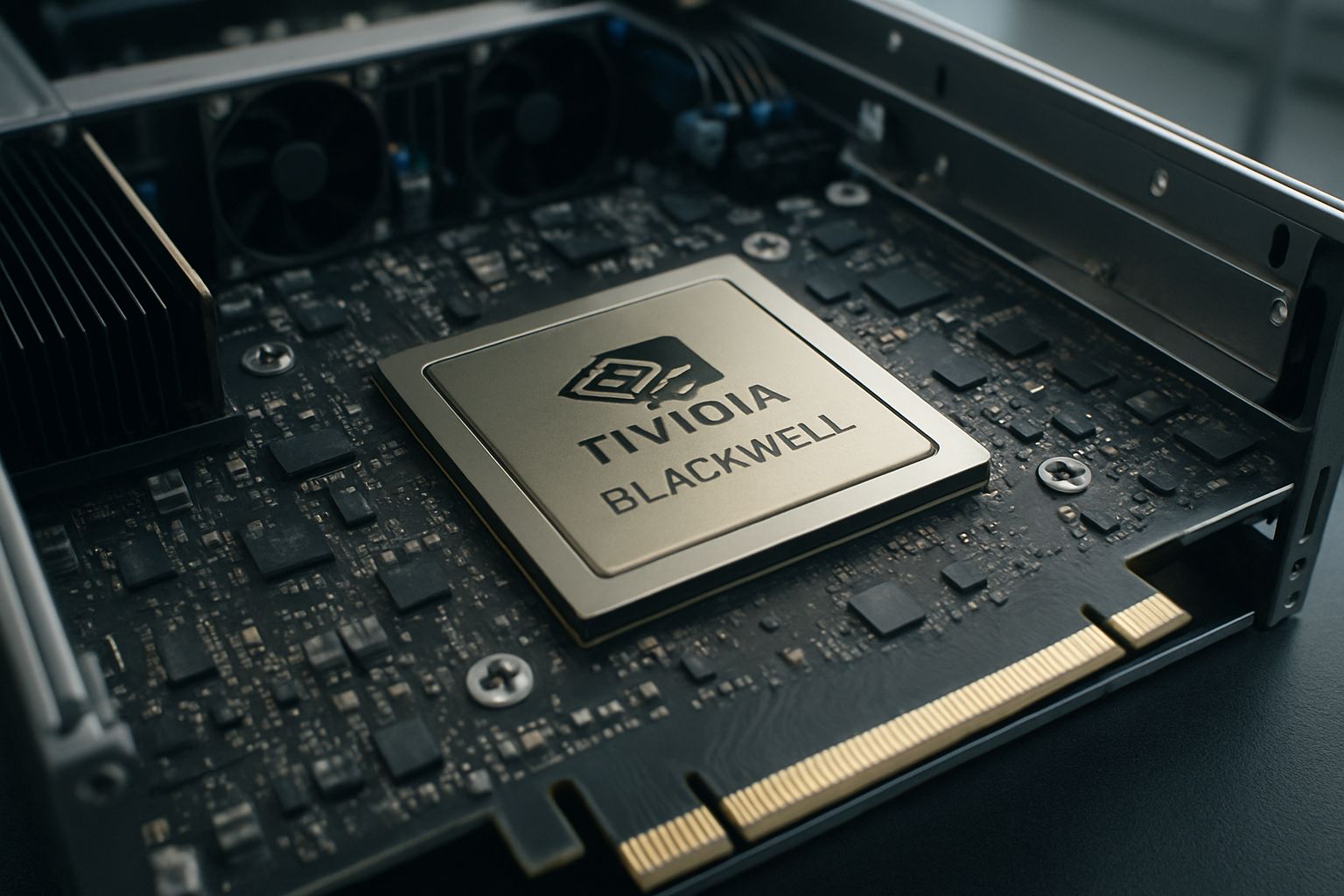
Google Cloud currently sells A4 instances built around the Nvidia Blackwell B200 accelerator. Additionally, preview customers can test A4X and A4X Max nodes based on the GB200 and GB300 superchips. Each A4 virtual machine bundles eight GPUs and links into Google’s AI Hypercomputer fabric for low-latency scaling.
- Single A4 VM: 8 Nvidia Blackwell B200 GPUs, 1.4 TB HBM
- Peak FP8 throughput: 1.8 PFLOPS per VM
- Available regions: us-central1, europe-west4, asia-east1
However, Google requires capacity reservations for clusters exceeding 256 GPUs, indicating supply discipline. These policies underscore flexible access without confirming a five-figure GPU pool. In contrast, several public projects have disclosed precise 10k deployments.
Competing 10K Deployments Landscape
The United States Department of Energy announced Equinox, a 10,000-GPU system built with Nvidia Blackwell silicon and Oracle Cloud. Meanwhile, Deutsche Telekom and several boutique providers have signaled similar counts for upcoming European clusters. Consequently, journalists may inadvertently attribute one project’s headline number to another hyperscaler. Proper attribution avoids cross-project confusion and maintains credibility. The following section weighs performance benefits against operational caveats.
Benefits And Caveats Explored
Nvidia Blackwell delivers higher bandwidth memory, FP4 support, and stronger NVLink fabrics than the prior Hopper generation. Moreover, improved efficiency lowers per-token inference cost, a key advantage for foundation-model services.
- Performance gain: up to 2× training throughput
- Energy draw: 15% better performance per watt
- Software stack: CUDA, TensorRT, and Vertex AI support out-of-box
- Risk: supply constraints may delay scaling plans
- Risk: export controls restrict certain regions
However, owning thousands of GPUs amplifies power, cooling, and networking spending. Therefore, many teams prefer cloud rentals until workloads justify fixed capital investments. Professionals can strengthen cloud governance by earning the AI Network Security™ certification. Balancing benefits and risks demands informed procurement and robust security practices. Subsequently, we distill strategic guidance for decision makers.
Strategic Key Takeaways Ahead
Analysts should request written confirmation before citing specific capacity milestones. Moreover, comparing provider documentation helps avoid mixing third-party numbers with Google Cloud data. Such diligence matters because Nvidia Blackwell allocations remain scarce and politically sensitive. Clear diligence protects budgets and brand trust. Finally, the next paragraphs summarise core points and suggest next steps.
This article verified that no official evidence supports claims of Google Cloud instantly activating 10,000 Nvidia Blackwell GPUs. However, Google Cloud does offer scalable A4, A4X, and G4 instances wired into the AI Hypercomputer. Meanwhile, the DOE Equinox system confirms that such massive Blackwell clusters are feasible in other environments. Consequently, enterprises should validate supplier statements, monitor supply conditions, and skill up security teams for forthcoming scale. Explore further guidance and certify your expertise today to stay ahead of the accelerated AI infrastructure race. Check the highlighted certification above to build trusted architectures and seize emerging opportunities.
Disclaimer: Some content may be AI-generated or assisted and is provided ‘as is’ for informational purposes only, without warranties of accuracy or completeness, and does not imply endorsement or affiliation.


