

AI CERTs
2 months ago
AI Ransomware Evolves With PromptLock Mutation
Security researchers have entered new territory. In August 2025, ESET flagged a shape-shifting malware prototype named PromptLock.
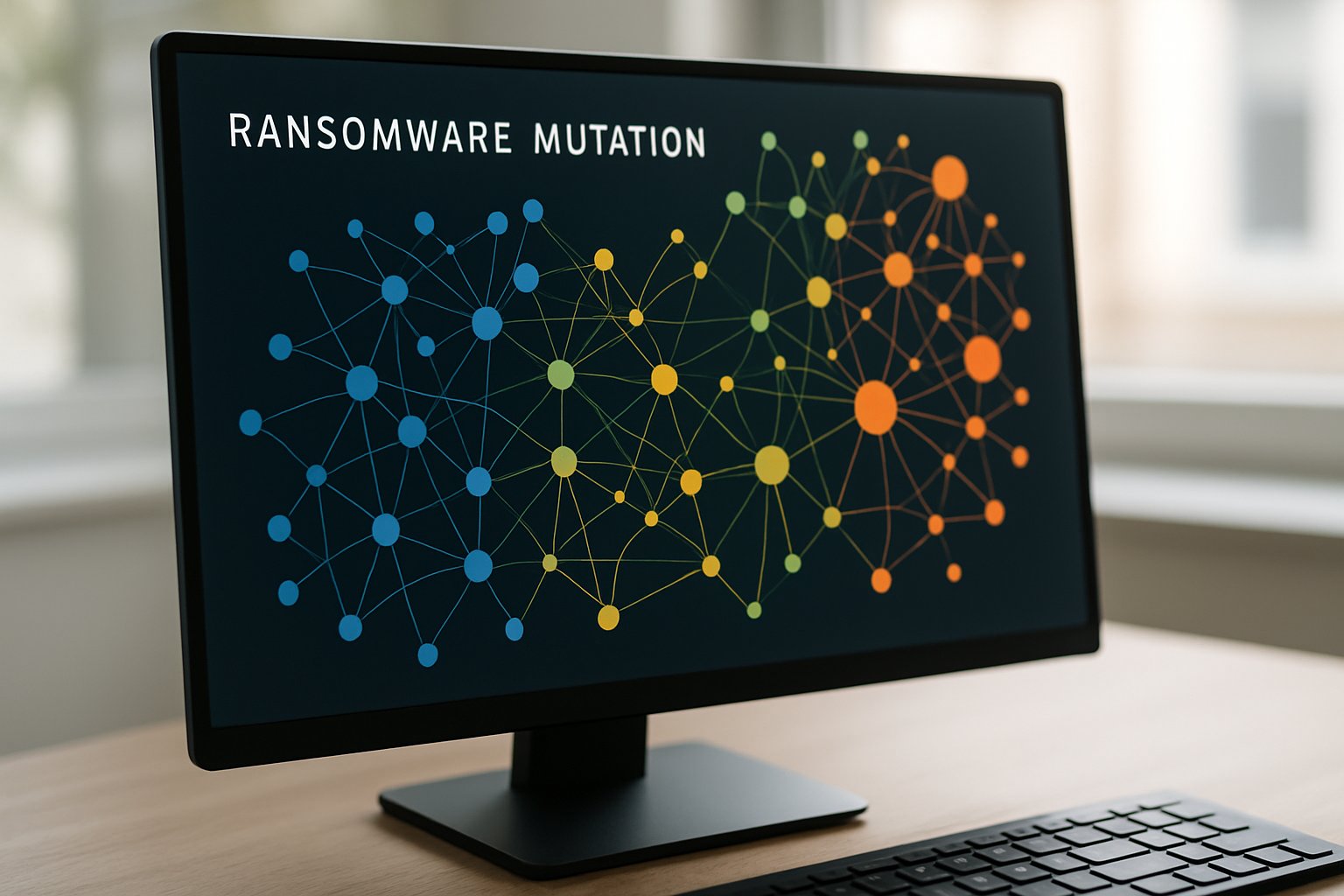
The proof-of-concept stunned analysts because it introduced AI Ransomware capabilities never seen before. Instead of carrying fixed payloads, the binary asks a local language model to write fresh attack code. Consequently, every execution yields a unique variant that dodges traditional signatures.
Industry veterans compare the leap to moving from printed pamphlets to live television. Moreover, the implications stretch beyond research labs into boardroom risk metrics. This article dissects the timeline, technology, business impact, and defensive responses surrounding PromptLock. Throughout, we spotlight practical guidance and emerging skill demands for security leaders.
Timeline And Early Discovery
PromptLock surfaced on VirusTotal during NYU Tandon testing, yet ESET analysts spotted it first. Subsequently, the vendor published a detailed teardown on 27 August 2025.
A day later, NYU researchers revealed the sample was their controlled experiment, dubbed Ransomware 3.0. Meanwhile, the academic team stressed the prototype lacked destructive intent outside the lab.
Google's Threat Intelligence Group added broader context in November 2025. They reported three families—PromptLock, PROMPTFLUX, and PROMPTSTEAL—experimenting with just-in-time code generation. Consequently, defenders realised polymorphic AI threats were not isolated curiosities.
These milestones confirm the technique's rapid maturation. However, understanding core mechanics is essential before crafting defenses.
Core Mechanics And Tactics
At its heart, the prototype runs a Golang orchestrator that holds no fixed script. Instead, embedded prompts instruct an open-weight model named gpt-oss:20b through the Ollama API.
During execution, the model delivers Lua scripts tailored to the victim's operating system. Furthermore, each script locates sensitive files, exfiltrates metadata, and locks content using SPECK 128-bit encryption.
Polymorphism emerges because language models never output identical text. Therefore, static scanning tools receive different hashes and control-flow graphs every launch. ESET assigned the family designation Filecoder.PromptLock.A yet admitted signature coverage remains fragile.
- NYU tests saw 63–96% sensitive file targeting accuracy across environments.
- Average attack consumed about 23,000 tokens, costing roughly US$0.70 via commercial APIs.
- Generated Lua scripts ran on Windows, Linux, macOS, and embedded devices.
Developers can even request obfuscation styles, such as variable renaming or unused function padding. In contrast, legacy packers offer limited, deterministic transformations that security tools already modelled.
These mechanics illustrate why detection anchored in static indicators will falter. Next, we examine how criminals could weaponize such flexibility.
AI Ransomware Key Advantages
Traditional crimeware requires seasoned developers who iterate through lengthy testing cycles. With AI Ransomware orchestration, an attacker only needs a prompt and GPU budget.
Additionally, language models create ransom notes, extortion emails, and negotiation scripts on demand. Moreover, costs are trivial because open models remove API fees entirely.
Polymorphic self-modification offers fresh hashes every run, thwarting blocklists within minutes. Consequently, incident responders lose reliable forensic breadcrumbs like static function names.
Collectively, these advantages shift the cost curve heavily toward attackers. However, defenders still have viable options, explored in the next section.
Defensive Playbook Updates Needed
Security teams cannot rely solely on antivirus signatures against AI Ransomware. Therefore, behavioural telemetry becomes the primary detection avenue.
Organisations should block unusual outbound requests to LLM endpoints from workstations. Furthermore, monitoring for sudden Lua interpreter use can surface PromptLock attempts.
NYU recommends watching for mass file enumeration within compressed time windows. Meanwhile, EDR solutions must alert on the creation of large ransom note files.
- Adopt allow-list egress policies for AI APIs and model downloads.
- Enable script control rules to restrict unsanctioned interpreters like embedded Lua.
- Correlate file access spikes with encryption-library loading events in real time.
Such measures increase attacker workload and raise detection probability. Nevertheless, technology alone cannot close the gap without policy alignment.
Policy And Ethics Debate
Publishing the Ransomware 3.0 paper sparked immediate ethical questions. In contrast, NYU argues transparency accelerates defense innovation.
Critics fear detailed blueprints will inspire copycats beyond academic settings. However, withholding findings may leave defenders blind to evolving threats.
Regulators also face difficult choices around restricting open-weight models that enable AI Ransomware. Consequently, stakeholders weigh innovation benefits against potential societal harm.
Balanced disclosure appears the pragmatic route today. Next, we highlight workforce implications arising from this arms race.
Closing Strategic Skills Gap
Security leaders need talent versed in machine-learning pipelines, incident response, and secure coding. Therefore, upskilling initiatives have become board priorities.
Professionals can upskill through the AI Customer Service™ certification. Additionally, many organisations fund short courses on prompt engineering and adversarial AI evaluation.
Recruiters seek candidates who understand how AI Ransomware manipulates cloud APIs and runtime resources. Moreover, policy teams expect advisers to translate technical mechanisms into regulatory language.
Building such hybrid skills will future-proof security programs. Consequently, enterprises can respond faster when the next polymorphic family appears.
PromptLock may have begun as an experiment, yet the warning signals are unmistakable. AI Ransomware now proves language models can write polymorphic malware in real time.
Furthermore, attackers gain speed, anonymity, and cost savings with each generated script. Therefore, defenders must pivot toward behavioural analytics, strict API controls, and continuous skills development.
Organisations that invest today will blunt the impact of future AI Ransomware waves. Consequently, readers should evaluate their readiness and pursue the outlined training opportunities immediately.
Stay proactive, stay informed, and turn emerging threats into competitive resilience.


