

AI CERTs
3 months ago
Algorithmic Trading Executors: AI, Regulation & HF Edge
Milliseconds now decide profit, liquidity, and reputational risk across global electronic markets. Consequently, institutional desks increasingly rely on Algorithmic Trading Executors to slice orders and capture dispersed liquidity. These systems fuse data science, network engineering, and compliance tooling into one cohesive workflow. Furthermore, market research shows 44% of U.S. buy-side equity flow already uses electronic execution. Meanwhile, vendors race to embed machine learning, chat interfaces, and advanced analytics into their platforms. Regulators have noticed this shift and now demand tighter governance, testing, and market-abuse surveillance. This article unpacks current adoption trends, regulatory headwinds, technology foundations, and strategic steps for effective deployment. Readers will understand how Algorithmic Trading Executors optimize high-frequency strategies while balancing compliance, performance, and competitive cost pressures.
Market Adoption Trends
Coalition Greenwich reports that algorithmic workflows handled 37% of U.S. equity volume during 2023. Moreover, program trades averaged $79 billion daily, with 46% executed electronically. These figures confirm accelerating institutional appetite for speed, consistency, and measurable cost reduction. In contrast, discretionary trading desks now face attribution pressure when slippage exceeds transparent benchmarks.
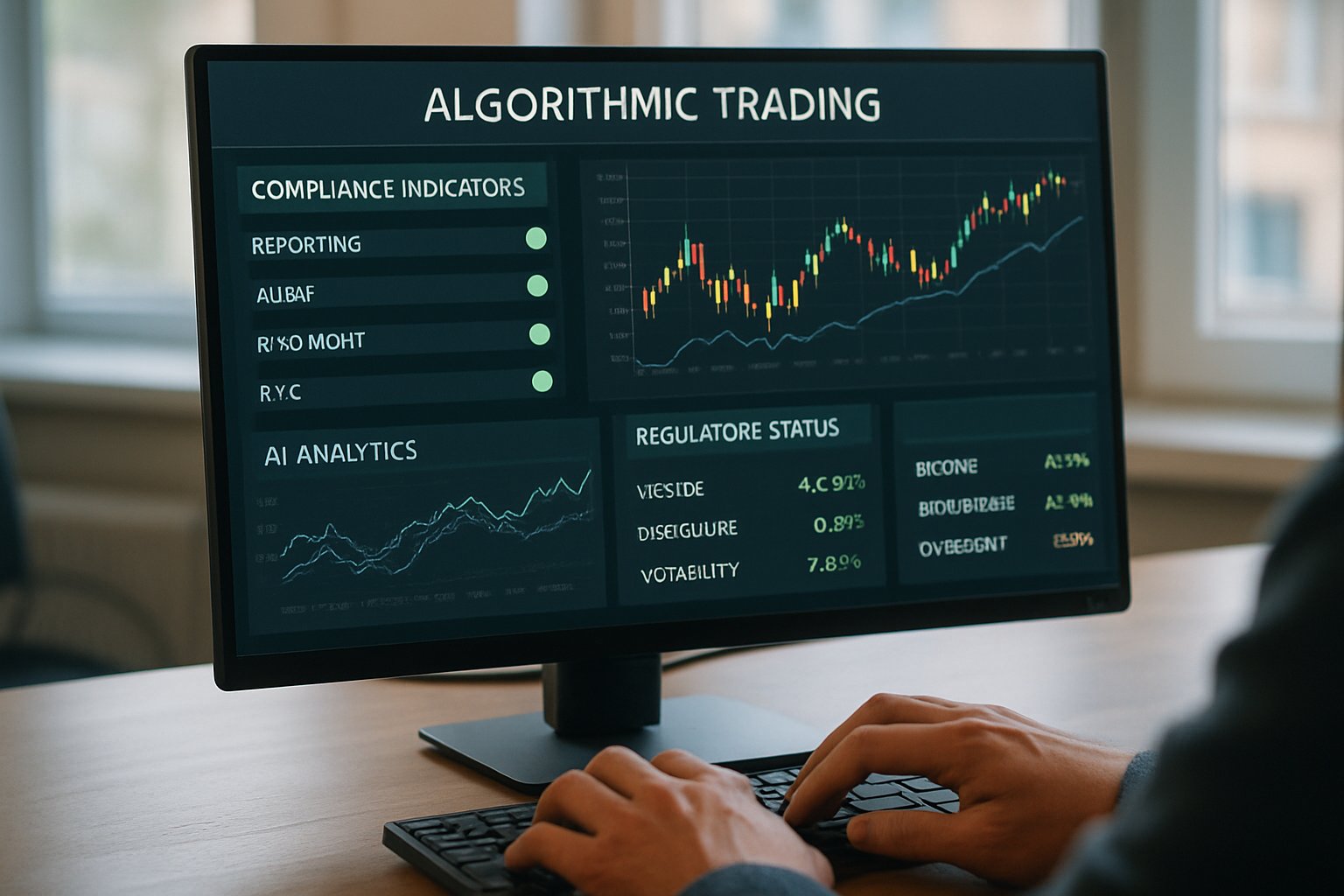
Vendors such as FlexTrade and Trading Technologies respond by expanding cloud, multi-asset, and analytics modules. Additionally, market-research firms forecast mid-single-digit compound growth for the algorithmic software market through 2030. Nevertheless, competition on latency and feature depth compresses margins across Financial Automation suppliers, encouraging consolidation. Algorithmic Trading Executors thus remain a crucial differentiator for both buy-side and sell-side franchises.
Adoption metrics reveal a clear trajectory toward pervasive automation and data-driven decision-making. However, stricter rules now shape how firms deploy algorithms. Consequently, the regulatory landscape deserves close examination.
Stricter Regulatory Oversight
The FCA’s August 2025 multi-firm review highlighted uneven testing, documentation gaps, and surveillance weaknesses. Furthermore, two firms received direct remediation notices, underscoring supervisory resolve. Across Asia, SEBI temporarily barred Jane Street after alleged index manipulation in July 2025. Therefore, cross-border strategies require unified control frameworks covering every venue.
Regulators now expect algorithm inventories, kill switches, and independent model validation. Moreover, MiFID RTS6 and RTS25 demand latency monitoring and deterministic timestamping. Algorithmic Trading Executors increasingly expose audit dashboards, pre-trade risk checks, and automated code promotion pipelines. Nevertheless, governance improvements sometimes lag behind innovation cycles, creating enforcement risk.
Oversight momentum shows no sign of easing. Subsequently, technology stacks must embed compliance by design. Understanding core infrastructure choices clarifies that imperative.
Key Technology Stack Fundamentals
Low latency starts with physical proximity. Co-location shrinks cable distance and reduces round-trip delay. Additionally, kernel bypass frameworks like DPDK and RDMA eliminate costly OS context switches. SmartNICs and FPGAs offload packet parsing, risk filters, and even order construction.
Meanwhile, deterministic software patterns—busy polling, CPU pinning, and NUMA awareness—cut jitter. Consequently, execution behaviour becomes predictable, easing back-testing and regulatory certification. However, cost escalates quickly as firms chase microsecond advantages. Algorithmic Trading Executors balance hardware investments with adaptive logic that moderates market impact.
Hardware advances deliver raw speed, yet intelligent code determines real execution quality. Next, artificial intelligence is reshaping that code layer.
AI Enhances Trading Execution
Reinforcement learning research from 2024-2025 demonstrated improved implementation shortfall over classic TWAP or POV. Moreover, vendors embed conversational assistants that suggest optimal aggression levels in real time. FlexTrade’s FlxAI, integrated with KCx analytics, offers such guidance within its execution workspace. Similarly, TT Strategy Studio enables tick-by-tick back-testing using hosted, ultra-low-latency infrastructure.
Machine models estimate instant market impact and adjust slice size dynamically. In contrast, parametric logic often relies on static coefficients vulnerable to regime shifts. Algorithmic Trading Executors deploy hybrid approaches, combining rule heuristics and learned policies for robustness. Additionally, Transaction Cost Analysis provides feedback loops that retrain models and justify parameter shifts. These AI additions aim to enhance Trading Execution by predicting hidden liquidity and signaling upcoming auctions. Ultimately, the goal aligns with broader Financial Automation initiatives across front-office workflows.
AI augments Algorithmic Trading Executors with smarter decision-making and measurable performance gains. However, new intelligence also introduces fresh operational dangers. Consequently, risk management deserves equal focus.
Core Risks And Mitigations
Flash events, model drift, and latency jumps remain persistent threats. Nevertheless, several safeguards can reduce probability and magnitude.
- Deploy kill switches that halt Trading Execution upon predefined loss or volatility thresholds.
- Schedule regular model retraining and independent back-testing to fight drift.
- Maintain dual venues and circuit breakers to manage exchange or network outages.
Moreover, comprehensive TCA uncovers hidden impact costs and guides parameter tuning. Governance frameworks must document every release, approval, and rollback pathway. Algorithmic Trading Executors incorporate audit trails, versioning, and code signing to support such controls.
Effective safeguards turn velocity into sustainable advantage. Subsequently, executives should approach implementation with clear priorities and measurable milestones. The final section outlines practical steps for leadership teams.
Practical Strategic Implementation Guidance
Start with a gap analysis comparing current processes against FCA high-level observations. Additionally, involve compliance officers early to shape architecture and KPIs. Choose infrastructure tiers based on strategy latency tolerance, not marketing rhetoric. Meanwhile, negotiate vendor contracts that include independent Trading Execution latency and impact benchmarks.
Next, integrate granular TCA, linking FIX tags to order-book snapshots for precise attribution. Consequently, iteration cycles become data-driven rather than anecdotal. Professionals can enhance their expertise with the Chief AI Officer™ certification. This credential supports broader Financial Automation initiatives across trading and risk domains.
Finally, establish cross-function steering committees to oversee Algorithmic Trading Executors throughout the lifecycle. Moreover, simulate extreme scenarios using ABIDES or similar frameworks before production activation.
Disciplined implementation maximizes performance while satisfying regulators. Therefore, firms can innovate confidently amid fast-evolving market structure. The conclusion distills major insights and next actions.
Algorithmic Trading Executors now anchor competitive strategy across equity and multi-asset markets. They deliver speed, adaptive intelligence, and transparent metrics when paired with robust infrastructure. However, rising regulatory scrutiny and model complexity demand disciplined governance, continuous testing, and airtight audit trails. Firms should balance hardware expenditure with AI-driven logic informed by rigorous Transaction Cost Analysis. Moreover, strategic certification, such as the linked Chief AI Officer™ program, can expand leadership fluency in Financial Automation. Consequently, desks can pursue alpha while meeting global oversight expectations. Explore the resources above and commence your next optimization cycle today.


