

AI CERTs
6 months ago
Debugging Automation Tools Cut MTTR, Boost Efficiency
Seconds now matter in software incidents. Executives expect near-instant recovery because digital downtime costs millions. Consequently, teams are embracing Debugging Automation Tools to slash investigation cycles. These AI driven platforms correlate logs, pinpoint root causes, and even propose code fixes.
Moreover, fresh data from Splunk, Datadog, and academic APR projects confirms dramatic gains. Leaders report minutes-scale detection and 30-80 percent shorter MTTR across environments. However, security weaknesses and vendor hype still require balanced scrutiny. This article unpacks the trend, data, players, and practical steps for Engineering Efficiency.
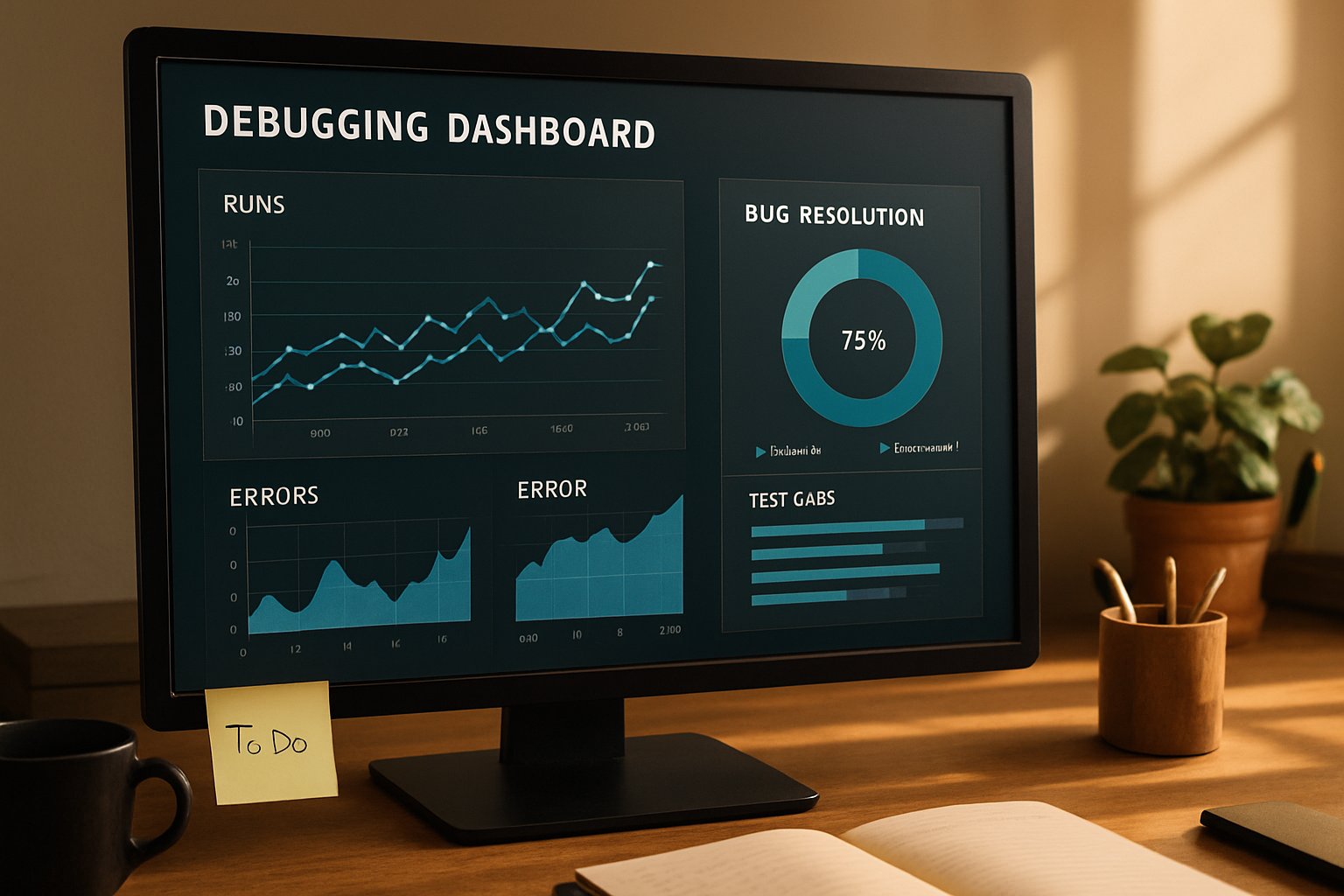
Market Momentum Surge Ahead
Adoption accelerated over the past 18 months. Splunk’s 2024 survey of 1,850 practitioners shows observability leaders detect issues within seconds. Meanwhile, beginners often wait hours before reacting.
Additionally, major vendors launched Debugging Automation Tools updates throughout 2024 and 2025. Datadog, Dynatrace, and ServiceNow added LLM summaries and automated runbooks in flagship releases.
- Observability leaders 2.8× faster awareness than peers (Splunk, 2024).
- Vendor case studies report 30-92% MTTR cuts after automation.
- APR research fixes up to 60% compilation errors automatically.
Momentum reflects clear competitive stakes and measurable returns.
Therefore, understanding the metric impact is the logical next step.
Key Metrics Impact Scope
MTTR and MTTD sit at the heart of operational performance. Moreover, DORA studies tie these indicators directly to revenue and customer retention.
Debugging Automation Tools shrink detection windows through alert correlation and smart noise reduction. Consequently, engineers focus on true positives rather than chasing false alarms.
- 30-60% average MTTR reduction in composite Forrester analyses.
- 80% alert legitimacy among observability leaders versus 54% for beginners.
- Minutes instead of hours for automated CI bug fixes via APR.
These numbers underscore tangible Engineering Efficiency improvements.
However, technology stacks powering those gains warrant a closer look next.
Core Technology Building Blocks
Success depends on layered capabilities, not a single magic feature. Observability first collects metrics, logs, and traces through OpenTelemetry. Furthermore, AIOps platforms apply machine learning to correlate signals and suggest root causes.
Automated Root Cause Analysis narrows investigation scopes within seconds. Subsequently, runbook automation executes predefined fixes or gathers context for responders.
Automated Program Repair pushes Debugging Automation Tools into the code realm. LLM models generate patches, compile them, and iterate until tests pass.
Each layer compounds speed and accuracy benefits.
In contrast, choosing vendors shapes real-world outcomes, which we examine now.
Leading Vendor Landscape Overview
Splunk, Datadog, Dynatrace, and New Relic dominate telemetry aggregation and AI correlation. Meanwhile, Cisco’s ThousandEyes and ScienceLogic excel at network centric insights.
PagerDuty and Rootly orchestrate incident response, invoking Debugging Automation Tools through workflow triggers. Moreover, GitHub Copilot and emerging APR systems tackle code-level Bug Resolution inside CI.
- Splunk Observability Cloud: integrated RCA plus automated remediation.
- Datadog Watchdog: anomaly detection and LLM incident summaries.
- ServiceNow ITOM: no-code runbooks with governance controls.
- MultiMend APR: research tool repairing multi-hunk defects.
Professionals can enhance their expertise with the AI Developer™ certification.
The ecosystem offers options for varied maturity levels.
Nevertheless, every option carries trade-offs explored in the next section.
Critical Risks And Caveats
Security studies reveal 24-36% of AI generated patches include weaknesses. Therefore, human review and automated scanning remain non-negotiable.
Vendor case claims sometimes lack transparent baselines or incident severity mixes. In contrast, peer-reviewed longitudinal audits are still emerging.
Debugging Automation Tools may hallucinate fixes that overfit limited test suites. Consequently, staging environments and canary rollouts mitigate blast radius.
Realistic expectations prevent costly surprises.
Subsequently, teams should adopt disciplined practices, covered next.
Practical Adoption Best Practices
Instrument first by unifying metrics, logs, and traces across services. Moreover, baseline MTTR numbers before deploying any automation.
Start with RCA and alert correlation rather than full self-healing. Gradually add runbooks guarded by approvals and rollback hooks.
- Require CI tests and security scans for every automated patch.
- Track percentage of incidents fully automated versus assisted.
- Share dashboards that visualize Engineering Efficiency gains.
Debugging Automation Tools should appear in retrospectives exactly like human actors. Teams must discuss false positives, over-rides, and Bug Resolution quality.
Disciplined rollout sustains benefits while containing risk.
Consequently, forward-looking teams monitor future advances closely.
Future Outlook Roadmap Insights
LLM research continues to raise automatic fix rates across diverse languages. Furthermore, multi-modal telemetry promises richer context for correlation engines.
Debugging Automation Tools will embed deeper into IDEs, chat interfaces, and deployment gates. Meanwhile, governance frameworks will standardize audit trails and ethical guardrails.
Vendors also plan tighter integration between app security testing and Bug Resolution workflows. Therefore, engineering leaders should budget for continuous tooling evaluation.
The next wave targets proactive prevention over reactive repair.
Nevertheless, strategic certification and skills remain vital, as the conclusion details.
Automated observability, AIOps, and APR now converge to slash MTTR across industries. Debugging Automation Tools deliver measurable Engineering Efficiency while accelerating Bug Resolution. However, success depends on robust telemetry, controlled rollouts, and diligent security review. Organizations should instrument first, automate gradually, and measure relentlessly.
Moreover, staying current with evolving standards ensures competitive resilience. Therefore, consider expanding skills through recognized learning pathways. Pursue the linked certification and start piloting data-driven automation today. Start small, monitor outcomes, and let Debugging Automation Tools scale with confidence.
Disclaimer: Some content may be AI-generated or assisted and is provided ‘as is’ for informational purposes only, without warranties of accuracy or completeness, and does not imply endorsement or affiliation.


