

AI CERTs
3 months ago
Version Control Integrators Power AI-Driven Engineering Success
Repositories are no longer passive code vaults. Consequently, they have become dynamic command centers. That shift is driven by Version Control Integrators marrying artificial intelligence with source history. Developers now receive branch suggestions, automated pull requests, and contextual code reviews from intelligent agents. However, enterprise leaders still ask how far the model driven revolution will extend. Understanding the players, features, and risks is therefore essential for 2026 planning. Moreover, AI Development Tools only deliver value when they respect established Engineering Workflows. Industry data revealed rapid adoption alongside fresh governance controls. Meanwhile, certifications emerge to validate architecture expertise in this evolving arena. Market analysts forecast double-digit growth for AI-native development platforms through 2030. Furthermore, security teams wrestle with prompt-injection attacks and IP exposure concerns. Nevertheless, early adopters report sizeable productivity gains versus traditional automation. These contrasting signals set the stage for a closer examination of current trends.
Global Market Momentum Overview
Industry surveys show explosive uptake of repo-aware assistants during 2024 and 2025. ResearchAndMarkets projects multibillion dollar spending on generative coding platforms by 2030. Moreover, 90% of teams surveyed by Jellyfish claimed at least experimental AI integration. GitHub reports tens of millions of Copilot users across commercial and open-source projects. Similarly, GitLab, Atlassian, Sourcegraph, and AWS each highlighted record enterprise conversions during keynote events.
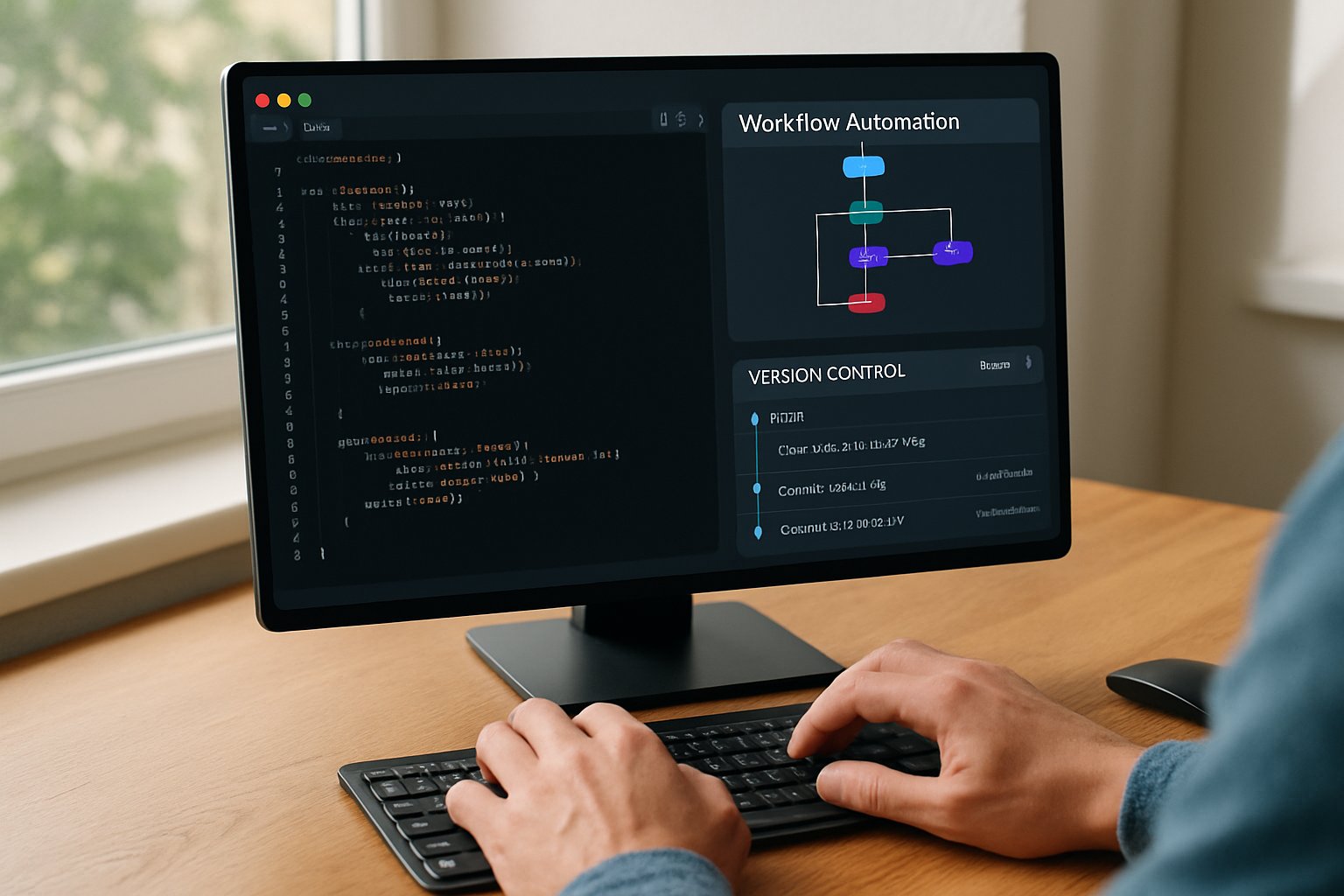
Version Control Integrators now anchor that spending. Consequently, Version Control Integrators sit at the intersection of repositories, CI pipelines, and policy engines. Analysts therefore expect sustained double-digit compound growth for provider subscriptions. However, estimates vary because vendors bundle AI Development Tools with ancillary services.
Momentum confirms a structural shift toward AI-native pipelines. These numbers indicate lasting demand, yet precise market size remains contested. Against that backdrop, platform features continue to expand rapidly.
New Agentic Feature Sets
Platform roadmaps increasingly prioritize autonomous agents over simple autocomplete. GitHub’s Agent HQ centralizes model permissions, plan execution, and cost visibility for multiple providers. Furthermore, Copilot Spaces allow curated sandboxes where agents propose multi-file changes safely. GitLab Duo Chat delivers similar chat-driven edits across self-managed runners and cloud fleets. Sourcegraph added Smart Apply, enabling batch edits spanning hundreds of repositories in minutes.
Bitbucket and AWS integrate agentic reviews directly within CI pipelines, reducing context-switching. Consequently, developers trigger an agent to open a branch, run tests, and raise a pull request. Version Control Integrators therefore move beyond IDE plugins, acting as orchestration hubs. Additionally, AI Development Tools now select optimal foundation models per task, balancing latency and cost. These innovations reshape Engineering Workflows by automating many intermediate steps.
Agents now execute complex flows once reserved for senior engineers. However, deeper integration also expands the attack surface. Security concerns therefore demand equal attention.
Governance And Security Risks
Deep repository access creates new governance dilemmas. Prompt-injection attacks demonstrated against GitLab Duo revealed data exfiltration paths. Moreover, hidden directives in README files can silently steer models toward unsafe outputs. IP attribution presents another puzzle because generated code may embed licensed snippets unintentionally. Therefore, enterprise legal teams request indemnity clauses from vendors before rolling out assistants.
Security vendors responded by embedding AI detection gates within the pipeline. SonarQube, Snyk, and others now flag AI-generated blocks, require review, and enforce quality thresholds. Consequently, Version Control Integrators must surface audit trails, usage metrics, and kill switches.
Critical Exposure Scenarios List
- Malicious prompt injections in comments
- Unauthorized model scope expansion
- Shadow training on private code
- Hallucinated dependencies bypassing scans
These scenarios underline tangible risks. Nevertheless, proactive controls can mitigate exposure. Productivity metrics reveal why organizations accept that trade-off.
Productivity And Adoption Data
Despite headlines about risk, adoption climbs. BusinessInsider saw 62% of respondents claiming at least 25% productivity gains. GitHub telemetry shows higher suggestion acceptance when assistants receive repository context. Similarly, Tabnine reported double-digit accuracy improvements after aligning with Bitbucket repositories.
Version Control Integrators thus provide measurable returns on engineering hours. Moreover, AI Development Tools shorten onboarding for new hires by surfacing internal patterns. In contrast, classic automation lacked that cognitive layer. Engineering Workflows adjust accordingly, emphasizing review over rote coding.
Data suggests the benefit curve still rises. Yet sustainable implementation requires disciplined processes. Best practice frameworks now emerge to guide rollouts.
Implementation Best Practice Playbook
Successful teams start with a limited pilot. Administrators configure agent scopes, set quality gates, and monitor telemetry dashboards. Furthermore, training sessions explain when to accept or reject suggestions. Tagging generated commits lets auditors trace AI contributions months later.
Version Control Integrators should integrate with existing secrets scanners, SAST, and vulnerability feeds. Additionally, platform budgets must be tracked to avoid runaway API costs. Documentation needs updates reflecting autonomous branch flows within Engineering Workflows.
Professionals can deepen expertise through the AI Architect™ certification. Consequently, credentialed staff become champions for secure adoption.
Version Control Integrators also benefit from periodic red-team exercises that simulate hostile prompts. Moreover, AI Development Tools must be configured to discard sensitive context after completion.
These practices embed guardrails without stifling creativity. Therefore, enterprises unlock value while containing risk. Strategic reflections illustrate the road ahead.
Strategic Enterprise Takeaways Ahead
Boards increasingly frame repositories as knowledge graphs rather than file stores. Consequently, Version Control Integrators become strategic infrastructure akin to cloud providers. Vendor selection should therefore consider governance maturity, security roadmap, and multi-model flexibility. Meanwhile, market consolidation seems likely as hosts bundle adjacent capabilities.
Analysts believe neutral players like Sourcegraph will differentiate through cross-host visibility. Nevertheless, open standards for agent logging and policy enforcement remain incomplete. Therefore, consortium efforts will shape interoperability during 2026.
Leadership focus must balance innovation with accountability. Informed decisions today create resilient pipelines tomorrow. A concise recap underscores final priorities.
Version Control Integrators have redefined software production by embedding intelligent agents inside the repository heartbeat. Moreover, AI Development Tools now cooperate with Engineering Workflows to accelerate delivery while guarding quality. Security controls, quality gates, and clear audit trails remain non-negotiable. Consequently, organizations must couple technical pilots with policy refinement and talent upskilling. Professionals should therefore pursue certifications and experiment with guarded pilots today. Visit the certification catalog to start building the expertise that tomorrow’s autonomous pipelines will demand.


