

AI CERTs
3 months ago
Viral Content Forecasters Shape Next-Gen Media Strategy
News cycles now move at breakneck speed. Consequently, teams that predict attention outrun rivals that only react. Viral Content Forecasters provide that predictive edge. These tools blend real-time data, AI, and social velocity signals to flag tomorrow’s hits today. Moreover, advertisers face soaring short-form video spend projections, pushing demand for earlier insight. This article unpacks how forecasters work, where they deliver value, and how leaders can integrate them into daily workflows. Readers will see concrete statistics, vendor moves, and actionable tactics. Throughout, we examine both Marketing Strategies and wider Media Trends shaping the space.
Why Forecasting Matters Now
Attention spikes drive disproportionate business results. Research shows heavy-tailed distributions where a few posts capture most views. Therefore, early detection lets brands double down while costs remain low. Viral Content Forecasters identify these spikes within minutes. In contrast, manual monitoring often lags by hours. Additionally, Sprout Social’s 2025 acquisition of NewsWhip signals that predictive features are now mainstream. Short-form video ad spend is projected to hit US$52B in North America by 2025. Consequently, every wasted hour risks lost share of that budget.
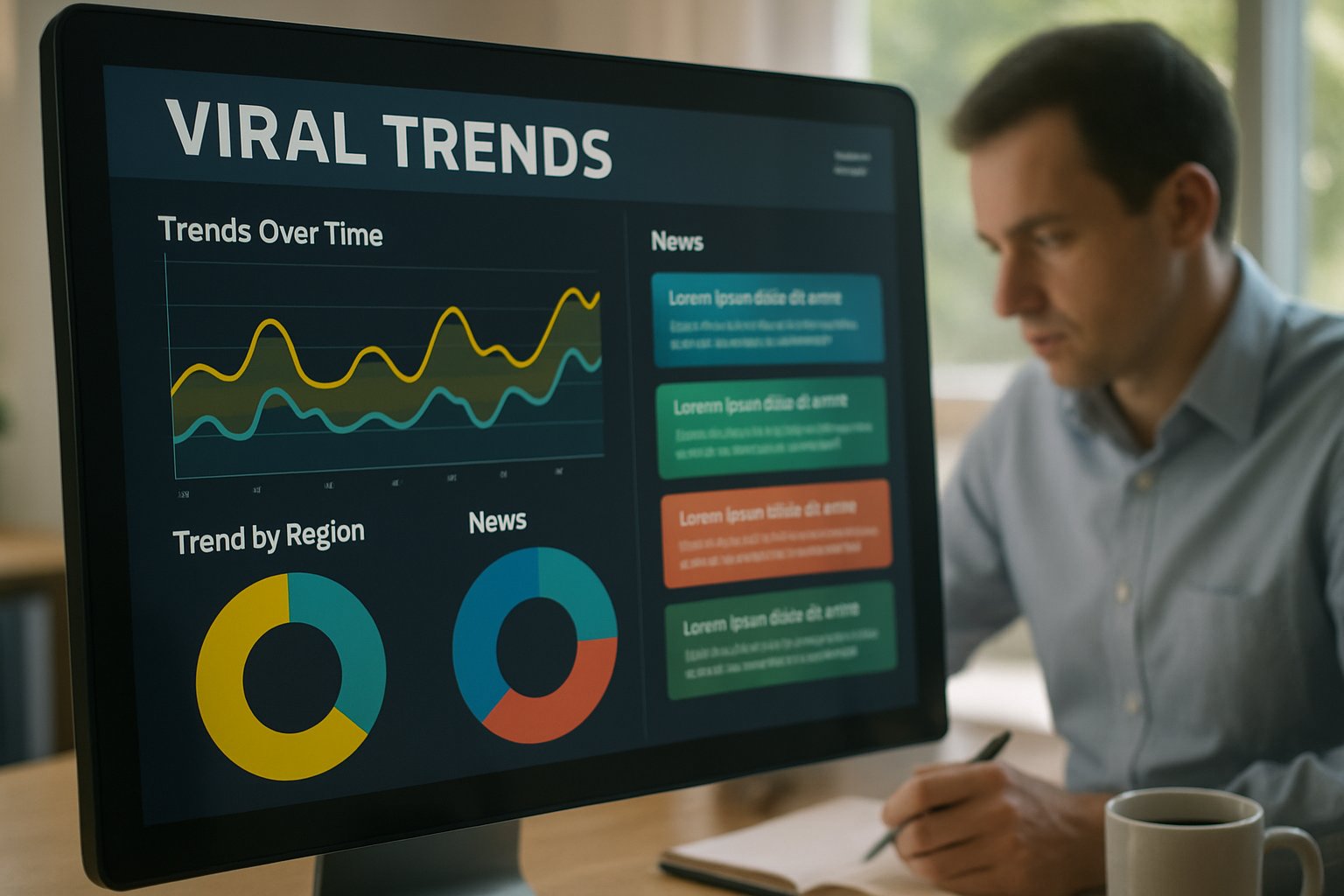
NewsWhip claims tight-band accuracy for 24-hour engagement forecasts. Meanwhile, academic work confirms velocity features are reliable short-term signals. Nevertheless, longer horizons remain noisy due to platform algorithm shifts. These realities underscore why teams prioritize rapid windows when designing Marketing Strategies. Viral Content Forecasters bridge that gap. These points stress urgency. However, understanding the tech stack is essential before deployment.
Core Technical Method Approaches
Modern systems fuse multimodal models, time-series analytics, and continual learning. Multimodal architectures ingest video frames, audio features, captions, and creator graphs. Furthermore, competition datasets show these models beat text-only baselines for TikTok and Reels prediction. Viral Content Forecasters also track social velocity. They measure engagement rate changes, then extrapolate near-term interactions. Moreover, online learning updates weights as fresh data streams in, limiting drift.
Key components include:
- Velocity metrics: likes, shares, watch time growth per minute.
- Multimodal fusion: attention layers link visual, textual, and network cues.
- Drift monitors: continuous retraining on streaming logs.
Additionally, Adam Mosseri notes that Instagram ranks content by watch time, likes, and sends. Forecasters therefore weight those metrics higher for Reels. Consequently, forecasts align with actual platform logic. These technical choices matter because accuracy erodes without them. Viral Content Forecasters integrate them to sustain performance. That technical foundation sets context for vendor differentiation. Subsequently, we examine the market.
Market And Vendor Landscape
Consolidation defines the current market. Sprout Social folded NewsWhip into its listening suite in 2025. Meanwhile, Brandwatch, Meltwater, and Talkwalker bundle prediction with social intelligence. BuzzSumo focuses on headline and historical pattern discovery, yet experiments with rapid alerts. Chartbeat expands from web analytics into short-form video. Viral Content Forecasters have therefore shifted from niche products to platform features.
Independent trend services like Exploding Topics still surface emerging queries. However, they lack granular velocity scoring. Consequently, large enterprises favor suites that combine listening, prediction, and action. Pricing models usually scale by seat count and API calls. Moreover, coverage gaps persist for non-Western platforms. Teams should audit vendor APIs to ensure critical channels appear. Viral Content Forecasters differ on latency, platform reach, and ethical guardrails. A rigorous checklist helps buyers navigate hype. These dynamics inform the benefits and risks evaluated next.
Key Benefits And Limitations
Benefits cluster around speed and efficiency. First, newsroom editors reallocate reporters toward stories flagged as likely breakouts. Secondly, advertisers remix creative faster, cutting production cycles from days to hours. Thirdly, programmatic buyers align spend with predicted peak windows, improving return on ad dollars. Meanwhile, generative AI accelerates iteration, closing the loop between forecast and creative output.
Nevertheless, limitations persist. Heavy-tailed attention makes week-ahead forecasts unreliable. Moreover, platform algorithm updates can trigger sudden accuracy drops, termed drift. Ethical concerns also rise. Predictive amplification can spread misinformation if risk checks fail. Additionally, over-optimization may erode brand authenticity, as Sprout Social surveys show consumers cringe at forced trend hijacking.
The trade-offs are clear. Viral Content Forecasters excel in short windows but must pair with human judgment and safety nets. These insights guide the operational playbook that follows.
Operational Playbook For Teams
Teams succeed when process matches tool capability. The following five-step playbook distills best practice:
- Install velocity-sorted dashboards that refresh hourly for each platform.
- Build a three-hour creative loop using pre-publish scores and rapid A/B hooks.
- Track platform-specific metrics, prioritizing watch time and sends over followers.
- Set drift alerts that trigger retraining after algorithm changes or seasonal shifts.
- Add a credibility gate that checks source reliability before amplification.
Professionals can enhance their expertise with the Chief AI Officer™ certification. Moreover, certification modules cover ethical AI deployment, offering frameworks for safe forecasting. Viral Content Forecasters fit best when teams align people, process, and technology. These steps optimize speed while guarding against harms. Consequently, organizations become resilient amid shifting Media Trends.
Key Actionable Next Steps
Leaders should start with a pilot focused on one platform. Measure forecast precision against actual twenty-four-hour engagement. Subsequently, expand coverage to other channels after refining thresholds. Secondly, negotiate vendor SLAs that guarantee latency under five minutes. Additionally, insist on transparency around model updates and bias testing. Thirdly, integrate forecaster APIs into existing Marketing Strategies dashboards for unified views.
Furthermore, schedule quarterly audits that compare predicted and real outcomes. Adjust weighting schemes when variance widens. Meanwhile, maintain a cross-functional ethics panel reviewing controversial content spikes. Viral Content Forecasters empower fast action, yet responsible governance preserves trust. These next steps ensure sustainable advantage.
In summary, Viral Content Forecasters fuse multimodal AI, velocity analytics, and continual learning to flag imminent attention surges. Consequently, newsrooms and brands reallocate resources swiftly, improving ROI and relevance. However, limitations around drift, heavy-tailed unpredictability, and ethical risk remain. Therefore, leaders must pair technology with disciplined process, transparent metrics, and ongoing audits. By doing so, they ride evolving Media Trends without sacrificing authenticity. Explore certification pathways and pilot a focused rollout today.


