

AI CERTs
2 months ago
Virtual Interior Layout AI Redefines Real Estate Staging
A staged room sells dreams, not just square footage. However, traditional staging demands trucks, furniture, and precious time. Consequently, agents increasingly turn to software that dresses listings virtually. Enter Virtual Interior Layout AI, a class of tools remixing interiors in seconds. Moreover, the technology pairs computer vision with generative models to render photoreal decor. Buyers can toggle styles, while agents launch polished listings before the paint dries. Meanwhile, portals race to embed the capability at platform scale. This article unpacks adoption trends, business impact, and compliance considerations. Furthermore, it maps next steps for teams evaluating rapid staging solutions. Expect clear data, expert quotes, and actionable guidance throughout.
Virtual Interior Layout AI
At its core, the technology detects walls, windows, and floor geometry from photos or scans. Then, generative engines synthesize furniture, artwork, and lighting that respect scale and perspective. Therefore, final images look captured, not fabricated. The result enhances property visualization during remote shopping.
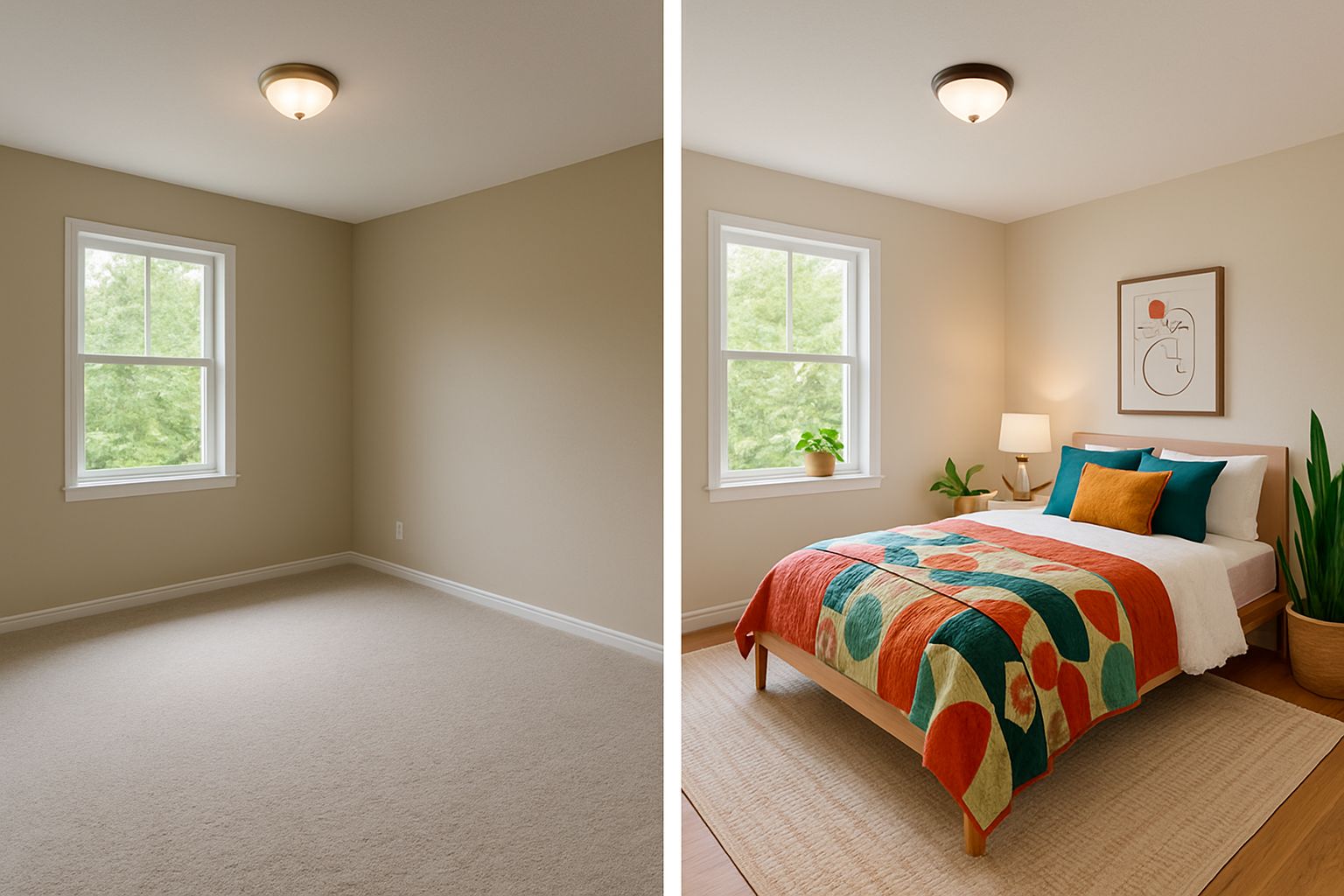
Legacy virtual staging required human Photoshop hours. In contrast, automated pipelines finish a room in under one minute. Subsequently, bulk processing lets photographers stage dozens of images overnight. These speed gains redefine listing timelines for competitive markets.
Crucially, algorithms retain original pixels in secure archives for later audits. Consequently, brokers can prove nothing structural was altered. The capability blends realism with unprecedented speed. Next, we examine market momentum building behind the shift.
Market Momentum Builds Fast
Research firm Market Growth Reports values virtual staging solutions at roughly USD 359 million for 2024. Moreover, analysts project compound annual growth rates near 25 percent through 2030. Consequently, valuations could cross billions before the next cycle. Awareness of Virtual Interior Layout AI now permeates top brokerage conferences.
Adoption trends mirror those forecasts. Zillow Showcase now embeds one-click staging for premium listings across major metros. Matterport, iGUIDE, and Giraffe360 integrate furniture placement exports into capture workflows. Furthermore, established vendor roOomy added new 3D shopping links inside tours.
Online engagement data underscores demand. Zillow reports Showcase homes historically sell for $7,000 more on average. Nevertheless, independent reviewers caution that early AI imagery sometimes goes unnoticed by shoppers. Overall, the growth curve appears steep yet still early. The next section dissects numeric proof points shaping stakeholder confidence.
Growth Numbers Impress Stakeholders
National Association of Realtors surveys show over 70 percent of buyer agents find staging helpful. Additionally, agents observe sale-price premiums between one and ten percent when homes present furnished visuals. Virtual approaches deliver those visuals without trucks or rental costs. Many survey respondents already budget for Virtual Interior Layout AI in 2026 marketing plans.
Portal metrics reinforce the ROI narrative. According to Zillow, agents using Showcase win 30 percent more listings. Consequently, competitive brokerages treat AI staging as table stakes for lead generation.
Investors monitor engagement too. Longer dwell times and click-through improvements often translate into premium ad inventory sales. Therefore, platforms have financial incentives to expand staging reach quickly. Strong statistics attract major platform investments. We now explore which players are integrating deepest.
Leading Platforms Integrate AI
Zillow’s 2024 acquisition of Virtual Staging AI unlocked proprietary computer-vision pipelines. Subsequently, the portal launched real-time style toggles inside Showcase listings last September. Users can shift from Scandinavian to Midcentury palettes with one tap. The company’s engineering blog details the design tech stack powering style toggles.
Matterport follows a capture-first strategy. Its API now hands annotated depth maps to partner staging engines. Consequently, a single LiDAR scan produces a navigable tour and exportable furnished floorplan.
Photography backend Aryeo incorporates the same pipelines for bulk media management. Meanwhile, BoxBrownie and InteriorAI target freelancers through pay-per-image portals. These varied distribution channels push Virtual Interior Layout AI into every listing tier.
Nevertheless, startup competition remains fierce among venture-backed tools promising sub-minute renders and style libraries. We examine that rivalry next. Platform integration depth sets the innovation pace. Yet, nimble startups challenge incumbents with rapid iteration.
Startup Competition Intensifies Quickly
Dozens of SaaS newcomers, including RoomX and RoomLift, tout one-click staging APIs for brokerages. Moreover, they price aggressively, sometimes at two dollars per image. Lower fees broaden access for smaller markets that once skipped staging entirely.
Product differentiation now hinges on style diversity, realism ratings, and compliance tooling. In contrast, earlier waves focused only on render speed. Some founders market proprietary bias filters that adjust outputs for regional tastes. Each contender claims its Virtual Interior Layout AI model renders superior Scandinavian sofas.
Funding remains robust, yet consolidation looms. Acquisition rumors surround several mid-tier vendors lacking enterprise distribution. Consequently, expect continued M&A through 2026. Competitive churn benefits agents through falling costs and richer features. However, buyers focus on practical benefits rather than corporate jockeying. The following section outlines tangible gains for listing teams.
Benefits For Listing Teams
Time savings headline the benefits list. Agents upload raw captures in the morning and publish staged galleries by lunch. Consequently, listings hit MLS feeds faster than competing properties.
Cost reduction ranks next. Physical staging can exceed $2,000 monthly, while AI versions often cost under $100 total. Moreover, unlimited style revisions carry negligible incremental fees.
Flexibility also matters. Teams A/B test modern versus farmhouse imagery, then optimize marketing spend accordingly. These experiments deepen understanding of buyer taste and property visualization effectiveness. Key measurable outcomes include:
- 30% higher listing click-through, per Zillow Showcase data
- 1-10% average sale-price uplift, per NAR surveys
- Reduced days on market by several weeks in competitive metros
- Improved property visualization feedback during virtual showings
Additionally, agents can upsell staging as a premium marketing service. Consequently, brokerage margins improve without adding trucks or movers. In sum, benefits span speed, savings, and stronger storytelling. Yet, governance challenges demand equal attention.
Governance And Compliance Pressures
MLS rules prohibit misleading edits that hide defects or change structural features. Therefore, many boards require on-image labels or side-by-side comparisons with originals. Restb.ai and similar vision vendors now scan uploads to flag risky alterations. Disclosure language must specifically name Virtual Interior Layout AI to satisfy some MLS boards.
Fair-housing obligations raise additional concerns. Bias could emerge if style presets reinforce narrow cultural aesthetics. Consequently, responsible teams curate diverse libraries and test outputs for representational balance.
Audit trails matter for legal defense. Secure storage of source captures and staging metadata supports future disclosures. Professionals can deepen governance skills via the AI+ Quantum Specialist™ certification. Strong controls build buyer trust and reduce regulatory exposure. The final section offers a concise adoption playbook.
Practical Adoption Playbook Guide
First, capture quality inputs. Use HDR photography and 3D scans to give algorithms accurate geometry. Consequently, final renders appear consistent across marketing channels.
Second, store originals in immutable archives before staging edits. Immutable storage sustains compliance and enables future audits.
Third, run small A/B tests measuring click-through, inquiries, and offers. Moreover, track metrics separately for each design tech stack to avoid confounding factors.
Fourth, document disclosure practices in brokerage standard operating procedures. Include labeling guidelines and review checkpoints.
Finally, negotiate clear service-level agreements with vendors on data retention and peformance. In contrast, vague contracts complicate liability during disputes.
Following these steps positions teams for scalable, defensible adoption. We close with a brief outlook summary.
Virtual Interior Layout AI reshapes how real estate stories get told online. Consequently, vendors refining Virtual Interior Layout AI stand poised to capture outsized market share. The strategy playbook remains clear. Capture quality images, stage responsibly, and monitor performance continuously. Moreover, invest in talent who understand compliance nuances and emerging design tech. Industry watchers expect regulations to tighten as adoption scales. Nevertheless, early movers already report measurable gains in engagement and revenue. Act now to test, learn, and outperform slower competitors.


