

AI CERTs
2 months ago
Enterprise Knowledge Graph Automation Transforms Corporate Wikis
Dusty internal wikis frustrate employees hunting for reliable knowledge. Meanwhile, AI agents demand structured, current context to operate safely. Consequently, many enterprises now evaluate Enterprise Knowledge Graph Automation as a modern alternative. This shift connects documents, data, systems, and people into a continuously updating relationship fabric. Moreover, automated graphs enable multi-hop reasoning, provenance tracking, and actionable search. Gartner notes rising interest yet cautions about governance and ROI validation. Therefore, leaders must understand technology fundamentals, market dynamics, and implementation realities. The following analysis distills recent research, vendor moves, and practitioner lessons. Readers will gain clear guidance for replacing static wikis without repeating past mistakes. Additionally, certification resources appear for professionals seeking career advantage.
Static Wikis Face Limits
Traditional knowledge bases like Confluence or SharePoint rely on manual updates. However, content often grows stale within weeks, eroding trust quickly. Users then abandon search, recreate documents, or ping colleagues, wasting time.
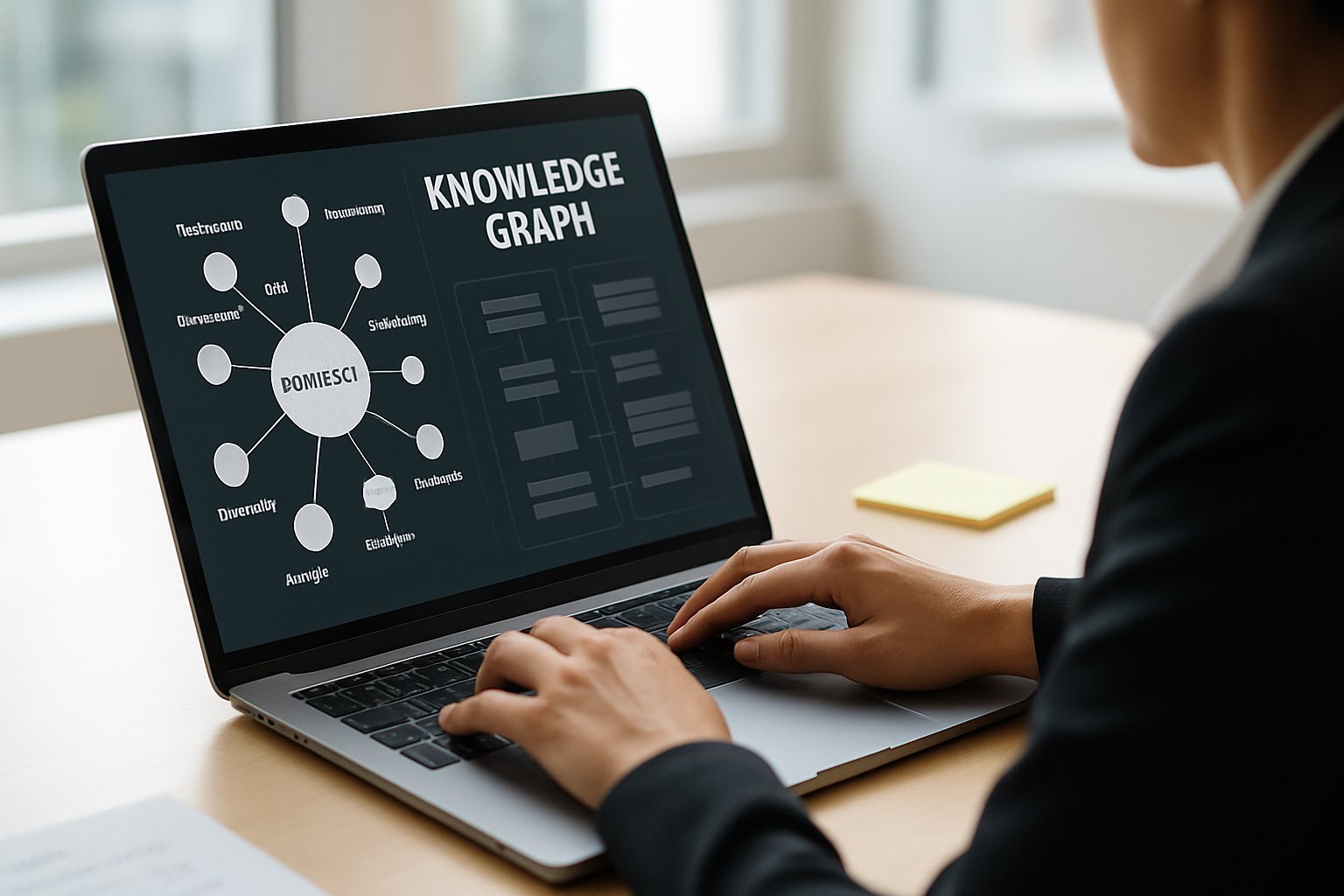
In contrast, complex queries need context spanning projects, tickets, and expert networks. Static wikis cannot represent those relationships, nor supply real-time provenance. Consequently, adoption stalls and organizational memory deteriorates with each new system rollout.
Stagnant content and missing links undermine knowledge worker productivity. These shortcomings create an opening for graph-driven approaches. Next, we unpack how Enterprise Knowledge Graph Automation tackles the gap.
Graph Automation Explained
A knowledge graph stores entities and relationships as interconnected nodes and edges. Furthermore, ontologies define semantics, enabling consistent reasoning across data silos. Enterprise Knowledge Graph Automation builds and refreshes this structure using connectors, extraction models, and schema induction.
Diffbot, Glean, and Blue Yonder showcase automated pipelines that ingest emails, tickets, and databases continuously. Moreover, new research like AutoSchemaKG reports 95% alignment between induced and human schemas. GraphRAG then grounds LLM answers on graph facts, reducing hallucinations.
Automated graphs evolve with the business, unlike static snapshots. They supply verifiable context to humans and agents alike. Subsequently, market momentum reflects these technical gains.
Market Momentum And Players
Market projections signal rapid growth for enterprise graph solutions. MarketsandMarkets forecasts USD 6.94 billion in 2030, reflecting a 36.6% CAGR. Meanwhile, Fortune Business Insights publishes similarly bullish trajectories.
Vendor positioning also accelerates. Glean markets its Enterprise Graph and agent platform as a wiki replacement. Diffbot promotes GraphRAG powered by its multi-billion-fact web graph. SAP, Neo4j, and Snowflake partners extend graph capabilities into existing stacks.
- Glean: real-time enterprise graph plus workplace agents.
- Diffbot: web-scale data grounding for generative systems.
- Blue Yonder: supply-chain graph enabling decision agents.
- Neo4j: labeled property graph database for analytics.
- Stardog: semantic platform unifying R&D data silos.
These players illustrate diverse routes toward Enterprise Knowledge Graph Automation adoption. Investment signals suggest the approach is crossing the chasm. Therefore, executives must weigh tangible benefits next.
Benefits For Enterprise Teams
Graph-driven platforms address daily pain points for knowledge workers. Moreover, multi-hop queries deliver richer answers than keyword search. Agents can also execute tasks, closing the loop between insight and action.
- Reduced search AI latency from minutes to seconds, according to Glean pilots.
- Improved organizational memory through continuous ingestion and linking of new assets.
- Higher accuracy for chatbots by grounding with provenance, as Diffbot studies show.
- Silo consolidation, with Stardog reporting 80% R&D data integration.
- Actionable workflows, such as automatic ticket creation and stakeholder alerts.
Professionals may deepen skills via the AI Sales™ certification. Consequently, teams align vocabulary and governance when deploying graphs.
Enterprise Knowledge Graph Automation underpins these outcomes by keeping relationships current. Graph advantages extend beyond faster answers. They strengthen organizational memory and operational agility together. However, challenges require equal attention ahead.
Challenges And Mitigations
Every transformation carries risk and complexity. Firstly, ontology design and data cleaning demand scarce expertise. Nevertheless, automated schema induction now reduces manual overhead significantly. Gartner still advises starting small and proving ROI before scaling.
Secondly, governance and access control remain non-negotiable. Therefore, vendors bake row-level or edge-level permissions into their graph engines. SAP and Glean highlight policy inheritance mapped from source systems.
Thirdly, vendor lock-in can emerge after twelve months of customization. In contrast, open standards like RDF and LPG portability mitigate switching friction. Organizations should negotiate export clauses during procurement.
Real challenges exist, yet none are insurmountable with disciplined planning. Enterprise Knowledge Graph Automation projects succeed when governance, scope, and metrics align. Subsequently, teams must chart a practical roadmap.
Future Outlook And Action
Analysts predict broader convergence between graphs, vector stores, and agent frameworks. Moreover, research shows automated construction accuracy climbing each quarter. Consequently, total cost of ownership will decline, expanding adoption to mid-size firms.
Executives should pilot limited domains, measure response quality, and iterate rapidly. Regularly benchmark search AI satisfaction and hallucination rates against previous wiki baselines. Meanwhile, continuous training keeps organizational memory aligned with changing product lines.
The momentum behind Enterprise Knowledge Graph Automation appears durable. Benefits outweigh challenges as tooling matures and skills spread. Therefore, now is the time to evaluate next steps.
Enterprises can no longer rely on dated wikis to fuel innovation. Enterprise Knowledge Graph Automation offers a reliable, extensible backbone for connected knowledge. Moreover, it strengthens organizational memory while empowering search AI and autonomous agents. Glean, Diffbot, and other players show the path through proven deployments. Nevertheless, governance, cost, and cultural change must stay front-of-mind. By starting focused pilots, leaders validate Enterprise Knowledge Graph Automation before enterprise scale. Consequently, successful teams secure competitive advantage and career growth. Explore certifications and pilot tools today to join the Enterprise Knowledge Graph Automation movement.


