

AI CERTs
4 months ago
How customer intent graph modeling systems drive omnichannel wins
Personalization now decides customer loyalty and revenue. However, channel silos still break contextual experiences. Consequently, brands are turning to customer intent graph modeling systems for real-time insight. These graph-based engines link identities, behaviors, devices, and products into actionable networks.
Therefore, marketers can predict needs and orchestrate next-best actions across every touchpoint. McKinsey reports personalization lifts revenue by up to 15 percent while improving marketing ROI 30 percent. Meanwhile, 71 percent of consumers now expect tailored interactions during their journeys. Industry investment reflects that pressure.
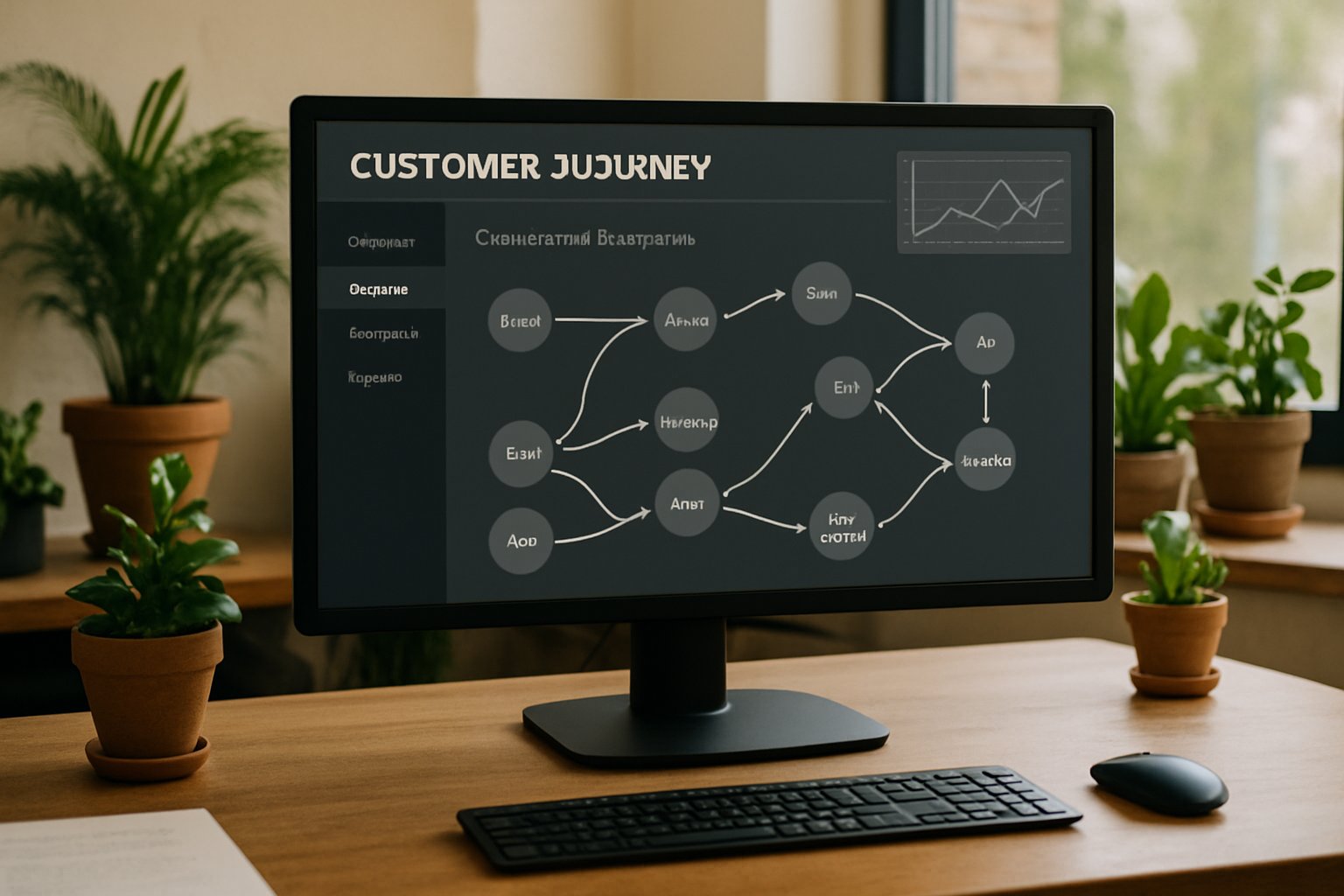
LiveRamp, Zeta, and Wunderkind recently expanded graph features and privacy-safe activation partnerships. In contrast, Gartner warns that engines lacking intent context will soon lag competitors. This article examines the technology, vendors, benefits, and challenges shaping the emerging landscape. Additionally, readers receive a concise implementation playbook and certification resources for deeper mastery.
Market Momentum Builds
Analyst houses now spotlight graph driven personalization. For example, Gartner’s 2025 Magic Quadrant praises platforms merging intent and context for omnichannel gains. Moreover, SAP Emarsys and Dynamic Yield leveraged those citations in recent press releases.
Investment follows recognition. Wunderkind launched Signals, blending an identity graph with real-time triggers for cookieless outreach. Similarly, PayPal extended its transaction graph to advertisers preparing Ads Manager for 2026 retail media demand.
Consequently, budget flows toward identity plus intent capabilities rather than stand-alone segmentation suites. customer intent graph modeling systems now anchor many roadmap decks presented to boards. Nevertheless, market definitions vary, creating confusion for buyers. The next section solves that vocabulary problem.
Graph Fundamentals Explained
A customer intent graph links people, devices, events, and products through weighted edges. Furthermore, an identity graph stitches hashed emails, device IDs, and CRM keys into persistent profiles. Together, they create the core of customer intent graph modeling systems.
Graph databases such as Neo4j or Amazon Neptune support millisecond traversal and flexible schemas. Meanwhile, graph neural networks derive embeddings that capture nuanced relationships and temporal patterns. Academic models like IntentGraphRec fuse sequence attention with knowledge embeddings for superior ranking accuracy.
journey intelligence emerges when those representations reveal long-term goals beyond single sessions. behavioral clustering groups shoppers with similar graph signatures to inform audience strategy. Consequently, decisioning engines can recommend next-best content across web, app, email, and ads. The practical workflow illustrates these steps. Subsequently, the next section maps that workflow step by step.
Omnichannel Workflow Overview
Implementation begins with real-time event ingestion from sites, apps, and stores. Subsequently, identity resolution assigns deterministic or probabilistic IDs with confidence scores. The graph layer updates edge weights and recalculates intent probabilities within seconds.
Therefore, personalization engines consume fresh scores using API calls embedded in experience platforms. behavioral clustering filters visitors into micro-segments when one-to-one signals remain sparse. journey intelligence surfaces cross-device paths, preventing contradictory offers between mobile and email.
Finally, clean rooms measure incremental lift while respecting privacy regulations. Professionals can validate skills via the AI Cloud Specialist™ certification. In practice, speed and accuracy hinge on tight identity resolution. These steps deliver a consistent, data-driven experience. Consequently, brands can act confidently, as the next section profiles leading suppliers.
Emerging Vendor Landscape
Vendors position graphs at different layers of the stack. LiveRamp focuses on identity and clean rooms after acquiring Habu. Meanwhile, Zeta Global markets an integrated media engine on Snowflake.
Intentsify Orbit targets B2B buyers with what CEO Gary Noke calls an evolutionary leap. Moreover, Wunderkind Signals adds cookieless triggers to owned-channel messaging. PayPal exploits its transaction graph to power small-business retail media.
These providers collectively advance customer intent graph modeling systems toward mainstream adoption. Nevertheless, buyers must align features with data maturity, industry constraints, and regulatory exposure. The following list summarizes common evaluation filters.
- Data scale and latency promises versus documented benchmarks
- Identity graph match accuracy and confidence reporting
- Clean room governance, audit logs, and legal approvals
- Graph explainability tools for marketing and compliance teams
- Integration depth with existing personalization engines
Overall, the vendor field is diverse and rapidly evolving. Buyers must match capabilities to data maturity and risk tolerance. The following section weighs the benefits and drawbacks in detail.
Benefits And Drawbacks
customer intent graph modeling systems generate several concrete advantages. Graphs deliver quantifiable performance gains. McKinsey links personalized engagement to 10-30 percent marketing ROI improvements.
Moreover, omnichannel consistency prevents channel cannibalization and drives higher lifetime value. However, risks persist. Identity accuracy may drop when relying on probabilistic matches, inflating costs and eroding trust.
Additionally, regulators scrutinize extensive profiles, demanding clean room protections and clear consent frameworks. Engineering teams also face streaming scale, graph compute expense, and model explainability pressures. journey intelligence eases some burdens by surfacing interpretable paths, yet complexity remains.
behavioral clustering can mask sparse data, but false positives still reduce relevance. Collectively, these factors define the strategic risk-reward profile. Therefore, balanced governance and incremental rollout are essential. These trade-offs underscore the need for a disciplined implementation playbook, covered next.
Implementation Playbook Highlights
Start with first-party data, prioritizing authenticated events and loyalty transactions. Subsequently, deploy deterministic identity joins before expanding to probabilistic linkage. Furthermore, define minimal viable graphs and iterate, avoiding massive, low-quality ingest.
customer intent graph modeling systems thrive on accurate, fresh signals, not stale hoards. Implement role-based access and retention policies within clean rooms to protect privacy. Consequently, compliance teams gain confidence while marketers access actionable scores.
Next, integrate graph APIs into personalization engines using server-side calls for low latency. Moreover, schedule A/B tests or geo splits inside clean rooms to prove incremental lift. behavioral clustering cohorts can serve as control groups when one-to-one data is limited.
Finally, publish dashboards summarizing graph health, match trends, and revenue impact for executives. Consistent governance and measurement reinforce organizational confidence. Consequently, the next section explores future enhancements and strategic actions.
Future Outlook And Actions
Looking ahead, intent graphs will fuse with large language models to power conversational commerce. Meanwhile, vendors are embedding differential privacy and explainable AI to satisfy regulators. In contrast, open standards for identity tokens may reduce vendor lock-in.
customer intent graph modeling systems will likely shift from competitive edge to baseline expectation by 2028. Moreover, McKinsey predicts leaders will capture 40 percent more revenue from personalization than laggards. journey intelligence dashboards and real-time behavioral clustering will move from experimental add-ons to default features.
Consequently, professionals should skill-up, pilot fast, and measure rigorously. Overall, graph convergence, privacy advances, and AI infusion will define the next phase. Our conclusion distills actionable next steps.
Omnichannel success now hinges on customer intent graph modeling systems and intent-aware, people-based personalization. Moreover, identity graphs, clean rooms, and graph models have matured enough for enterprise scale. Benefits include revenue lift, ROI efficiency, and regulated data collaboration.
However, accuracy, privacy, and engineering complexity demand structured rollout. Therefore, leaders should audit data readiness, run pilot graphs, and measure incrementality before full deployment. Meanwhile, upskilling teams on graph architectures will shorten time to value.
Professionals seeking competitive advantage should pursue specialized credentials and keep monitoring vendor roadmaps. Enroll in the AI Cloud Specialist™ program to accelerate your personalization expertise.
Disclaimer: Some content may be AI-generated or assisted and is provided ‘as is’ for informational purposes only, without warranties of accuracy or completeness, and does not imply endorsement or affiliation.


