

AI CERTs
4 months ago
AI-powered regulatory change detection platforms slash compliance
Regulatory calendars move faster each quarter. Consequently, compliance teams struggle to keep policies aligned before deadlines bite. Enter AI-powered regulatory change detection platforms, tools promising to shrink the lag between rule release and proven compliance. Market data from 2024–2025 shows rapid adoption yet raises questions about evidence and governance.
This article unpacks recent market moves, core technology, benefits, obstacles, and practical procurement guidance. Along the way, it balances vendor claims with independent research and expert commentary. Readers will leave with actionable insights and links to professional development resources.
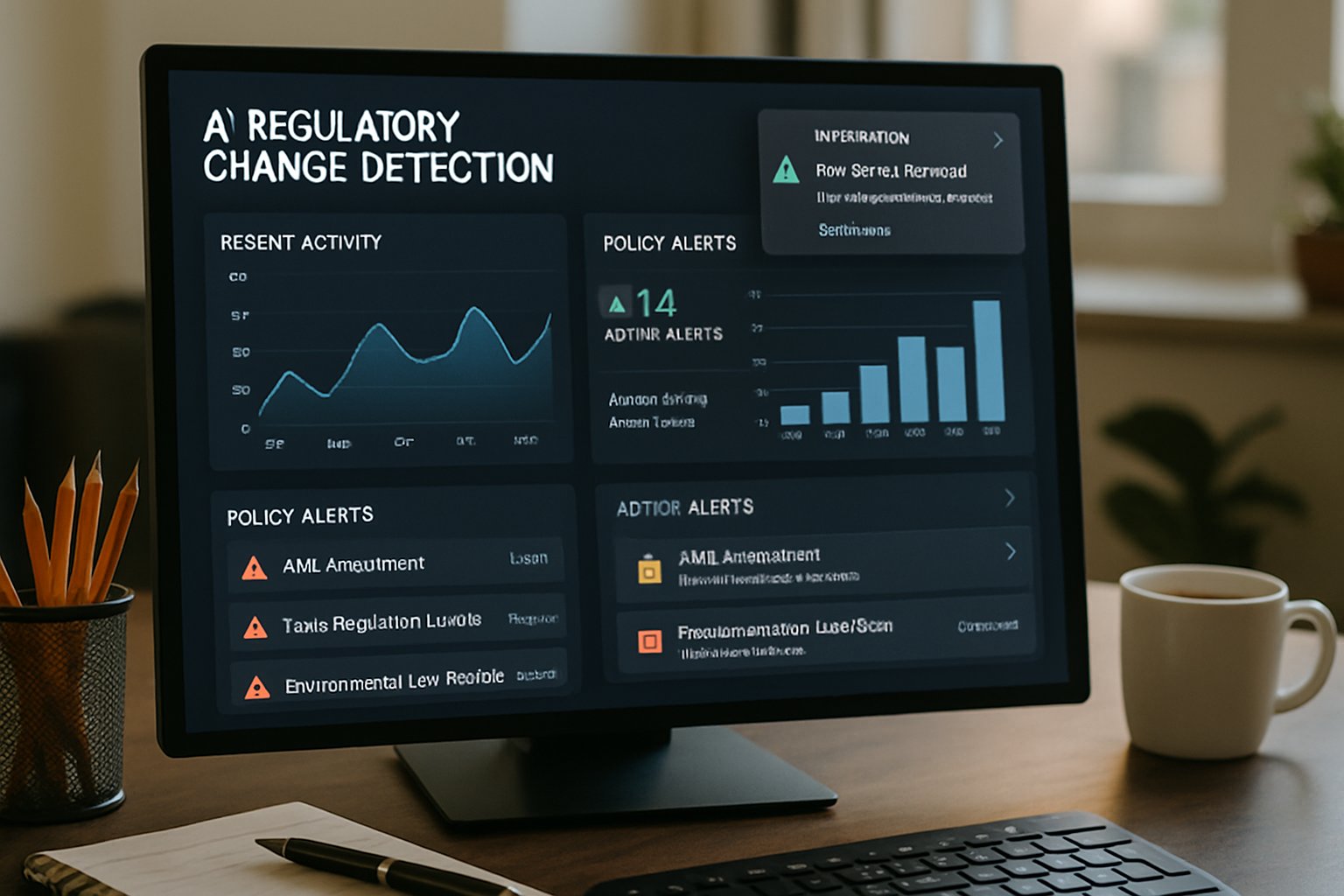
AI Detection Platforms Rise
Grand View Research estimates the global RegTech market reached $12–20 billion in 2025 and continues climbing. Meanwhile, consolidation intensifies. CUBE bought Thomson Reuters’ Regulatory Intelligence unit, signalling a race to blend content with advanced AI. Analysts link this deal to soaring demand for AI-powered regulatory change detection platforms across financial and life-science sectors. Clarivate, Wolters Kluwer, and ServiceNow also launched conversational assistants that accelerate policy monitoring workflows.
Together, these moves confirm that AI is no longer experimental in compliance. However, understanding the tech foundations clarifies what value is realistic.
Market Momentum Accelerates Fast
Surveys provide quantitative support. Strike Graph found 72 percent of compliance leaders intend to insert new AI into workflows within 12 months. Additionally, AuditBoard research shows mature programs using AI broadly report higher control update speed and lower remediation cost. Vendors claim that AI-powered regulatory change detection platforms cut manual triage time by 30–90 percent, though independent audits remain scarce. Nevertheless, market revenue forecasts suggest double-digit compound growth through 2030 as budgets shift from spreadsheets toward automation.
Momentum appears sustainable given budget intentions and vendor pipelines. Therefore, grasping the underlying technology becomes vital before signing contracts.
Core Technology Explained Simply
At the heart sits natural language processing that scrapes regulator websites, consultative papers, and gazettes. Large language models then classify obligations, map them to internal controls, and draft impact summaries. Furthermore, relevance scorers prioritize alerts so human reviewers tackle highest-risk items first. Some systems integrate legal alert automation into ticketing platforms, triggering tasks and capturing evidence automatically. Generative layers even propose revised policies, yet governance frameworks demand human validation to prevent hallucinations. Consequently, leading AI-powered regulatory change detection platforms expose explainability panels and versioned audit trails.
The stack blends data ingestion, NLP, orchestration, and governance. Next, we examine concrete benefits and supporting evidence.
Benefits And Emerging Evidence
Early adopters highlight three measurable gains.
- Faster detection: Alerts surface minutes after publication instead of weekly email digests.
- Lower noise: Relevance scoring reduces non-actionable alerts by up to 70 percent in pilot projects.
- Audit readiness: Complete evidence logs shorten regulatory examinations by several days, according to vendor references.
Moreover, Clarivate’s beta assistant claims to cut research time by half for life-science submissions. CUBE promotes similar reductions, pairing RegBrain AI with Thomson Reuters’ curated rule library. These improvements extend beyond policy monitoring; they streamline legal alert automation across multilingual jurisdictions. Banks in recent case studies credit AI-powered regulatory change detection platforms with 40 percent faster policy implementation.
Quantified gains remain vendor-reported and task-specific. However, implementation challenges can erode promised value.
Implementation Obstacles Persist Today
Legacy repositories often lack APIs, complicating data lineage and automation hooks. Moreover, teams still rely on spreadsheets, hindering real-time policy monitoring and legal alert automation consistency. Integration work can exceed license costs, according to PwC implementation notes. Additionally, generative models may hallucinate or misclassify obligations, raising material compliance risk if unchecked. Therefore, organizations deploying AI-powered regulatory change detection platforms must maintain human review gates and rigorous model tests.
Technical debt and governance gaps stall adoption velocity. Consequently, risk frameworks and oversight top the priority list.
Governance And Risk Mitigation
KPMG advises building explainability, bias testing, and model inventory procedures early. Furthermore, regulators increasingly request attestation logs that link every alert to a control action. SupTech initiatives will enhance supervisory data mining, making opaque AI unacceptable. For defensibility, leading AI-powered regulatory change detection platforms now embed model cards, lineage views, and role-based approvals. Nevertheless, continuous validation remains essential, especially when extending legal alert automation to new jurisdictions.
Robust governance converts innovation into regulator trust. Next, we outline procurement steps to enforce these safeguards.
Procurement Best Practice Steps
Effective sourcing starts with a precise problem statement.
- Define baseline lag metrics and desired improvement targets.
- Request audit logs that prove before-and-after performance.
- Seek third-party validation or at least two customer references.
- Mandate human-in-the-loop controls and bias testing.
- Align service-level agreements with policy monitoring coverage expectations.
Moreover, buyers should pilot integrations within one domain before scaling globally. Pilots reveal whether AI-powered regulatory change detection platforms meet latency, accuracy, and governance thresholds. Professionals can enhance their expertise with the AI Learning Development™ certification, which covers AI risk controls.
Structured procurement protects budgets and reputations. Therefore, skill development and careful piloting pave the way forward.
Future Outlook And Skills
Market analysts expect RegTech revenue to exceed $30 billion by 2030 under optimistic scenarios. As regulations proliferate, AI-powered regulatory change detection platforms will expand into privacy, ESG, and tax domains. Additionally, demand for data scientists who understand compliance is climbing. Consequently, upskilling programs and certifications help professionals stay competitive and vigilant. Emerging roles will oversee policy monitoring analytics and design legal alert automation guardrails.
The talent gap could stall adoption for late movers. Nevertheless, early planners are positioning for strategic advantage. Let us recap the critical insights.
AI-driven compliance is no longer hype. This article illustrated how market consolidation, advanced NLP, and careful governance shape returns. Organizations adopting AI-powered regulatory change detection platforms gain earlier visibility, leaner workflows, and stronger audit evidence. However, integration gaps, hallucination risk, and weak controls can negate promised savings. Buyers should demand metrics, third-party validation, and transparent model documentation. Furthermore, developing skills through accredited programs reinforces internal oversight capacity. Interested readers can strengthen portfolios with the AI Learning Development™ credential. Informed, governed, and data-driven adoption will transform compliance into a proactive discipline.
Disclaimer: Some content may be AI-generated or assisted and is provided ‘as is’ for informational purposes only, without warranties of accuracy or completeness, and does not imply endorsement or affiliation.


