

AI CERTs
5 months ago
How climate risk modeling engines reshape underwriting policies
Wildfires, floods, and convective storms are battering balance sheets worldwide. Consequently, insurers are moving beyond backward-looking loss averages. Instead, they now leverage climate risk modeling engines for forward-looking clarity. These sophisticated platforms blend catastrophe analytics with machine-learning physics and granular exposure data. Moreover, regulators increasingly endorse such engines for pricing, capital, and disclosure decisions. California’s recent wildfire model approvals and the UK’s stricter scenario rules prove the shift. Meanwhile, reinsurers tighten capacity, forcing primary carriers to sharpen underwriting or exit markets. This article explores how climate risk modeling engines reshape underwriting policies, capacity, and product design. It also highlights emerging vendor innovations, regulatory demands, and practical steps for actuarial intelligence teams. Additionally, we assess benefits, pitfalls, and strategic actions for insurers navigating escalating climate volatility.
Global Market Shifts Accelerate
Historic loss trends no longer dominate pricing conversations. Instead, scenario outputs from climate risk modeling engines now guide boardroom debates. Furthermore, Swiss Re projects insured catastrophe losses could reach USD 300 billion in a 1-in-10 year. Munich Re reports non-peak perils such as severe convective storms now drive a larger loss share. Consequently, reinsurers demand higher attachment points and stricter aggregate limits. Lloyd’s leadership even signaled reduced appetite for poorly modeled fossil-fuel portfolios. Moreover, the protection gap sits near USD 181 billion, pressuring public policy and private innovation. Insurers therefore seek differentiated risk views to defend margins and maintain capacity. High-resolution catastrophe analytics provides competitive insight at property and portfolio levels. These market dynamics create fertile ground for analytic investment, as subsequent sections will detail.
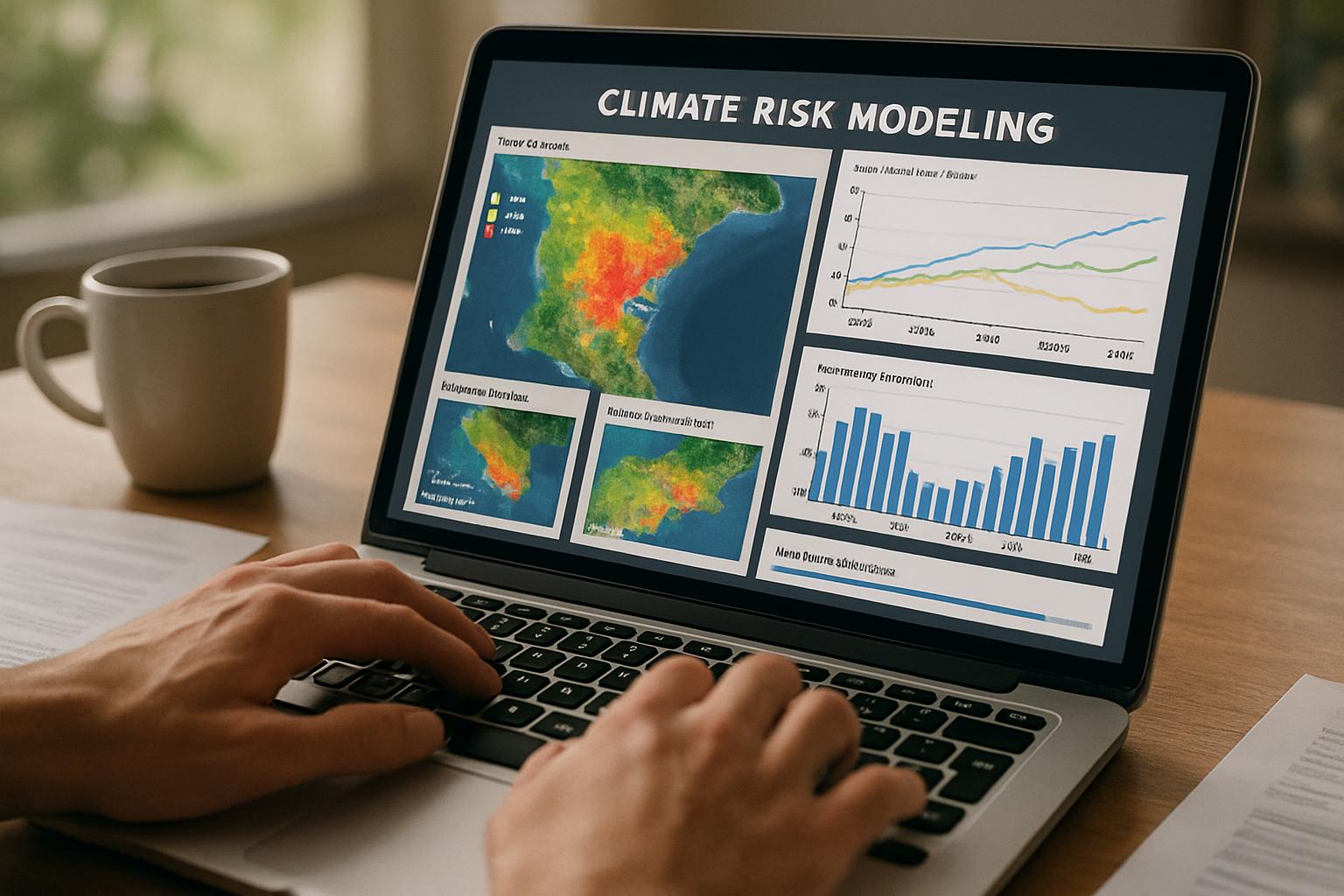
Rising losses and capital strain accelerate analytic adoption across underwriting functions. However, regulatory expectations amplify this momentum, which the next section examines.
Global Regulatory Pressure Mounts
Supervisors now expect climate metrics embedded within core governance documents. For example, the UK PRA’s PS25/25 mandates robust climate scenario analysis inside ORSAs. Furthermore, firms must evidence model governance, data quality, and proportional use. California’s Department of Insurance approved three wildfire models for rate filings during 2025. Consequently, insurers can price using projected hazards rather than backward claims history. Commissioner Ricardo Lara framed the move as restoring voluntary capacity and consumer protection. Meanwhile, other US states watch closely but have yet to replicate California’s regime. Regulators also scrutinize model risk management, forcing carriers to validate assumptions and sensitivity ranges. Therefore, climate risk modeling engines must deliver transparent documentation and audit trails to gain approval. These supervisory demands push insurers toward structured model inventories and multi-model frameworks.
Regulators are moving from encouragement to mandatory integration of forward-looking analytics. Subsequently, underwriting policies must adapt, especially as vendor capabilities evolve next.
Technology Vendor Landscape Evolves
Vendor competition has intensified over the past year. Jupiter Intelligence, ZestyAI, and One Concern now offer API-based property analytics updated quarterly. Moreover, traditional providers Moody’s RMS, Verisk AIR, and Karen Clark & Co. embed climate scenarios within stochastic engines. These products integrate catastrophe analytics with high-resolution hazard layers and geospatial exposure databases. Consequently, underwriters can run per-property loss curves in seconds, not hours. Several platforms now carry independent validation to streamline regulatory acceptance and reduce model risk. Meanwhile, vendors highlight actuarial intelligence features that estimate mitigation return on investment. One dashboard, for instance, quantifies wildfire defensible space savings and suggests price discounts. However, licensing costs and integration complexity remain barriers for smaller regional carriers. Ultimately, climate risk modeling engines must balance precision, speed, and affordability to win market share.
Vendor advances now offer decision-grade analytics. The next section explores how such tools reshape day-to-day underwriting decisions.
Underwriting Policy Impacts Deepen
Underwriters increasingly overlay modeled hazard projections onto legacy rating plans. Consequently, high-risk properties may face surcharges, coverage restrictions, or required mitigation steps. Conversely, resilient buildings can earn credits when actuarial intelligence flags lower expected losses. California filings illustrate pricing influence; carriers used approved wildfire models to justify targeted 17-25% increases. Moreover, portfolio managers steer aggregate limits away from correlated wildfire zones to reduce tail risk. Reinsurance brokers rely on exceedance probability curves from climate risk modeling engines when negotiating layers. Lists below summarize the specific underwriting levers now driven by catastrophe analytics.
- Pricing and rate filings rely on projected Average Annual Loss metrics.
- Risk selection rules embed property-level hazard classifications.
- Reinsurance program design uses updated Probable Maximum Loss distributions.
- Product innovation offers parametric covers linked to modeled triggers.
Additionally, some carriers bundle adaptation services, such as wildfire vegetation removal, within renewal offers. Nevertheless, model uncertainty dictates that many firms adopt multi-model blends and wide sensitivity bands.
Climate-informed underwriting enables granular action yet demands disciplined governance. Benefits and drawbacks of this shift now deserve balanced assessment.
Benefits And Key Drawbacks
Forward-looking analytics provide clear strategic advantages. Firstly, they improve solvency by aligning pricing with probable future losses. Moreover, quantified mitigation ROI encourages policyholders to invest in resilience. Consequently, social welfare improves when disasters strike because losses fall and recovery speeds up. Capital allocation also benefits; boards can deploy scarce capacity toward profitable segments with greater confidence. However, drawbacks persist. Model divergence can produce double-digit pricing spreads for identical properties. Regulators therefore demand transparent assumptions and robust validation to curb cherry-picking. Affordability risks grow when forward curves elevate premiums in already vulnerable communities. In contrast, political backlash may limit insurers’ ability to fully reflect modeled hazards. Additionally, observers worry about herd behavior because many firms license identical climate risk modeling engines.
Pros and cons therefore require careful, ongoing monitoring. Operational strategies can mitigate these concerns, as outlined next.
Operational Next Steps Forward
Executives should establish enterprise model inventories with clear ownership and lifecycle tracking. Moreover, multi-model ensembles reduce dependency on single vendor viewpoints. Underwriters can run comparative sensitivity tests to expose parameter uncertainty early. Subsequently, actuarial intelligence teams must document assumptions, calibration choices, and validation statistics for regulators. Boards should receive climate metrics within quarterly risk appetite dashboards, not annual appendices. Furthermore, integrating outputs into policy administration systems ensures consistent rating across distribution channels. Consequently, deploying climate risk modeling engines enterprise-wide demands change management support. Implementation checklists help busy teams maintain momentum. Key steps appear below.
- Map available catastrophe analytics and select vendor mix.
- Conduct model validation and scenario benchmarking.
- Embed results into pricing and reinsurance workflows.
- Train underwriting staff on tool usage and governance.
Professionals can deepen skills via the AI-Marketing Specialist™ certification. Additionally, alignment with emerging standards such as NGFS improves external reporting credibility.
Structured processes convert analytics into reliable underwriting advantage. Finally, we consider the broader outlook and unanswered questions.
Outlook And Next Steps
Climate threats will intensify, yet data and computing power also accelerate. Therefore, insurers embedding climate risk modeling engines across pricing, capital, and claims will navigate volatility. Moreover, multi-model catastrophe analytics sharpen differentiation and bolster regulatory transparency. However, governance discipline and skilled actuarial intelligence remain essential to avoid false precision. Meanwhile, carriers delaying climate risk modeling engines risk capital withdrawals and rating downgrades. Investors already reward firms showcasing credible use of climate risk modeling engines in disclosures. Consequently, executives should evaluate workflows, budget for vendor diversity, and invest in staff training now. Explore certifications like the AI-Marketing Specialist™, upgrade toolsets, and lead resilient underwriting.
Disclaimer: Some content may be AI-generated or assisted and is provided ‘as is’ for informational purposes only, without warranties of accuracy or completeness, and does not imply endorsement or affiliation.


