

AI CERTs
3 months ago
AI-powered energy load forecasting platforms steady smart grids
Utilities worldwide face a volatile mix of record peaks, rapid renewable adoption, and surging data-center demand. Consequently, system operators need sharper visibility and faster decisions. AI-powered energy load forecasting platforms now offer that clarity, blending machine learning with real-time grid data. These systems slash prediction errors, open room for flexible loads, and strengthen reliability across smart grids.
However, momentum hides complexity. Legacy infrastructure, regulatory friction, and cybersecurity gaps still slow scaling. Nevertheless, recent production deployments suggest the technology’s tipping point has arrived.
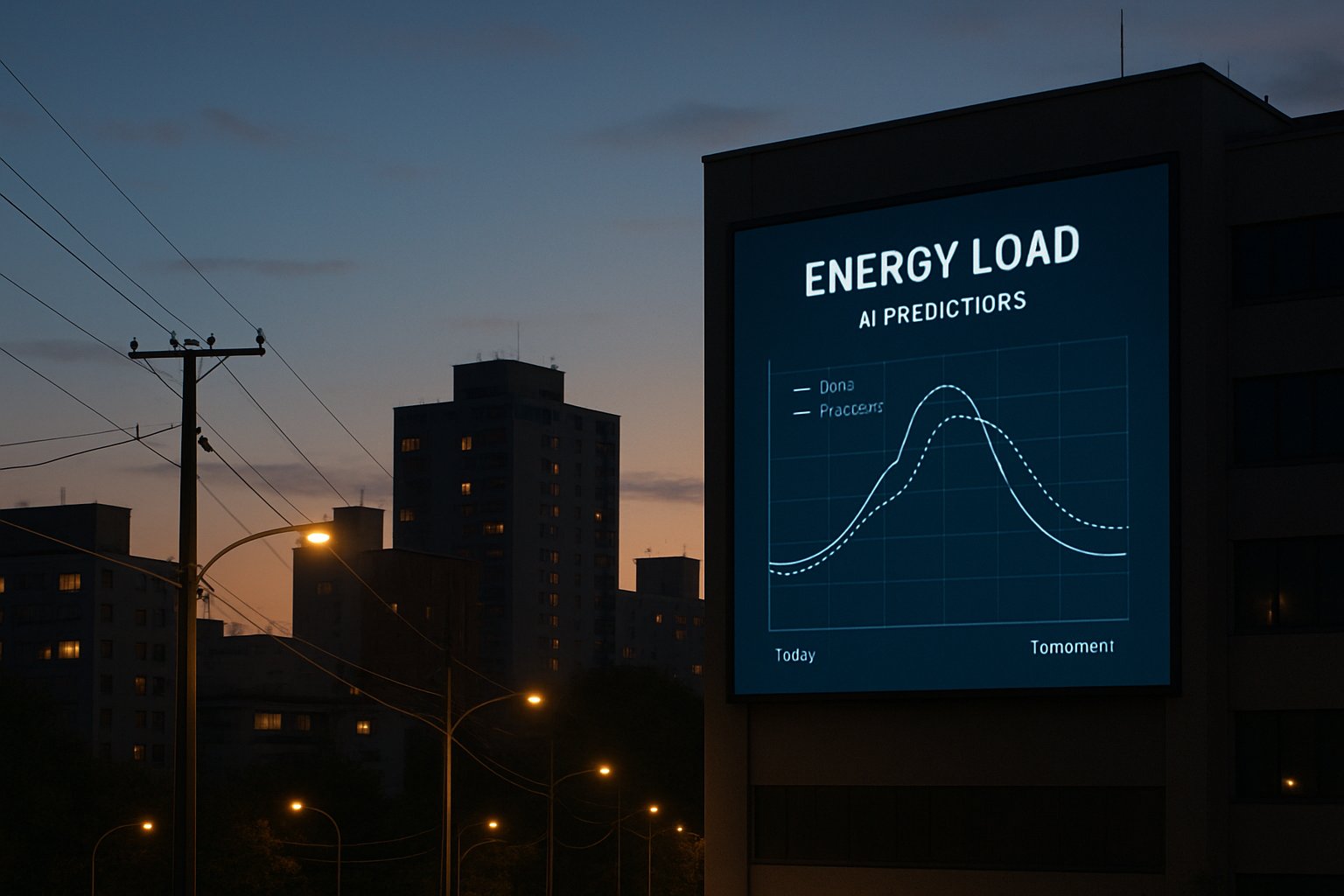
Market Momentum Accelerates Adoption
Global investment in forecasting and analytics is climbing. Precedence Research projects multi-billion dollar revenue for the category this decade. Moreover, Google, Amperon, and Bidgely launched commercial offerings that pair probabilistic forecasts with control software. Google even signed utility deals letting machine-learning workloads flex during critical hours.
Meanwhile, EPRI’s DCFlex demonstrations will test data-center flexibility at multiple sites through 2027. The U.S. Department of Energy warns national data-center demand could triple by 2028, making these pilots urgent. In contrast, some regulators discuss capping new hyperscale connections unless flexibility commitments exist.
These developments underscore rising confidence in AI-powered energy load forecasting platforms (#2). The trend also signals expanding roles for grid optimization and verified demand response services.
Better forecasts and flexible compute unlock capacity. However, long-term success depends on trusted measurement and market rules.
Core Grid Technologies Explained
Several technical pillars enable the current wave. Probabilistic forecasting generates confidence intervals instead of single numbers, improving risk management. Additionally, digital twins replicate network conditions in software, letting operators test AI recommendations safely. Ensemble models continually retrain using new AMI, weather, and DER feeds.
Furthermore, AI-powered energy load forecasting platforms (#3) often integrate with DERMS and ADMS suites. That architecture supports grid optimization by coordinating batteries, EV chargers, and curtailed compute jobs.
Key vendors add API layers that export forecasts directly to market bidding engines. Consequently, utilities can monetize accuracy by reducing reserve procurement. Demand response orchestration then shifts or trims load when forecasts detect tight margins.
These components create a closed feedback loop. Accurate predictions guide actions, and verified actions improve future predictions. Therefore, technology maturity now rests more on data quality than on algorithm novelty.
Benefits For Grid Operators
Operator gains already appear in field data. Industry pilots report 10–25% forecasting error reductions compared with legacy statistical baselines. Moreover, probabilistic outputs help right-size spinning reserves, saving fuel and emissions.
Coordinated flexible loads multiply the value. Google’s tests with Indiana Michigan Power curtailed compute during three grid events, freeing capacity for other customers. Consequently, operators deferred infrastructure upgrades and improved renewable integration.
Utilities also cite downstream gains in outage prevention and peak shaving. When AI-powered energy load forecasting platforms (#4) feed DERMS, batteries discharge precisely when solar ramps down. That synergy advances grid optimization goals and supports responsive markets.
Key upside highlights:
- Lower reserve costs through sharper short-term accuracy.
- Higher renewable penetration by balancing net load swings.
- Capital deferral when demand response reduces peak build requirements.
These benefits strengthen business cases. However, proving them at scale remains essential before regulators grant broad cost recovery.
Verified savings entice early adopters. Nevertheless, lingering challenges could derail progress without strategic mitigation.
Challenges Stall Wider Scaling
Data availability tops the list. Many utilities still rely on legacy SCADA feeds with limited temporal resolution. Consequently, model accuracy suffers, and operator trust erodes.
Cybersecurity adds another hurdle. CSIS warns that autonomous controls enlarge the attack surface. Therefore, platforms must embed rigorous authentication, anomaly detection, and fail-safe modes.
Additionally, market rules vary by region. Some ISOs hesitate to reward probabilistic forecasts or unproven flexible loads. In contrast, voluntary agreements, such as Google’s, show alternative pathways.
Workforce skills gaps persist as well. Staff need training on AI model governance, bias detection, and interpretability. Professionals can enhance their expertise with the AI Human Resources™ certification, which covers change management for digital transformations.
These obstacles limit the speed at which AI-powered energy load forecasting platforms (#5) enter full production.
Solutions appear, yet adoption hinges on harmonizing standards, incentives, and security protocols.
Policy And Market Outlook
Regulators recognize the stakes. DOE recommendations advocate forecasting research, flexible load programs, and coordinated planning. Meanwhile, PJM proposes stricter interconnection reviews for large data centers.
Markets also evolve. ABI Research ranks GE Vernova, Siemens, and Schneider Electric as digital-grid leaders. Furthermore, startups focus on specialty niches like dynamic line ratings and nodal price forecasting.
Investment trends remain bullish. Forecasting, grid optimization, and demand response collectively attract venture and corporate capital. Therefore, analysts expect double-digit CAGR through 2030.
However, policy delays could slow rollouts. Transparent measurement and verification rules for flexible loads will determine whether capacity markets accept them.
AI-powered energy load forecasting platforms (#6) will flourish where data-center growth faces tight capacity margins. Consequently, states with robust tech corridors may pioneer new tariff designs.
The regulatory tide is moving. Nevertheless, alignment between policy, technology, and finance remains unfinished.
Actionable Steps For Utilities
Utilities considering deployment can follow a phased roadmap:
- Audit data pipelines and clean historical load, weather, and DER datasets.
- Start with shadow forecasts to benchmark accuracy improvements.
- Integrate probabilistic outputs into dispatch planning tools.
- Pilot demand response with willing data-center or EV-fleet partners.
- Establish cybersecurity governance and model-risk frameworks.
Each phase builds operator confidence while capturing incremental value. Additionally, workforce training should run in parallel. Staff versed in AI ethics and interpretability can spot anomalies before they create outages.
Utilities that adopt AI-powered energy load forecasting platforms (#7) early can negotiate favorable market positions. Moreover, they influence evolving standards and incentive structures.
Measured progress de-risks technology. Thus, deliberate planning converts experimentation into sustained operational gains.
Conclusion And Next Moves
Smart-grid stability now depends on better predictions and flexible demand. AI-powered energy load forecasting platforms (#8) supply those insights, while grid optimization and demand response monetize them. Market momentum, vendor innovation, and supportive policy shifts signal a breakout phase.
Nevertheless, data quality, cybersecurity, and regulatory clarity remain gating factors. Utilities should pilot, measure, and iterate. Furthermore, professionals should upskill to navigate AI governance and change management.
The path is clear. AI-powered energy load forecasting platforms (#9) can transform grid economics and resilience. Therefore, explore pilot partnerships, pursue verified performance metrics, and leverage certifications to build internal expertise.
Adopting these tools today prepares utilities for tomorrow’s electrified, digital economy. Consequently, now is the moment to act and lead the transition.


