

AI CERTs
3 hours ago
Behavioral Threat Detection Models Drive Adaptive Zero Trust
Escalating breaches keep executives awake at night. Meanwhile, attackers weaponize stolen credentials faster than teams respond. Organizations therefore pivot toward continuous verification across users, devices, and workloads.
Today, behavioral threat detection models now sit at the heart of that shift. By baselining activity and flagging anomalies, they feed real-time Zero Trust policy engines. Consequently, security leaders gain insight before attackers pivot laterally.
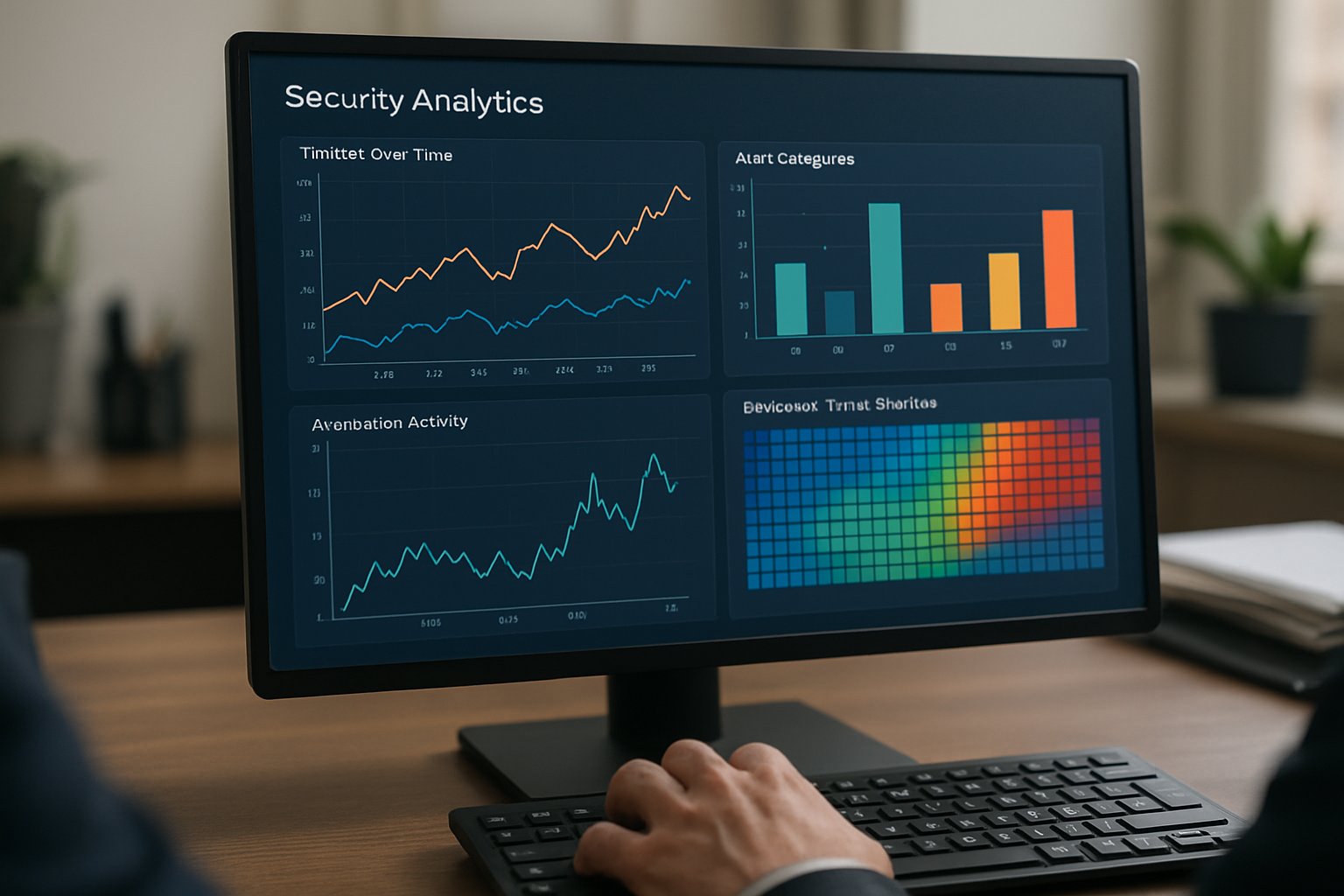
However, hype can obscure the technical gains and operational gaps. This article dissects recent developments, market data, and research directions. Moreover, readers will learn practical steps for deploying the approach safely.
Surging Zero Trust Momentum
Zero Trust adoption accelerated across industries during the last eighteen months. Furthermore, government mandates and supply-chain attacks raised urgency.
Microsoft integrated its “behaviors” layer into Sentinel and Defender portals. Exabeam launched New-Scale Analytics, emphasizing dynamic risk scoring and automated containment. Additionally, research papers propose graph and LLM methods for continuous identity scoring.
Moreover, many solutions embed insider risk analytics for proactive workforce monitoring. Security teams value those advances because they convert noisy logs into actionable behavior objects. Consequently, anomaly detection improves while triage workloads fall.
These developments confirm rapid momentum. However, financial indicators reveal deeper insights.
Let us examine market growth next.
Robust Market Growth Signals
Market researchers project double-digit CAGR for UEBA and behavior analytics. Grand View Research estimates valuations approaching two billion dollars in 2025. Meanwhile, Verizon DBIR shows credential misuse leading recent breaches.
Those statistics align with budget shifts toward identity centric controls. In addition, insider risk analytics now commands a growing share of those allocations. Moreover, boards demand evidence of reduced dwell time and faster containment. Behavior based investments promise measurable ROI in these metrics.
- UEBA market valued at USD 1.4-1.9B in 2024.
- Double-digit CAGR projected through 2030.
- Verizon DBIR recorded 12,195 confirmed breaches in 2024.
- Credential misuse remained the top vector.
Financial indicators underscore escalating demand. Consequently, technical innovation must keep pace. Furthermore, brokers predict that behavioral threat detection models will outpace legacy SIEM spend by 2028.
Technical advances now deserve closer inspection.
Emerging Core Technical Advances
Vendors shift from static rules toward self-learning ensembles. Graph neural networks analyze relationships across identities, devices, and resources. Therefore, subtle lateral movement surfaces earlier.
LLMs now parse audit messages to infer intent and sentiment. Additionally, behavioral biometrics enrich continuous authentication without user friction. These capabilities strengthen anomaly detection across hybrid environments.
Advanced ensembles also elevate anomaly detection precision under shifting conditions. Research labs test federated learning to address privacy constraints. Meanwhile, adaptive baselines adjust for remote work seasonality. Modern behavioral threat detection models increasingly incorporate those techniques for resilient scoring. Such context helps behavioral threat detection models narrow investigation scope.
Technical progress expands detection breadth. However, deployment discipline determines real value.
Implementation practices merit detailed review.
Effective Implementation Best Practices
Successful rollouts begin with telemetry completeness. Organizations integrate identity logs, endpoint events, and cloud telemetry. Furthermore, tuning thresholds reduces alert fatigue.
Teams should map behavior scores to conditional access actions. For example, high risk may trigger step-up multifactor authentication. Consequently, threats face immediate friction. Additionally, robust insider risk analytics should feed the same policy engine to avoid blind spots.
Professionals can enhance expertise with the AI+ Ethics Strategist™ certification. That program covers privacy, governance, and responsible AI monitoring. Moreover, it prepares leaders to evaluate model ethics during deployment.
Modern Threat Enforcement Loop
Microsoft describes an ingest-analyze-enforce loop within Sentinel. Logs convert to behavior objects that feed policy engines in seconds. Subsequently, SOAR playbooks isolate or revoke sessions automatically.
Clear mappings accelerate response time. Therefore, best practices revolve around integration discipline.
Risks and safeguards now enter focus.
Key Risks And Mitigations
Despite progress, privacy concerns persist. Continuous monitoring can trigger legal scrutiny in regulated regions. Consequently, teams adopt differential privacy or federated training to reduce exposure.
False positives remain another challenge. In contrast, adaptive baselines and feedback loops cut noise over time. Behavioral threat detection models still require human oversight for critical actions.
Attackers may learn to mimic normal behavior or poison training data. Nevertheless, explainable models and ensemble defenses limit such evasion.
Risk mitigation demands balanced governance. Consequently, research remains vital.
The next section explores future directions.
Promising Future Research Directions
Academic teams experiment with graph neural networks on identity graphs. Moreover, they report detection AUCs above 0.95 on curated datasets. Operational validation inside enterprises remains pending.
LLMs increasingly summarize alerts and recommend remediation steps. Additionally, autonomous agents might soon adjust policies without analyst input. Behavioral threat detection models will likely embed these assistants for closed-loop defense.
Federated learning will support cross-agency collaboration while preserving data sovereignty. Consequently, insider risk analytics could improve across supply chains. A vibrant research pipeline suggests continued capability expansion.
Future work targets automation and privacy. Therefore, continuous learning will define next-generation security.
Finally, let us consolidate key insights.
Modern security depends on continuous verification rather than static walls. Therefore, behavioral threat detection models convert raw activity into decisive risk insights. Combined with insider risk analytics, they expose malicious insiders and negligent users early. Moreover, advanced anomaly detection trims false positives and accelerates containment. Successful programs hinge on telemetry breadth, governance, and ethical oversight. Consequently, leaders should pilot, measure, and refine these capabilities while pursuing relevant credentials. Explore the linked AI ethics certification to strengthen your strategy today.


