

AI CERTs
2 months ago
How autonomous incident response playbooks slash breach time
Containment speed defines breach impact. However, many security teams still wrestle with drawn-out investigations and costly downtime. Emerging evidence reveals a practical remedy. Autonomous incident response playbooks now compress containment windows previously measured in months. The IBM 2025 Cost of a Data Breach study reports a nine-year low lifecycle of 241 days. Furthermore, organizations with extensive security automation contained breaches 108 days faster than peers. Verizon DBIR trends show similar, though less dramatic, progress. NIST reinforced the message in April 2025 by embedding playbook controls in SP 800-61 Revision 3. Consequently, executive boards recognise that codified response workflows are no longer optional. This article examines research, standards, and market dynamics. Readers will learn how autonomous incident response playbooks drive efficiency, strengthen SOC automation, and improve cyber resilience across industries.
Market Momentum Accelerates Fast
Global demand for security orchestration platforms keeps rising. Moreover, analysts place the 2024 SOAR market between USD 1.6 billion and USD 2.8 billion. Forecast models predict double-digit compound growth through 2030.
- Mean breach lifecycle: 241 days (IBM 2025)
- 108-day faster containment with mature automation
- Ransomware playbooks cut 16 % containment time
Budgets now follow these data-driven trends. Stakeholders view autonomous incident response playbooks as a proven cost-avoidance lever. However, regulatory clarity remains essential, leading directly to recent NIST guidance.
NIST Guidance Shapes Practice
April 2025 marked a pivotal milestone. NIST released SP 800-61 Revision 3, its first major incident-response update in years. The document positions playbook-driven response alongside the NIST CSF functions.
Furthermore, the guidance urges mapped approvals, testing cycles, and audit logging for every automation step. Consequently, security leaders must embed governance in each deployment of autonomous incident response playbooks.
NIST’s endorsement eliminates lingering doubts. Mandatory testing and oversight guard against unsafe actions. Next, understanding the mechanics behind these playbooks becomes crucial.
Autonomous Incident Response Playbooks
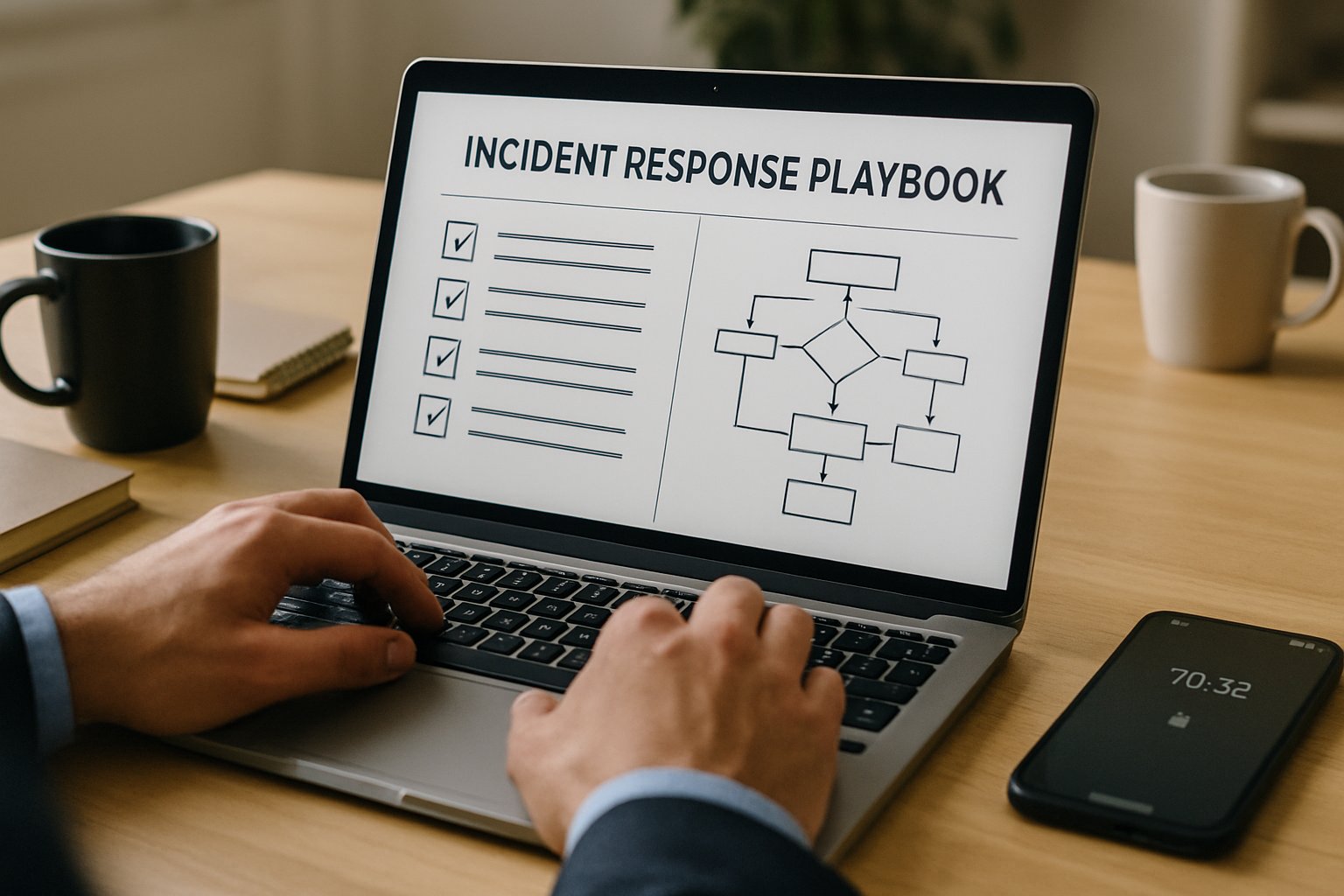
An autonomous incident response playbook codifies investigative and remedial steps for a specific threat scenario. Moreover, modern SOAR platforms trigger these instructions automatically when detection engines raise defined alerts. Actions range from evidence enrichment to endpoint isolation, with human approvals injected for higher-risk decisions.
Meanwhile, AI agents now augment static scripts with context-based recommendations. This shift elevates SOC automation maturity and frees analysts for strategic work. Autonomous incident response playbooks thereby become an engine for sustained cyber resilience.
Playbooks transform knowledge into executable code. They bridge detection and response without extra staffing. The next section reviews measured performance gains.
Measurable Breach Reductions Evident
Independent research validates the operational impact. IBM’s 2025 dataset sets mean identification-containment at 241 days. Organizations with extensive security AI shaved 108 days from that baseline.
- Ransomware playbooks: 68-day containment versus 80-day average
- 108-day faster lifecycle with mature automation
- Multi-million USD savings per breach event
Furthermore, vendors cite reductions from hours to minutes in customer testimonials. These claims support the broader thesis yet require independent verification. Nevertheless, the convergence of surveys, case studies, and standards heightens confidence in autonomous incident response playbooks.
Metrics show consistent time savings. Financial benefits follow smaller containment windows. Still, unchecked automation can introduce fresh risks, so governance deserves attention.
Governance And Oversight Essentials
Unchecked automation can misfire and disrupt business systems. Therefore, SP 800-61r3 prescribes approval gates, simulation tests, and audit logs for every workflow.
Additionally, leaders should couple SOC automation metrics with business-level service indicators. Autonomous incident response playbooks must preserve forensic artefacts to maintain legal defensibility.
Disciplined governance maximises benefits while containing risk. Organisations that pair oversight with automation grow trust and adoption. Attention now turns to building future-ready resilience strategies.
Building Future Resilience Strategies
Market momentum and regulatory clarity create a favourable environment for continued investment. Enterprises should start with low-risk workflows then expand coverage once lessons surface.
Moreover, cross-functional crisis drills validate both technology and human protocols. Teams can enhance their expertise with the AI-Cloud Security Engineer™ certification, which embeds best-practice playbook design.
Consequently, trained staff, robust SOC automation, and autonomous incident response playbooks create a virtuous security loop. Planned investment plus continuous learning fortify cyber resilience. Early adopters already see measurable returns. Finally, the conclusion distils actionable next steps.
Autonomous incident response playbooks have moved from innovation to expectation. IBM, NIST, and market analysts confirm their material impact on containment speed and cost. Moreover, SOC automation amplifies scarce talent while improving repeatability. Nevertheless, success depends on rigorous governance, testing, and continuous measurement. Organisations that adopt these practices improve cyber resilience and business confidence. Professionals seeking deeper mastery should pursue recognised certifications and contribute to playbook libraries. Take action today and accelerate your journey toward safer, stronger operations.


