

AI CERTs
2 months ago
Supply chain disruption forecasting models redefine nearshoring
Nearshoring once relied on gut feeling rather than data. Today, executives simulate entire networks before shifting production across borders. Consequently, supply chain disruption forecasting models provide quantitative clarity that leadership once lacked. Moreover, rising tariff volatility and geopolitical shocks have made traditional spreadsheets obsolete. Executives demand rapid scenario answers instead of slow static reports. Additionally, this analysis details how advanced tools improve site selection, cost control, and service reliability. Furthermore, practical steps show how to build capabilities without overspending.
Nearshoring Trend Accelerates Fast
Regionalization has moved from aspirational slideware to measurable action. McKinsey found 60% of manufacturers regionalized portions of supply chains during 2024. Furthermore, two-thirds increased nearby sourcing to hedge transit uncertainty and political risk. Mexico illustrates the momentum vividly. FreightWaves reported record foreign direct investment of $21.4 billion in Q1 2025 alone. Consequently, manufacturers keep expanding automotive and electronics capacity south of the U.S. border.
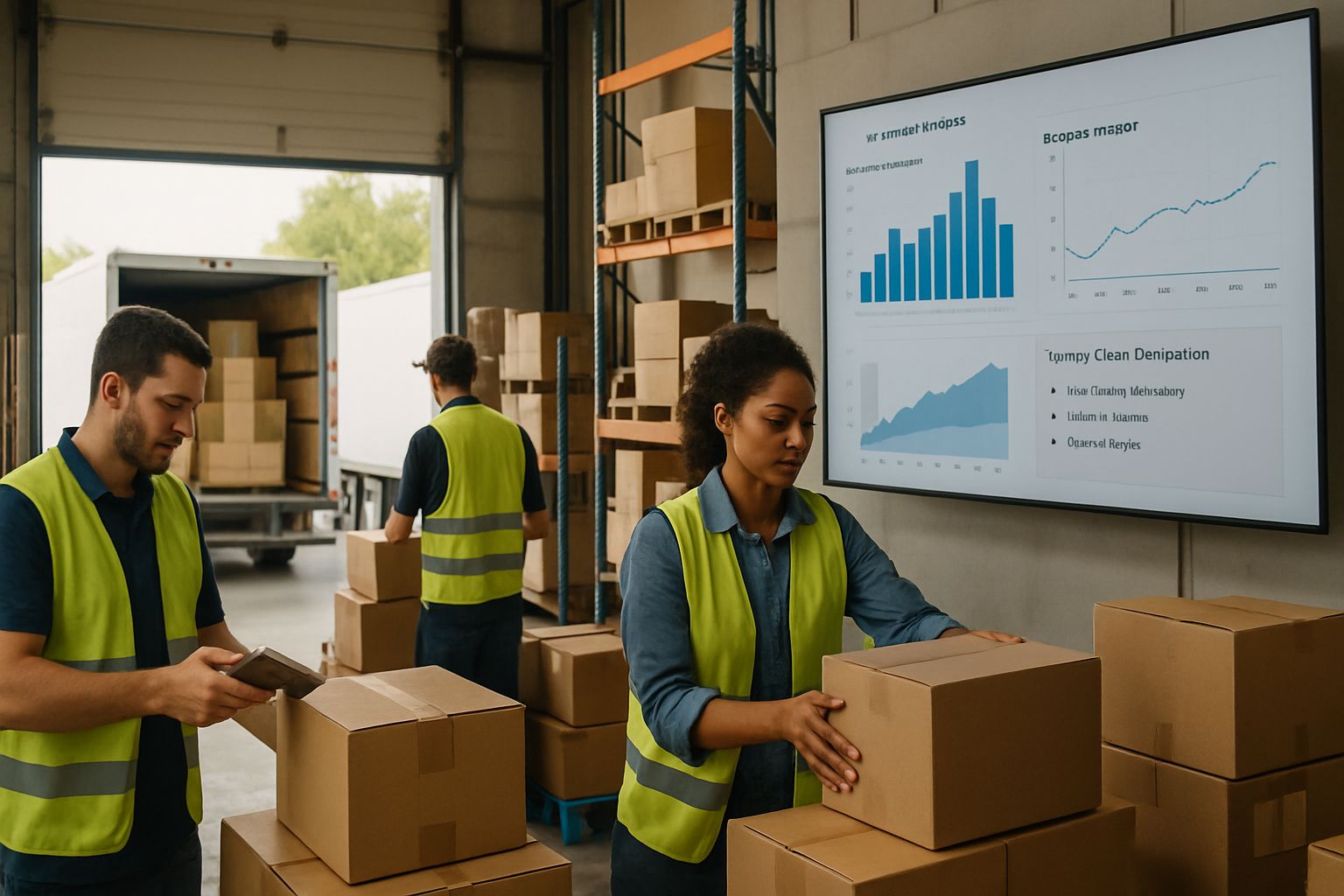
- 73% of firms adopt dual-sourcing, reducing single-supplier exposure.
- Accenture links mature, AI-enabled chains to 23% higher profitability.
- BCG projects an additional $315 billion in North American trade by 2033.
Moreover, executives cite logistics risk intelligence as a decisive input when selecting regional hubs. These numbers confirm the strategic urgency. Nevertheless, data alone rarely guides optimal choices. The next section explores why.
These statistics reveal unstoppable momentum. Consequently, companies must strengthen analytical foundations before expanding footprints.
Forecasting Models Power Decisions
Traditional demand forecasts assume smooth operations. In contrast, supply chain disruption forecasting models embed probability distributions for delays, strikes, and weather shocks. Moreover, they integrate tariffs, fuel costs, and labor indices into scenario engines. Consequently, planners can compare hundreds of site options within minutes rather than weeks.
Additionally, modern platforms fuse machine learning with causal signals such as commodity prices. This fusion enriches logistics risk intelligence and sharpens near-term alerting. Blue Yonder’s CEO notes that cognitive planning cuts decision latency from hours to minutes. Furthermore, Accenture, NVIDIA, and KION demonstrated warehouse twins that react instantly to policy shifts.
Therefore, companies replace static spreadsheets with always-on simulators. Another advantage arises from transparency. Teams can show boards exact trade-offs among cost, lead time, carbon, and service levels. Consequently, debate moves from opinion to evidence. However, technology choices still matter greatly, as outlined next.
These capabilities transform planning agility. Subsequently, firms adopting them report faster, better capital allocation.
Technology Stack Underpinning Accuracy
Effective deployments combine three building blocks. First, real-time data pipelines feed external prices, macro news, and sensor events. Second, a live cost engine recomputes total landed cost whenever an input changes. Third, digital twins let planners test structural moves safely.
Digital Twin Engines Rise
Digital twins mirror factories, transport lanes, and inventories in the cloud. Moreover, they update continuously, reflecting border wait times and factory outputs. Consequently, supply chain disruption forecasting models can evaluate shifting 30% of production to Monterrey within seconds. Additionally, probabilistic solvers rank site portfolios by expected profit and risk.
This stack also strengthens resilience planning. Teams can stress-test suppliers against earthquake scenarios or currency shocks. Furthermore, graph analytics trace tier-2 and tier-3 dependencies otherwise hidden. Therefore, executives gain an end-to-end view of exposure.
These tools raise forecast accuracy while shrinking analysis cycles. Nevertheless, decision quality still depends on balancing multiple objectives, examined below.
Quantifying Critical Resilience Trade-Offs
Boards often struggle to price resilience benefits. However, supply chain disruption forecasting models convert abstract risk into dollars. Moreover, chance-constrained optimization recommends paying higher unit costs when disruption probability exceeds thresholds.
Consider a multinational electronics firm. Scenario runs showed that a Mexican facility increased unit labor by 8%, yet cut emergency airfreight by 21% and improved service levels. Consequently, net margin rose two points within one year.
The models also expose carbon impacts. Additionally, live engines recalculate emissions when transport modes change. Therefore, sustainability executives obtain credible numbers for ESG reporting. Furthermore, enhanced logistics risk intelligence helps procurement negotiate wider buffer inventory agreements.
Key benefits include:
- Faster decision cycles, shrinking analysis time from weeks to minutes.
- Better risk weighting through probabilistic scoring of tail events.
- Dynamic updates as tariffs or exchange rates shift.
These quantified trade-offs support board approval. Subsequently, attention turns toward practical adoption hurdles.
Implementation Challenges And Fixes
Many firms still lack multi-tier visibility. Consequently, model inputs may miss critical supplier nodes. Moreover, rare events remain hard to calibrate because historical analogues are sparse. Nevertheless, recent academic advances offer hybrid techniques that improve tail estimation.
Data Gaps Persist Today
Data quality issues undermine forecasts, yet solutions exist. First, integrate real-time shipment feeds from FourKites or Project44. Second, capture supplier risk scores from Resilinc. Additionally, deploy graph databases to map dependencies quickly.
Skill shortages pose another barrier. However, professionals can enhance their expertise with the AI+ Sales™ certification. The program covers analytical storytelling that converts model output into persuasive business cases.
Furthermore, change management requires clear incentives. Therefore, leading companies tie bonuses to resilience metrics alongside cost. Consequently, adoption rises and cultural resistance fades.
These fixes close critical gaps. Subsequently, leadership can focus on scaling capability enterprise-wide.
Strategic Roadmap And Outlook
An effective roadmap follows four steps. First, baseline current network risk using logistics risk intelligence feeds. Second, pilot supply chain disruption forecasting models on a high-value product line. Third, embed digital twins within S&OP governance. Fourth, institutionalize resilience planning metrics within executive dashboards.
Moreover, vendors now offer modular subscriptions, reducing upfront costs. Consequently, mid-market firms can compete with global giants. Additionally, governments increasingly grant incentives for nearshoring that meets sustainability targets.
Industry analysts expect double-digit growth for digital twin software through 2030. Therefore, delaying investment risks competitive disadvantage. Nevertheless, disciplined roadmaps prevent over-spending on hype.
These forward steps align technology, talent, and process. Subsequently, companies can navigate future shocks with confidence.
In conclusion, nearshoring momentum is undeniable. Moreover, supply chain disruption forecasting models transform that momentum into measurable profit. They enrich logistics risk intelligence, elevate resilience planning, and compress decision cycles dramatically. Consequently, firms achieve faster service and higher margins while meeting ESG goals. Nevertheless, success demands quality data, skilled talent, and disciplined change management. Therefore, readers should audit current capabilities and launch a pilot within the next quarter. Finally, explore advanced certifications and vendor partnerships to accelerate the journey toward resilient, data-driven supply chains.


