

AI CERTs
2 months ago
How Drug Trial Patient Matching Systems Slash Recruitment Delays
Emerging drug trial patient matching systems are reshaping recruitment workflows across life sciences. Consequently, sponsors feel growing pressure to shorten enrollment timelines and control costs. These automated platforms mine electronic health records, parse eligibility criteria, and surface ranked candidates within minutes. Furthermore, vendors now report measurable time savings and significant enrollment gains. Industry leaders therefore watch the space closely, seeing clear links to clinical trial acceleration and stronger cohort discovery outcomes.
Market Pressures Intensify Fast
Recruitment delays remain the largest drag on development timelines. Moreover, Tufts CSDD data show 11% of sites enroll zero patients. IQVIA analyses additionally note rising enrollment duration from 2019 through 2023. Consequently, sponsors seek technology that trims weeks from prescreening. Automated matching answers that call by reducing manual chart reviews and revealing hidden populations. These macro drivers set fertile ground for rapid adoption. The section underscores why urgency exists. However, the technology stack deserves equal scrutiny.
Technology Stack Rapidly Evolves
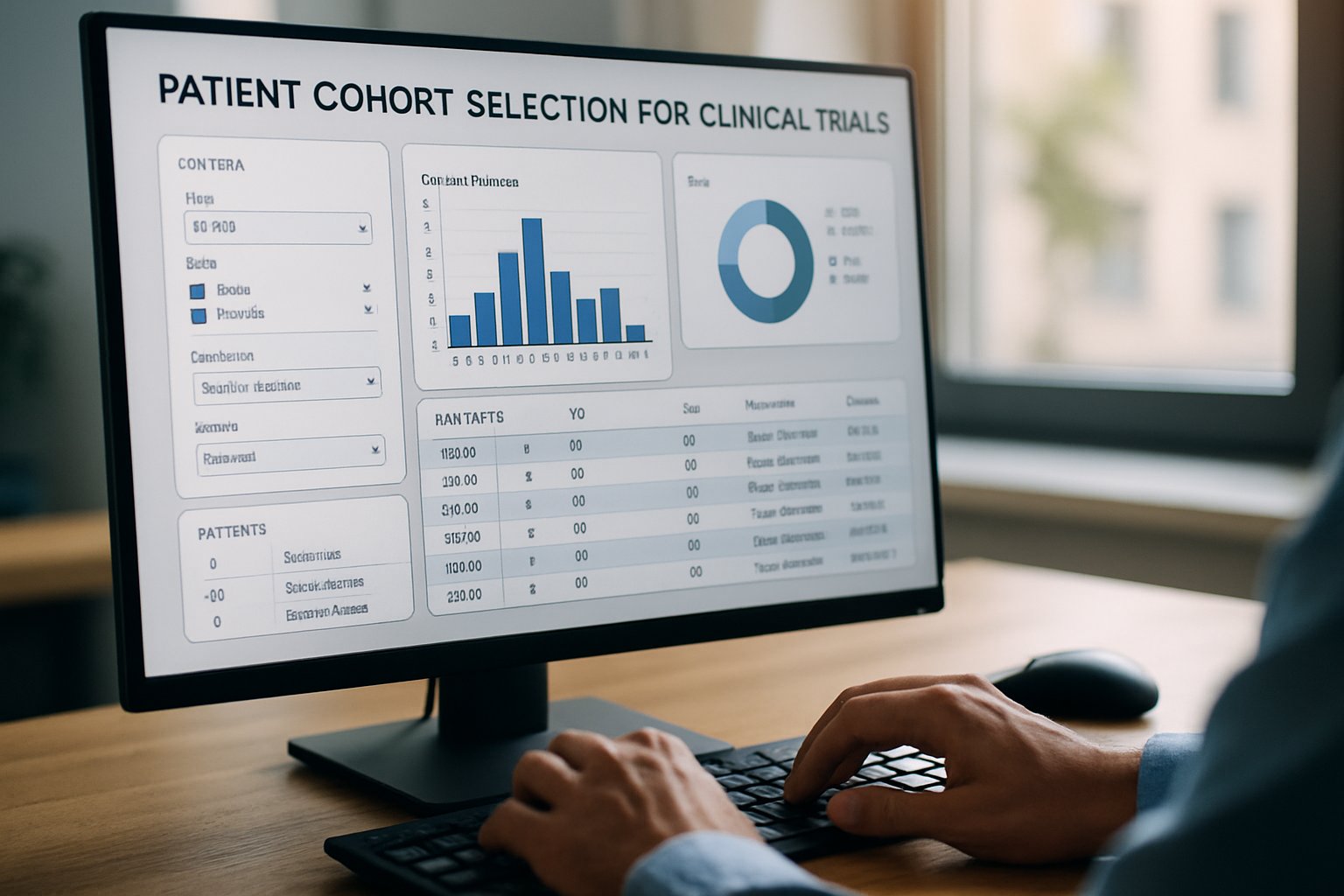
Early tools relied on rule-based queries against structured data. Subsequently, natural language processing extracted critical facts from free-text notes. Large language models, exemplified by TrialGPT, push performance further by interpreting nuanced criteria. Deep6.ai, Realyze, and similar vendors integrate FHIR feeds for seamless hospital deployment. In contrast, federated architectures keep protected health information on-site, using tokenization for privacy. These layered capabilities enable superior recall while maintaining compliance. The technical evolution explains recent performance claims. Nevertheless, hard numbers validate those claims best.
Proven Impact Metrics Emerging
Peer-reviewed evidence now supports vendor narratives. TrialGPT recalled over 90% of relevant trials and cut screening time 42%. UPMC’s Realyze implementation matched seven times more oncology patients and doubled enrollments. Market reports equally estimate software revenue at USD 187 million in 2024 with 13% CAGR. Meanwhile, Deep6.ai case studies describe minutes-long searches replacing months of manual effort. Sponsors value these gains because they fuel clinical trial acceleration and widen cohort discovery. Numbers clearly spotlight efficiency lifts. Yet challenges could blunt those benefits.
Operational Challenges Still Persist
Data quality remains the primary hurdle. Many eligibility details hide in fragmented narrative fields requiring robust NLP. False positives can swamp coordinators, shifting rather than removing workload. Bias risk hovers when models train on nonrepresentative records, potentially limiting diversity goals. Additionally, privacy regulations demand rigorous consent handling and secure architectures. Independent reviewers therefore call for human-in-the-loop workflows and transparent validation metrics. These concerns illustrate that implementation rigor matters. Therefore, the regulatory climate commands attention next.
Regulatory Landscape Quickly Shifts
FDA guidance on AI software as medical devices now covers adaptive algorithms and lifecycle control plans. Moreover, transparency expectations require explainable outputs and continuous performance monitoring. HL7’s FHIR standard supports interoperability while easing auditability. Health systems integrating drug trial patient matching systems must involve privacy boards early and document algorithm change controls. Consequently, vendors increasingly position offerings as decision support rather than deterministic gatekeepers. Clear compliance strategies mitigate adoption risk. Sponsors then focus on practical rollout steps.
Implementation Best Practice Checklist
Organizations can follow a structured roadmap:
- Conduct retrospective validation using historical enrolled cohorts.
- Establish FHIR pipelines and enrich unstructured notes with NLP.
- Secure institutional review board and privacy approvals upfront.
- Deploy human-verified review queues to confirm matches.
- Track metrics such as screening minutes saved, match precision, and diversity ratios.
Furthermore, professionals can deepen expertise through the AI Prompt Engineer 2™ certification. These steps drive predictable rollouts and faster value realization. The checklist highlights actionable moves. Subsequently, industry observers look toward future trajectories.
Future Outlook And Insights
Market forecasts predict near doubling of software revenue by 2030. Additionally, multi-site prospective studies will likely publish fuller outcome data. Equity audits and bias mitigation tools should mature, fostering inclusive enrollment. Vendors may embed generative AI to draft consent materials, extending platform reach. Consequently, clinical trial acceleration could become standard rather than exception. Ongoing innovation will keep cohort discovery efficient and precise. Adoption momentum therefore appears sustainable.
These trends confirm transformative potential. However, continued evidence generation and regulatory clarity remain vital.
Consequently, stakeholders should evaluate roadmaps now. Organizations embracing drug trial patient matching systems early may secure competitive timeline advantages.
Nevertheless, prudent governance ensures long-term success. Forward-looking teams already plan controlled pilots and fairness evaluations.
In summary, the ecosystem stands at an inflection point.
Therefore, informed investment today positions firms for tomorrow’s accelerated pipelines.
Adoption strategies should integrate metrics, compliance, and workforce upskilling.
Finally, strategic certification can strengthen internal capability.
Interested readers can explore the linked program to build practical AI expertise.
That capability will prove invaluable as matching technology reshapes recruitment norms.


