

AI CERTs
3 months ago
How computer vision quality inspection networks boost U.S. yield
Factory executives now view camera-driven quality networks as strategic infrastructure. Consequently, U.S. electronics plants are linking inspection cameras across lines and sites. These connected systems, known as computer vision quality inspection networks, synchronize images, models, and metrics in near real time. Moreover, survey data shows 95% of manufacturers will fund AI within five years, with quality as the top target. Vendors like Instrumental and LandingAI now bundle edge inference, cloud orchestration, and cross-site learning. Therefore, defects caught on one line trigger model updates everywhere. The approach promises faster ramps, higher First Pass Yield, and fewer costly escapes. Nevertheless, teams must balance technical complexity, governance, and workforce readiness. This article unpacks market momentum, architecture, ROI evidence, and practical steps for leaders considering nationwide deployments.
Market Momentum Rapidly Grows
Rockwell Automation’s 2025 survey underscores the surge. Specifically, 50% of manufacturers will apply AI to product quality this year. Furthermore, 95% intend broader AI investments within five years. These signals confirm that adoption is moving from trials to scale.
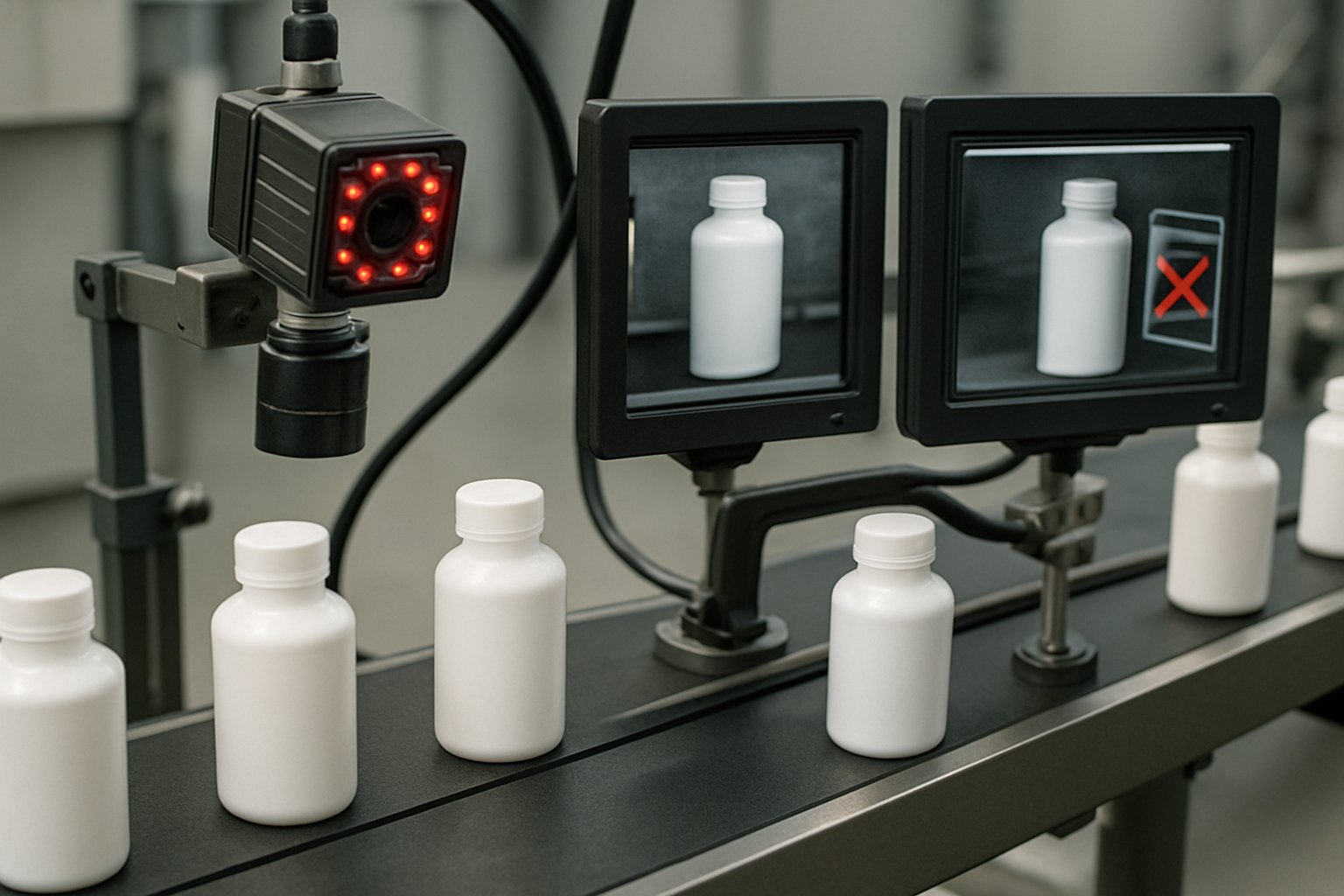
In parallel, analysts project mid-teens compound growth for AI visual inspection markets through 2030. Moreover, incumbents like Cognex and Keyence now embed deep learning into traditional AOI systems. Meanwhile, startups promote computer vision quality inspection networks to differentiate with fleet learning. Consequently, competitive pressure accelerates deployments across consumer and industrial electronics.
Momentum alone does not reveal inner mechanics. However, understanding how the networked architecture works is essential.
Network Operation Basics Explained
At the station, cameras capture every unit in milliseconds. Edge devices run lightweight convolutional models for immediate pass or fail decisions. Additionally, metadata and compressed images stream to a central repository for continuous learning and visual analytics. Therefore, improvement discovered on one line can propagate fleet-wide within hours. These interconnected nodes collectively form computer vision quality inspection networks that span factories and contract sites.
- Edge inference devices using NVIDIA Jetson compute.
- Central data lake on Snowflake storing images and labels.
- Model management service pushing updates to each line.
- Operator dashboard delivering real-time visual analytics.
Together, these layers replace siloed AOI machines with a living inspection mesh. Consequently, executives gain a single view of quality across geography, leading naturally to measurable yield gains. The next section reviews evidence of those gains.
Promised Yield Gains Evident
Vendor case studies provide the clearest public metrics. Many plants now trust computer vision quality inspection networks more than isolated AOI. Instrumental reports a mission-critical customer raising First Pass Yield by three percentage points after deploying its platform. Moreover, the same customer reached breakeven within one month, saving $953,000 annually.
LandingAI claims its practitioners cut model development time by 67% and improved accuracy with defect detection AI. Consequently, engineers iterate faster and prevent escapes earlier in the lifecycle. Independent consultants note AI inspection can outperform humans, reaching high-90s accuracy on repetitive checks.
- Higher detection accuracy reduces warranty costs.
- Upstream fixes raise throughput and free test capacity.
- Cross-site learning speeds new product introduction.
These quantified wins validate computer vision quality inspection networks beyond hype. However, real projects still face obstacles covered next.
Key Barriers And Risks
Retrofitting aging lines can demand specialized lighting, mechanical fixtures, and integration work. Consequently, upfront expenses deter cash-constrained factories.
Badly tuned models increase false calls, frustrating operators. Nevertheless, human-in-the-loop labeling and clear explanations reduce distrust. Defect detection AI must therefore include dashboards detailing confidence and root causes. Without stable lighting, computer vision quality inspection networks can drift and produce false calls.
Meanwhile, Rockwell’s survey shows nearly half of manufacturers fear an AI skills gap. Data governance and cybersecurity also rise when terabytes of images move across networks. Professionals can enhance their expertise with the AI Security-3™ certification.
Risks remain manageable with planning and training. Subsequently, a structured rollout roadmap becomes critical.
Implementation Best Practice Steps
Experts recommend beginning at failure-prone stations such as SMT reflow and connector mating. Moreover, collect multiple images per serial number for later correlation.
Combine edge inference for latency and cloud resources for visual analytics and retraining. Additionally, integrate MES and SPC data to link defects with downstream test failures. When designed correctly, computer vision quality inspection networks generate rich visual analytics without slowing the line.
- Build human-in-the-loop workflows to refine labels.
- Set KPIs like FPY, escapes, and rework cost.
- Audit progress weekly and retrain models monthly.
Following these practices shortens payback periods to weeks in high-volume lines. The conversation now shifts to vendor selection.
Vendor And Partner Landscape
Instrumental and LandingAI dominate software conversations inside U.S. electronics plants. Furthermore, Cognex, Keyence, and Omron upgrade AOI gear with deep learning modules. NVIDIA supplies Jetson and MGX platforms for edge acceleration, while Snowflake hosts inspection data. Consequently, buyers must align compute, storage, and visual analytics roadmaps before signing contracts.
Instrumental’s work with NVIDIA cut server build time by 14 days through synchronized models. In contrast, LandingAI embeds LandingLens directly in Snowflake, simplifying data governance. Both strategies fit the definition of computer vision quality inspection networks yet differ in architecture.
Vendor ecosystems are maturing quickly. Upskilling teams is therefore the next strategic priority.
Upskilling And Next Steps
Factories cannot unlock network value without capable engineers and technicians. Therefore, companies expand internal training and recruit data scientists.
Additionally, security knowledge is vital because inspection images often include proprietary designs. Earning the earlier mentioned AI Security-3™ credential validates secure deployment skills.
Hands-on labs that pair defect detection AI with robotics deepen practical understanding. Meanwhile, courses covering visual analytics teach practitioners to turn gigabytes of images into actionable dashboards.
But strategy matters alongside skills. Consequently, executives should pilot, measure, and then expand computer vision quality inspection networks in phases.
U.S. electronics manufacturers face relentless cost and quality pressure. Nevertheless, the evidence suggests networked AI vision delivers measurable relief. Computer vision quality inspection networks raise First Pass Yield, shorten debug cycles, and cut warranty exposure. Furthermore, continuous learning distributes discoveries across every plant. However, success hinges on careful integration, robust security, and skilled teams versed in defect detection AI and visual analytics. Therefore, leaders should launch focused pilots, instrument ROI rigorously, and scale only when metrics compel expansion. Professionals ready to lead such programs can strengthen credentials through the AI Security-3™ course. Act now to transform inspection from isolated checkpoints into a self-improving competitive advantage.


