

AI CERTs
3 months ago
Voice Commerce Intelligence Systems Transform Retail Checkout
Shopping by voice has shifted from novelty to mainstream execution within months. Driving that change are voice commerce intelligence systems that now close the entire retail funnel. Google, Walmart, and SoundHound all unveiled agentic checkout capabilities across chat, car, and smart displays. Consequently, U.S. retailers face new revenue possibilities alongside security and standards questions. This article unpacks recent milestones, market numbers, and strategic considerations for technology leaders. Additionally, it examines fraud threats and regulatory shifts shaping adoption. Moreover, secondary trends like conversational AI sales metrics and speech analytics improvements intensify the opportunity. Meanwhile, rising consumer comfort with assistants accelerates demand for natural, multimodal buying journeys. Therefore, the next year will determine which retailers capture share and which lag behind.
Current Voice Market Momentum
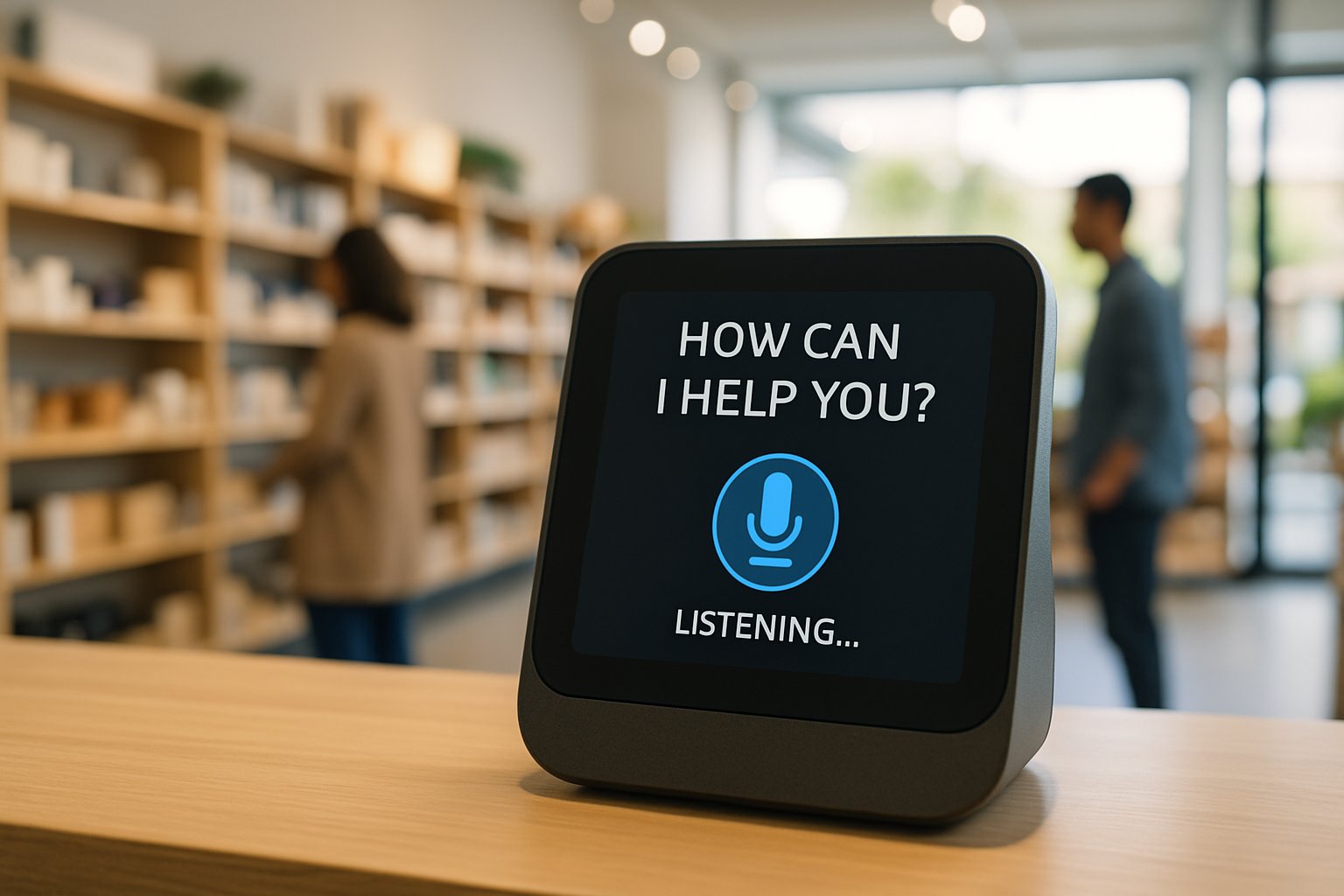
Grand View Research placed 2024 U.S. voice commerce revenue at roughly USD 15.02 billion. Furthermore, multiple global studies predict high-teens compound growth through 2030, although definitions vary materially. In contrast, SoundHound projects in-car transactions alone could reach USD 35 billion annually for automakers. Analysts link the surge to maturing automatic speech recognition and instant checkout rails. Moreover, consumer polls show tens of millions of Americans now complete at least one voice purchase yearly.
- USD 15.02 billion U.S. revenue in 2024
- Global market sized USD 40–66 billion 2024
- SoundHound forecasts USD 35 billion in-car potential
Therefore, retailers are modernizing their voice commerce intelligence systems to meet heightened shopper expectations. Retailer announcements reinforce the data. Walmart’s ChatGPT partnership and Target’s Google Gemini pilot both emphasize smoother discovery and conversion. Consequently, investor presentations spotlight voice channels as margin-expanding growth levers within omnichannel roadmaps. These indicators confirm accelerating deployment. However, scale will depend on standards and trust, explored next. Voice commerce momentum rests on converging demand and technological readiness. The next section details major deployments shaping that momentum.
Major Retail Deployments Today
Google grabbed headlines on 11 January 2026 by unveiling the Universal Commerce Protocol and in-chat checkout for Gemini. Target, Wayfair, and Shopify merchants co-developed the standard to ensure catalog fidelity and fulfillment clarity. Meanwhile, Walmart linked Instant Checkout to OpenAI’s ChatGPT, labelling the flow an “AI-first” shopping experience. SoundHound demonstrated in-vehicle food ordering during CES, extending later to parking and entertainment. Additionally, Visa and Mastercard endorsed agent-aware payment tokens to secure these conversations. Each initiative relies on robust voice commerce intelligence systems combining recognition, dialog management, and payment integration. Moreover, early pilots show notable conversion lifts, though figures remain confidential. For example, one retailer told analysts that conversational AI sales lifted cart completion by double digits during limited tests. Nevertheless, executives caution that scaling nationwide will demand deeper inventory mapping and stricter data governance. Successful launches here will influence competitors, as explored in the technology section ahead. Retail pilots now span chat, car, and store channels. Consequently, technology choices become decisive for broader rollouts.
Underlying Technology Stack Details
At the core lies automatic speech recognition tuned for retail entities and noisy environments. Natural language understanding pipelines then map utterances to structured product or intent data. Dialog managers orchestrate context across steps, while agent frameworks automate checkout and post-purchase support. Furthermore, payment layers add tokenization, risk scoring, and confirmation prompts suited to voice. Voice biometrics and liveness detection mitigate synthetic voice attacks highlighted in Pindrop’s 2025 report. Complementary speech analytics dashboards surface intent, sentiment, and abandonment trends for merchandising teams. All modules integrate within enterprise voice commerce intelligence systems via APIs and the emerging Universal Commerce Protocol. Moreover, cloud platforms now bundle model monitoring to satisfy compliance and brand safety. Consequently, architects must balance latency, privacy, and extensibility when choosing vendors. Those trade-offs feed directly into stakeholder benefit calculations discussed next. Retail tech stacks increasingly converge around modular, standards-based components. Therefore, understanding benefits helps prioritize investments.
Benefits For All Stakeholders
Retailers cite higher conversion, larger baskets, and richer customer data as primary gains. Moreover, shorter journeys cut paid-traffic costs by minimizing bounce and abandonment. Conversational AI sales also create incremental upsell opportunities through context-aware recommendations. For consumers, hands-free convenience shines during driving or multitasking scenarios. Additionally, personalized suggestions reduce cognitive load during repetitive purchases. Payments networks enjoy new token revenue and risk insights generated from speech analytics feedback loops. Meanwhile, automakers see fresh service margins once cars become transaction conduits. All advantages rely on reliable voice commerce intelligence systems delivering instant yet secure experiences. Nevertheless, stakeholders must weigh fraud and privacy exposure, detailed next. Benefits span revenue, satisfaction, and data strategy. However, rising risks could erode those gains without safeguards.
Fraud And Security Risks
Synthetic-voice attacks surged hundreds of percent in 2024, according to Pindrop’s Voice Intelligence report. Furthermore, deepfakes now target account-linking flows and confirmation prompts within conversational AI sales channels. In contrast, traditional card-not-present fraud declined slightly, illustrating channel shift rather than volume reduction. Voice biometrics helps, yet false acceptance remains problematic when attackers replay high-quality samples. Therefore, multi-factor liveness checks, device binding, and behavioral analytics become essential. Payments networks are drafting agent-scoped tokens that expire quickly or limit spend. Moreover, retailers tune speech analytics thresholds to flag unusual pitch or cadence. Robust voice commerce intelligence systems must embed these layers natively to maintain trust. Nevertheless, liability allocation among platforms, merchants, and issuers remains unresolved. Regulatory discussion appears inevitable, as the upcoming section explains. Fraud threats escalate alongside adoption speed. Consequently, standards and policy debates are intensifying.
Regulation And Standards Outlook
The Universal Commerce Protocol embeds privacy notices and consent prompts at every agent hand-off. Meanwhile, the FTC signals interest in AI-agent disclosures and biometric data retention limits. State laws, notably in Illinois and Washington, already restrict voiceprint storage without explicit consent. Consequently, compliance teams must map data flows across voice commerce intelligence systems and partner clouds. Visa, Mastercard, and Stripe collaborate on token standards aligned with these constraints. Additionally, retailers lobby for clear liability carve-outs when autonomous agents misplace orders. Industry analysts warn that fractured rules could stall conversational AI sales momentum. Nevertheless, open standards reduce lock-in and simplify audits. Professionals can deepen governance skills with the AI+ Government™ certification. The next section offers practical steps for retailers navigating this evolving matrix. Regulatory clarity will shape speed of adoption. Therefore, proactive planning is prudent.
Recommended Retailer Next Steps
Begin with a cross-functional audit of existing voice commerce intelligence systems to map capabilities and gaps. Subsequently, benchmark error rates, latency, and abandonment using granular speech analytics reports. Next, pilot agentic checkout in one high-velocity category before scaling. Moreover, integrate device binding and liveness checks early to satisfy security stakeholders. Align token strategy with Visa and Mastercard sandbox guidelines. Retailers should also negotiate take-rate ceilings before platform lock-in materializes. Meanwhile, craft clear consumer disclosures that articulate AI decision boundaries and recourse processes. Consider joining standards bodies to influence protocol evolution and roadmap compatibility. Finally, measure conversational conversion uplift against control cohorts to prove value internally. Document performance in a centralized dashboard within your upgraded voice commerce intelligence systems. These optimized voice commerce intelligence systems will underpin future omnichannel differentiation. Structured pilots and rigorous metrics accelerate ROI. Consequently, leaders secure budget and market advantage.
Voice shopping is rapidly shifting from experimental pilot to mainstream profit center. Major platforms now offer standardized protocols, while retailers race to embed secure, seamless experiences. Benefits span conversion gains, new channels, and richer data, yet fraud and compliance risks loom large. Proactive governance, robust security layers, and careful vendor selection remain decisive success factors. Consequently, teams that iterate quickly and measure rigorously will outpace slower rivals. Professionals seeking deeper policy insight should consider the linked AI+ Government™ certification for structured guidance. Adopt these strategies today to position your brand for the next conversational commerce wave.


