

AI CERTs
2 months ago
How zero-trust threat correlation systems slash breach response
Breaches still linger for months despite record security spending. Consequently, attackers enjoy lengthy dwell time to steal data and sabotage operations. Meanwhile, regulators urge faster response to contain mounting losses. Many U.S. enterprises now turn to zero-trust threat correlation systems to close that gap. These platforms consolidate telemetry, enrich context, and trigger automated playbooks at machine speed. Moreover, recent industry studies show detection and containment times dropping by more than 60 percent. Gartner, IBM, and CISA highlight the strategic value of integrated analytics within Zero Trust architectures. Consequently, security leaders face a pivotal decision: invest in correlation and automation or accept slower remediation. This report examines evidence, limitations, and practical steps for adopting such technology. Readers will gain actionable insight shaped for technical executives and SOC managers.
Escalating Breach Response Timelines
Attack speed keeps accelerating. Verizon’s 2024 DBIR records vulnerability exploitation within hours of public disclosure. In contrast, defenders patch half of critical flaws after roughly 55 days. Consequently, the window for human-only response is shrinking rapidly.
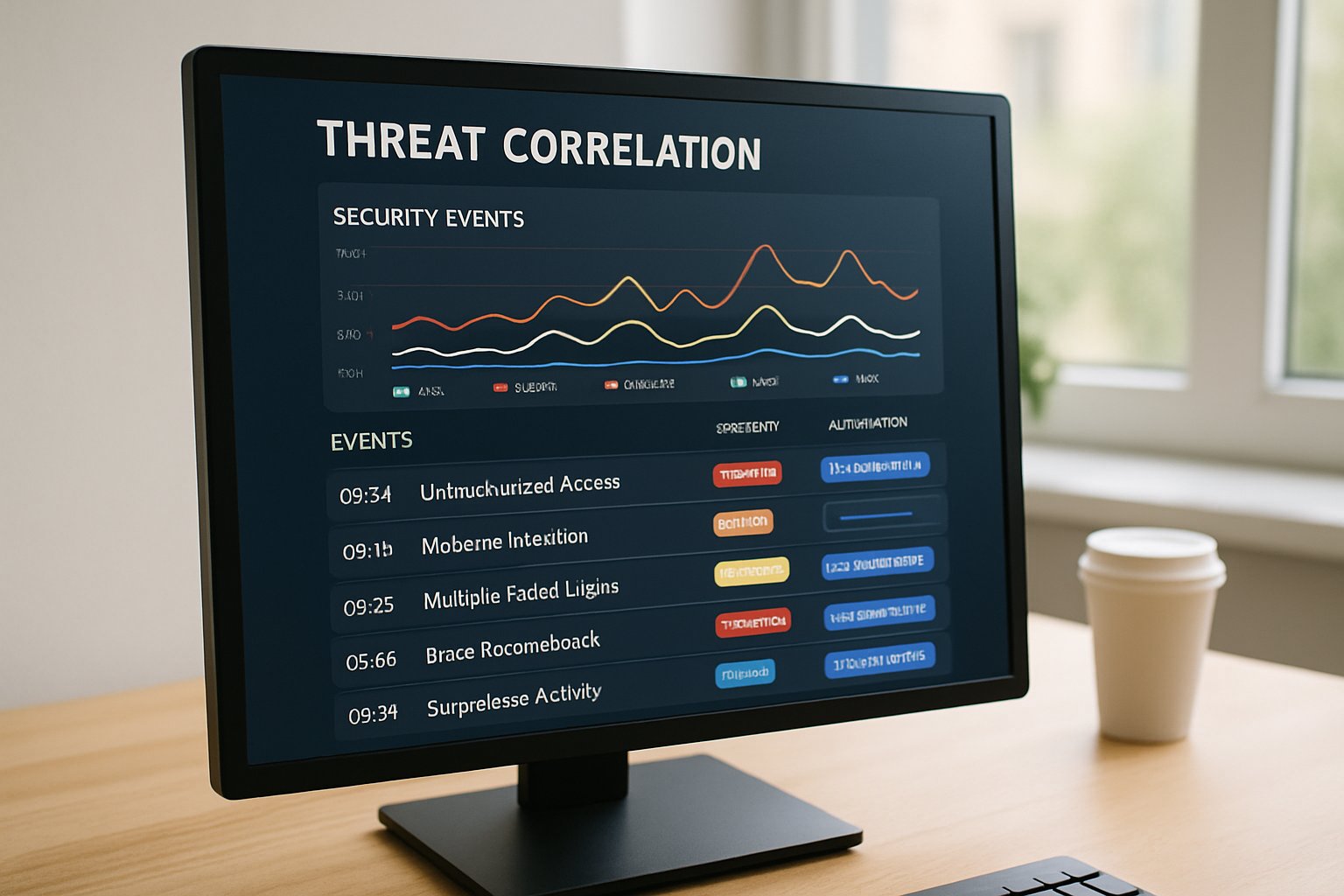
IBM’s 2024 breach report shows average identification plus containment still spans 258 days. Furthermore, credential attacks sometimes remain hidden for ten months. Costs climb accordingly, averaging USD 4.88 million per incident. Therefore, leadership seeks technologies that compress Mean Time To Detect and Respond.
Palo Alto Unit 42 warns that ransomware exfiltration can finish in 30 minutes. Nevertheless, its own SOC claims detection in 10 seconds using advanced correlation. Evidence indicates automated analytics, not extra headcount, now define response speed.
These metrics confirm an urgent timing gap. However, zero-trust threat correlation systems promise to reverse the imbalance. The next section outlines foundational architecture principles.
Zero Trust Architecture Fundamentals
Zero Trust assumes no implicit trust across network boundaries. Every request must be verified using identity, device, and contextual risk. Additionally, policies enforce least-privilege access and continuous evaluation. NIST SP 800-207 formalized this model for public and private sectors.
Correlation engines complement Zero Trust by linking disparate telemetry sources. They ingest logs, network flows, endpoint events, and identity assertions. Companies deploying zero-trust threat correlation systems create a unified security fabric. Moreover, enrichment creates high-fidelity incidents from numerous low-value alerts. AI SOC automation often orchestrates the subsequent containment actions.
When combined, Zero Trust policy and correlation form an adaptive control plane. Consequently, detection and response move closer to real-time execution.
The architectural synergy sets the stage for tangible performance gains. Following section explains how correlation delivers that acceleration.
Correlation Engines Accelerate Response
Correlation platforms reduce noise by 80 percent in many pilot projects. Forrester’s 2025 TEI on CrowdStrike reports 65 percent faster investigations. Additionally, Microsoft Sentinel customers noted 88 percent shorter response windows. These improvements stem from automated enrichment, deduplication, and playbook execution.
AI SOC automation plays a pivotal role in this acceleration. Machine learning highlights anomalous behavior while scripts isolate infected hosts within seconds. Moreover, integrated identity signals block lateral movement before data exfiltration. Google SecOps users saw 50 percent faster Mean Time To Respond. Strong cyber risk intelligence enriches correlation results with attacker context.
Analysts agree correlation gains multiply when paired with Zero Trust segmentation. Therefore, zero-trust threat correlation systems deliver compound protection benefits.
Data from multiple vendors shows consistent, if vendor-biased, acceleration. Subsequent evidence will illustrate broad industry validation.
Evidence From Industry Studies
Independent and vendor studies jointly outline compelling quantitative results. Nevertheless, evidence quality varies across sources.
- IBM: AI automation cut breach costs by USD 1.88 million.
- Verizon: 55 days median patch delay versus hours attacker exploitation.
- CrowdStrike TEI: 310% ROI, zero reported breaches among study participants.
- Microsoft TEI: 88% reduction in response time across composite incidents.
- Google TEI: 65% faster investigations, 50% faster response.
CISA’s maturity model emphasizes continuous verification and orchestration for rapid containment. Gartner surveys show 63 percent adoption of partial Zero Trust programs. However, only 10 percent will reach full maturity by 2026. Therefore, many organizations still trail best-in-class responders. Augmenting analytics with cyber risk intelligence helps prioritize emerging threats quickly. Case studies consistently credit zero-trust threat correlation systems for those gains.
The studies reveal potential yet highlight uneven deployment realities. Next, we examine barriers slowing enterprise progress.
Barriers And Practical Caveats
Implementation complexity remains the foremost obstacle. Legacy systems fragment telemetry, complicating correlation engine integration. Additionally, costs for licensing, storage, and skilled staff escalate quickly. Gartner cites budget and talent shortages as leading adoption blockers. Without mature identity controls, zero-trust threat correlation systems lack crucial context.
Vendor marketing sometimes overstates universal outcomes. Many spectacular MTTD figures derive from tightly controlled internal SOC environments. Consequently, cross-vendor benchmarking is still limited. Organizations should request detailed assumptions behind any performance claim.
AI SOC automation can misfire without rigorous governance. False positives or aggressive isolation may disrupt critical business processes. Nevertheless, strong tuning and staged deployment mitigate those risks.
Challenges are real yet manageable with disciplined planning. Therefore, leaders must follow a structured roadmap for success. Enterprises should pilot zero-trust threat correlation systems in low-risk segments first. The next section proposes such a roadmap.
Roadmap For Security Leaders
Begin with an honest maturity assessment against CISA’s Zero Trust model. Subsequently, prioritize identity visibility and endpoint telemetry consolidation. These inputs feed zero-trust threat correlation systems effectively. Align policies, data schemas, and retention periods across all sources.
Deploy correlation analytics in phases, starting with high-value attack paths. Moreover, integrate AI SOC automation only after playbooks undergo peer review. Include manual approval steps until confidence reaches acceptable thresholds. Meanwhile, track MTTD and MTTR to quantify value for executives.
Skilled staff remain essential although workloads decrease. Upskill analysts in cyber risk intelligence to interpret correlated alerts accurately. Professionals can enhance their expertise with the AI+ Human Resources™ certification. Moreover, cross-training strengthens collaboration between security, IT, and governance teams.
A phased, skills-centric roadmap maximizes platform returns. Consequently, enterprises can achieve measurable resilience improvements.
Conclusion
U.S. enterprises face relentless attack velocity and widening skills gaps. However, zero-trust threat correlation systems consistently shrink detection and response timelines. Furthermore, AI SOC automation and rich cyber risk intelligence magnify those benefits. Independent reports and vendor studies together validate multi-million-dollar savings. Nevertheless, success depends on disciplined integration, governance, and talent development. Consequently, leaders should pilot zero-trust threat correlation systems, track MTTD, and iterate quickly. Explore advanced training and the linked certification to fortify your program today.


