

AI CERTs
5 months ago
AI Radiology Triage Models Slash Emergency Imaging Backlogs
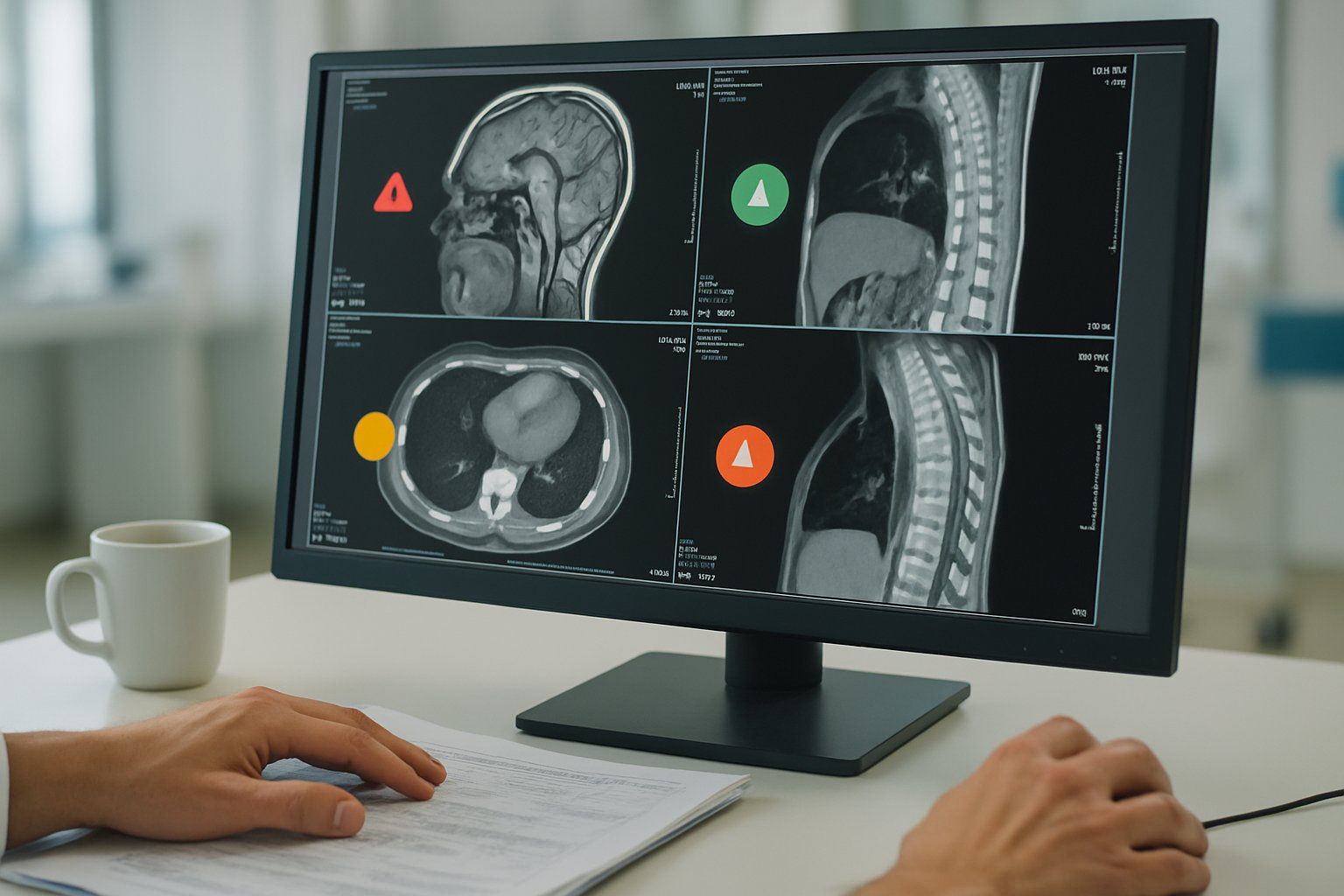
Emergency departments worldwide face growing imaging queues. Consequently, radiologists struggle to deliver timely, lifesaving interpretations. AI radiology triage models promise faster reads and slimmer backlogs. These algorithms detect urgent findings and reorder worklists in seconds. Moreover, early deployments show measurable gains when integration is thoughtful.
Recent peer-reviewed studies quantify these gains across stroke, hemorrhage, and pulmonary embolism. Furthermore, active scan prioritization rather than pop-up alerts drives the strongest impact. Consequently, hospitals with backlogs report turnaround reductions measured in minutes or even days. Nevertheless, sensitivity gaps, false alarms, and equity issues still demand scrutiny. Therefore, this article dissects evidence, risks, and best practices for enterprise deployment. Meanwhile, we highlight certifications that help professionals build and govern these tools responsibly.
AI Triage Model Benefits
Clinicians value speed when brain or chest pathology threatens life. Moreover, AI radiology triage models surface critical scans within seconds, not hours. Additionally, Northwestern Medicine reported a 15.5% productivity lift after embedding draft-reporting AI.
Real-world triage studies extend the list of benefits. Consequently, pulmonary embolism worklist reprioritization trimmed positive case turnaround by 12.3 minutes. In contrast, a widget-only intracranial hemorrhage tool failed to change reporting times. These comparisons underline why integration design matters more than algorithm accuracy alone.
- Stroke platforms cut door-to-groin times by up to 34 minutes in pooled analyses.
- Incidental PE detection fell from several days to 87 minutes during backlog periods.
- Draft reports accelerated chest radiograph documentation by 15.5% without harming accuracy.
Overall, evidence supports measurable time savings when prioritization is active. However, results vary across pathologies and integration styles. The backlog problem explains this variation.
Emergency Imaging Backlogs Rise
Radiology volumes grow faster than workforce expansion. Additionally, aging populations and CT ubiquity inflate exam counts yearly. Therefore, night shifts often inherit long reading queues when day staff leaves. Meanwhile, nonurgent studies push urgent cases downward, extending clinical risk windows.
AI radiology triage models alleviate this bottleneck by reordering queues dynamically. However, gains appear only when the backlog exists or staffing is limited. In contrast, well-staffed academic centers sometimes observe neutral impact. Consequently, administrators should analyze queue data before forecasting return on investment.
Backlogs create the opportunity window for automation. Next, we examine why active reprioritization unlocks that opportunity.
Active Reprioritization Advantage Explained
Queue theory shows that moving true positives upward drops patient wait time sharply. Furthermore, it spares radiologists from hunting through mixed urgency lists. AI radiology triage models employing automatic list sorting outperform passive alert widgets consistently.
AJR researchers reported faster reporting for pulmonary embolism when only 12.7% of scans were reprioritized. Moreover, Netherlands Cancer Institute data revealed a drop from days to 87 minutes for incidental PE. Nevertheless, an ICH tool that delivered only a floating icon changed nothing.
Hospitals adopting AI radiology triage models often retrofit existing PACS rather than purchase new viewers. These contrasting results highlight the centrality of workflow engineering. Therefore, buyers must demand full PACS integration, not sidecar dashboards.
Automatic queue sorting magnifies clinical impact. With evidence established, we turn to numbers.
Key Performance Data Insights
Hard data clarifies hype roughly. Consequently, we summarise pivotal metrics below.
- 101,944 head CT audit: sensitivity 82.2%, specificity 97.6% for large hemorrhage.
- CTPA study: PE-positive turnaround fell from 59.9 to 47.6 minutes post deployment.
- Viz.ai networks: median door-to-groin time dropped from 109 to 75 minutes.
- Northwestern draft reporting: mean interpretation time decreased by 29.4 seconds per radiograph.
AI radiology triage models demonstrated respectable specificity yet missed subtle findings more often. Additionally, false positives risk reader fatigue, though rates remain under 3% in many datasets. Scan prioritization efficiency scales with prevalence of target pathology and queue length. Diagnostic workflow AI also benefits from foundation models that handle multiple findings simultaneously.
Multiple centers confirm that AI radiology triage models sustain specificity above 95% across diverse scanners. Meanwhile, diagnostic workflow AI platforms increasingly rely on foundation training to generalize across organs.
Data confirms moderate to high accuracy with operational caveats. Next, we outline implementation guidance for hospitals.
Implementation Best Practices Guide
Successful projects begin with multidisciplinary governance. Furthermore, sites should map current queues, failure points, and desired metrics before purchase. Stakeholders must check FDA intended-use statements to confirm triage versus diagnostic claims.
During rollout, enable automatic scan prioritization and monitor false flags weekly. Moreover, capture turnaround, missed rates, and equity metrics stratified by demographic group. Diagnostic workflow AI dashboards should present these metrics transparently for governance meetings.
Institutions deploying AI radiology triage models should document baseline queue metrics in detail. Professionals can enhance their expertise with the AI Prompt Engineer ™ certification. Consequently, graduates gain skills to audit model performance and guide vendor negotiations.
Governance and measurement sustain long-term value. However, fairness issues still warrant separate discussion.
Equity And Bias Risks
Clinical AI often underperforms for underrepresented groups. In contrast, vendor brochures rarely disclose subgroup validation. Therefore, radiologists must review demographic slices before go-live.
RSNA guidance urges standardized fairness metrics and public reporting. Furthermore, health systems should monitor outcome parity after deployment and adjust thresholds. AI radiology triage models lacking such oversight risk widening healthcare disparities. Diagnostic workflow AI governance forums can address threshold tuning and case escalation policies.
Regular audits ensure AI radiology triage models treat age, gender, and race groups consistently.
Equity monitoring protects vulnerable patients. Finally, we summarise key messages and next steps.
Conclusion And Next Steps
In summary, AI radiology triage models deliver measurable speed gains when integrated through automatic queue sorting and monitored carefully. Furthermore, peer-reviewed studies verify reduced turnaround for stroke, hemorrhage, and embolism imaging. Nevertheless, performance gaps and bias demand continuous oversight. Therefore, leaders should pair technology investment with robust fairness audits and education. Professionals seeking cutting-edge skills should explore the linked certification and drive responsible deployment. Effective scan prioritization underpins these benefits. Take action today and guide your organisation toward safer, faster, AI-enabled radiology.
Disclaimer: Some content may be AI-generated or assisted and is provided ‘as is’ for informational purposes only, without warranties of accuracy or completeness, and does not imply endorsement or affiliation.


