

AI CERTs
5 months ago
Predictive Maintenance Intelligence Platforms Reduce Downtime
Unplanned downtime still drains manufacturing profit and erodes customer trust globally. However, factories are fighting back with predictive maintenance intelligence platforms that turn raw sensor streams into foresight. These AI-driven systems analyze vibration, temperature, and production data to flag looming failures before chaos strikes. Consequently, early adopters are posting double-digit downtime cuts and rapid payback periods. Market forecasts equally signal explosive growth, yet real value depends on execution discipline. This article unpacks the business case, recent results, technical enablers, and lingering challenges. Moreover, we outline practical guidance for scaling success across multi-site operations. Industrial leaders can then evaluate readiness and plan investments confidently. Meanwhile, your workforce may boost credibility through targeted AI sales certifications. Predictive maintenance intelligence platforms now sit at the intersection of technology, process, and cultural change. Understanding their economics has become imperative for competitive survival. Therefore, let us start with the market momentum shaping this transformative discipline.
Market Momentum Accelerates Worldwide
Global spending on predictive maintenance intelligence platforms is soaring. Fortune Business Insights projects the segment to jump from USD 13.65 billion in 2025 to USD 97 billion by 2034. That equates to a compound annual growth rate above 24 percent, eclipsing many other industrial software categories.
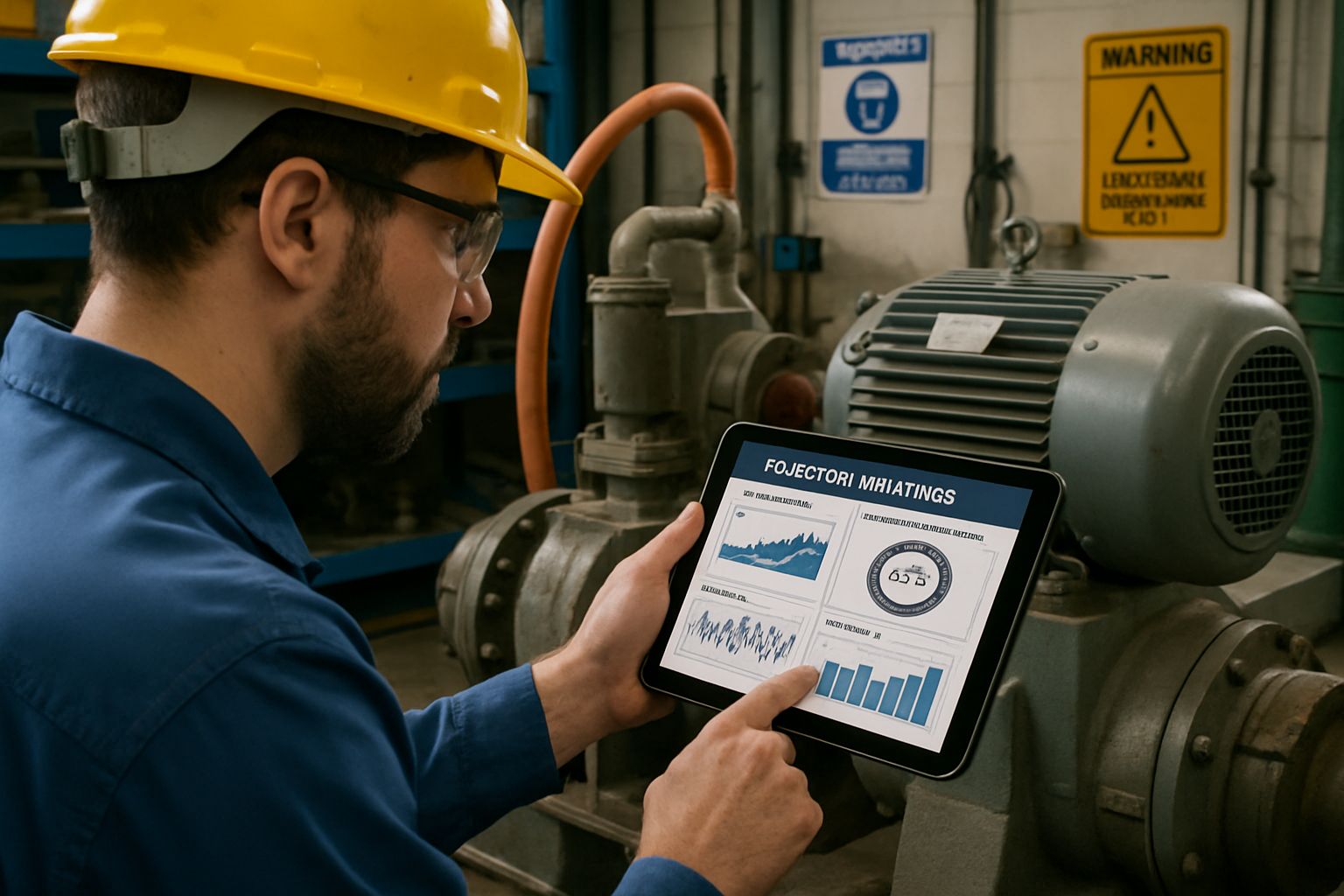
In contrast, some analysts publish lower baselines, yet every recent report confirms double-digit expansion. Drivers include falling sensor costs, improved cloud connectivity, and mounting pressure to protect margins. Consequently, venture funding continues to flow into condition-monitoring startups such as Augury and Senseye.
Large vendors also widen offerings, integrating edge analytics with enterprise asset management suites. Siemens MindSphere, IBM Maximo, and GE Digital each tout expanding device counts and partner ecosystems. Nevertheless, executives caution that hype obscures persistent deployment hurdles.
Growth forecasts underline sizable opportunity for factories willing to modernize maintenance. Predictive maintenance intelligence platforms thus sit high on capital expenditure agendas. Next, we examine documented outcomes that validate commercial impact.
Proven Industry Outcomes Reported
Hard evidence now accompanies many marketing claims. For example, BlueScope Steel avoided about 2,000 hours of unplanned downtime across three years using Senseye analytics. The project ran on Siemens MindSphere and scaled across multiple mills.
Meanwhile, decking manufacturer Fiberon saved USD 274,000 during an eight-month Augury pilot and achieved 2.5× ROI. Subsequently, Fortune Brands approved an enterprise rollout that now covers additional production lines. IBM lists similar cases showing downtime reductions of 25–50 percent and payback under 12 months.
- 35–50 % typical downtime reduction after deployment
- 20–40 % lower maintenance costs reported
- Sub-12-month payback on high-priority assets
- Tens to hundreds of thousands saved per avoided hour
Collectively, these figures demonstrate that predictive maintenance intelligence platforms can unlock material, measurable value. However, results differ by data quality, integration depth, and organizational maturity. The next section unpacks the technical ingredients that enable accurate equipment failure prediction.
Core Technology Building Blocks
Predictive maintenance pipelines start with high-fidelity sensor networks capturing vibration, acoustic, thermal, and electrical signatures. Additionally, historians and MES systems supply contextual production data that sharpen equipment failure prediction accuracy. Edge AI gateways process these feeds in real time, lowering latency and bandwidth needs.
Moreover, cloud platforms train deep learning or gradient-boosting models using months of labeled events. Digital twins simulate operational scenarios, thereby exposing hidden degradation patterns. Consequently, prescriptive layers can recommend specific parts, labor windows, and standard work instructions.
Operations AI orchestration then routes alerts into EAM or CMMS workflows for technician action. Therefore, data cleanliness and integration middleware profoundly influence platform performance. When executed well, predictive maintenance intelligence platforms deliver timely, trusted insights instead of noisy alarms.
These technical pillars form the backbone of reliable equipment failure prediction at scale. However, organizational obstacles often derail benefits, as the next section explains.
Challenges Stall Enterprise Scaling
Pilot success does not guarantee fleetwide impact. In contrast, many initiatives languish in so-called pilot purgatory for cultural and technical reasons. Data quality tops the risk list.
Noisy sensors, sparse failure history, and inconsistent sampling frustrate equipment failure prediction models. Consequently, false positives overwhelm technicians and erode trust quickly. Meanwhile, limited OT-IT collaboration slows integration with ERP, EAM, and scheduling systems.
Budget holders also struggle to authenticate vendor ROI numbers because baselines vary by site. Moreover, cybersecurity reviews may delay cloud connectivity approvals for sensitive production lines. Talent shortages compound the difficulty, especially for midsize manufacturers.
Together, these barriers explain why only a subset of predictive maintenance intelligence platforms achieve scale today. The following guidelines outline pragmatic steps for overcoming those roadblocks.
Strategic Implementation Guidelines Roadmap
Successful programs align technology pilots with clear financial pain points. Therefore, begin with high-loss bottleneck assets where every avoided hour yields material savings. Set baseline metrics collaboratively among maintenance, finance, and production teams.
Next, establish a robust data pipeline, including sensor calibration and governance workflows. Edge devices should buffer data locally during network outages to prevent model gaps. Meanwhile, integrate alerts into existing CMMS work orders to avoid process fragmentation.
Invest in upskilling technicians through short, focused courses on vibration basics and AI fundamentals. Professionals can enhance their expertise with the AI+ Sales™ certification. Consequently, frontline teams will trust insights and close work orders promptly.
- Select assets with high downtime cost
- Create unified OT-IT governance teams
- Automate data quality monitoring dashboards
- Tie KPIs to finance validated baselines
Executing these actions increases the likelihood that predictive maintenance intelligence platforms deliver sustainable returns. Finally, we explore future directions reshaping operations AI ecosystems.
Future Horizons And Convergence
Technology roadmaps point toward tighter convergence between predictive maintenance intelligence platforms and broader operations AI suites. Vendors envision predictive maintenance intelligence platforms serving as central nervous systems for fully autonomous factories. Moreover, vendors are embedding generative interfaces that translate sensor anomalies into chat-style explanations.
Digital twins will also feed design teams, closing feedback loops and improving next-generation equipment reliability. Subsequently, prescriptive algorithms could auto-order parts and schedule technicians without manual intervention. Edge silicon advancements are lowering power draw, enabling continuous acoustic monitoring on battery devices.
Nevertheless, human oversight will remain crucial for governance, ethics, and security checks. Standards bodies are drafting open data schemas to reduce multi-vendor lock-in. Consequently, buyers may soon switch platforms more easily as service models mature. Operations AI talent pipelines should also strengthen as universities update curricula.
In short, innovation will amplify benefits while raising governance expectations for every industrial leader. Therefore, decision makers must prepare now to capitalize responsibly.
Ultimately, the economics are compelling when strategy, data, and culture align. Factories adopting predictive maintenance intelligence platforms report fewer shocks, steadier throughput, and happier stakeholders. However, success hinges on disciplined scaling, transparent ROI baselines, and continuous skills development. Operations AI roadmaps promise even deeper automation, yet oversight remains non-negotiable. Therefore, start with targeted pilot assets, measure relentlessly, and iterate based on frontline feedback. Equip teams with modern certifications to accelerate trust and adoption. Consider enrolling in the previously mentioned AI+ Sales™ program to boost commercial fluency. Act now, and transform maintenance from reactive firefighting to data-driven resilience.
Disclaimer: Some content may be AI-generated or assisted and is provided ‘as is’ for informational purposes only, without warranties of accuracy or completeness, and does not imply endorsement or affiliation.


