

AI CERTs
2 months ago
Mastering Generative Advertising Strategy in Google’s AI Ads
Google is turning conversational search into a shopping mall. The company’s latest experiments blend AI answers, checkout, and discounts inside one seamless flow. Marketers who craft a Generative Advertising Strategy stand to gain significant first-mover advantages.
However, privacy advocates and publishers warn of unintended fallout. Meanwhile, regulators already probe Google’s dominance in Digital Ads and payments. This article unpacks the rollout, analyzes risks, and offers tactical guidance for enterprise teams.
Evolving AI Ads Landscape
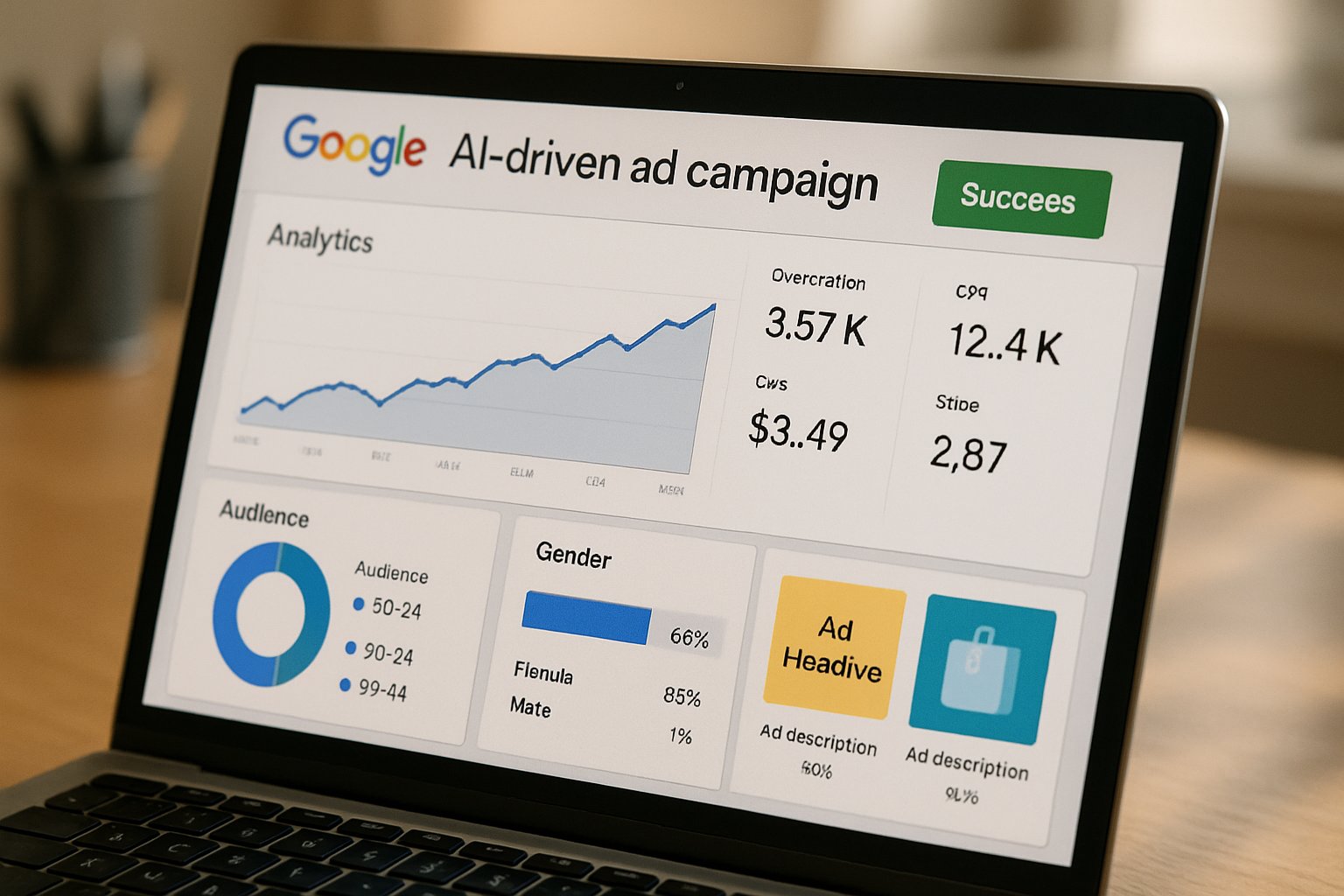
Google introduced AI Mode in Search during 2024 to answer multifaceted questions conversationally. Subsequently, ads started appearing inside those generated replies, labeled and contextually matched. Furthermore, pilot data suggests users accept the format when it shortens purchase journeys.
This shift signals Google’s broader Generative Advertising Strategy to monetize AI conversations directly. Consequently, advertisers may reach shoppers at decisive micro-moments without traditional page loads. In contrast, publishers fear reduced referral traffic and lost impression inventory.
The landscape shows rising monetization inside conversational interfaces. Therefore, understanding mechanics now is crucial before full deployment. Next, we dissect Direct Offers to see how those discounts materialize.
Direct Offers Mechanics Clarified
Direct Offers sit at the heart of the new pilot. Retailers upload verified promo codes into Merchant Center, then Google’s models decide optimal display moments. Moreover, each offer appears as a Sponsored deal inside AI Mode when relevance thresholds trigger.
Advertisers integrate Direct Offers with Performance Max, aligning campaigns under one Generative Advertising Strategy umbrella. Additionally, early partners such as Petco and Samsonite expect higher Conversions thanks to time-sensitive incentives. Gemini soon may surface similar deals, although the standalone app remains ad-free for now.
Direct Offers promise immediate savings that nudge hesitant shoppers. Nevertheless, success depends on seamless checkout integration. The Universal Commerce Protocol supplies that missing layer.
Universal Commerce Protocol Unpacked
Universal Commerce Protocol, or UCP, underpins in-conversation checkout. Therefore, shoppers can finalize purchases without jumping to merchant sites, using saved Google Pay credentials. Meanwhile, merchants remain merchant of record, preserving tax, refund, and loyalty workflows.
For marketers, integrating UCP aligns with a holistic Generative Advertising Strategy focused on frictionless conversion. Moreover, Google claims reduced cart abandonment could lift Conversions by double digits. Such promises echo earlier Digital Ads automation narratives, yet independent verification remains pending.
UCP addresses checkout friction while preserving merchant control. Consequently, the next question revolves around measurable performance. Data trends offer early answers.
Advertiser Performance Data Insights
Google touts impressive numbers supporting the initiative.
- $66.89 b ad revenue Q1 2025 illustrates Digital Ads scale.
- Over 500,000 advertisers tried conversational tools by mid-2025.
- Smart Bidding tests showed 19% additional Conversions on average.
Consequently, executives perceive a sizable first-mover advantage. However, CivicScience found 36% of adults distrust AI powered promotions. Such skepticism could dampen Conversational Marketing efforts if transparency lags.
Performance data appears promising yet contested. Therefore, understanding stakeholder concerns becomes imperative. Privacy debates illustrate those tensions.
Privacy Publisher Impact Debate
Publishers worry AI summaries may cannibalize referral traffic. In contrast, Google argues that links remain visible within responses. Additionally, privacy advocates question how conversational data informs ad targeting.
Google states user queries are ephemeral and anonymized for ad matching. Nevertheless, policy details remain scarce, inviting regulatory scrutiny. An informed Generative Advertising Strategy must weigh these reputational risks carefully.
Stakeholder trust emerges as the decisive currency. Consequently, competitive moves will shape perception further. We therefore examine rival approaches next.
Competitive Generative Search Arena
Microsoft, OpenAI, and Perplexity also test ad formats inside chat products. Meanwhile, Gemini gains daily users through Android integration yet remains ad-free. However, analyst rumors hint at eventual monetization as costs climb.
Competitors lack Google’s mature Digital Ads infrastructure and global merchant feeds. Therefore, Google can bundle offers, payments, and logistics more readily. A differentiated Generative Advertising Strategy anchored in scale could widen this gap.
Rival momentum ensures continuous innovation pressure. Consequently, marketers must plan proactively rather than reactively. The final section outlines practical steps.
Strategic Roadmap For Marketers
Enterprise teams should begin controlled experiments in AI Mode. Additionally, align feed hygiene, promo code governance, and audience signals before scaling. Embedding ethical guardrails will bolster Conversational Marketing credibility.
The following priorities can guide planning.
- Audit data usage policies for privacy alignment.
- Test Direct Offers with clear success metrics.
- Integrate UCP checkout flows to raise Conversions.
- Monitor publisher referral impacts weekly.
- Update crisis protocols for conversational misfires.
Moreover, incorporating certification learning strengthens governance capabilities. Professionals can enhance oversight with the AI Policy Maker™ certification.
A forward-looking Generative Advertising Strategy should include precise incrementality testing and brand safety thresholds. Meanwhile, Gemini integrations must stay consistent with user expectations to avoid backlash. Digital Ads specialists can coordinate with product teams to maintain coherent messaging.
Strategic alignment drives sustainable advantage and mitigates headline risk. Consequently, executing now positions brands ahead of late adopters. With groundwork laid, attention turns to near-term takeaways.
Conclusion And Next Steps
Google’s conversational commerce push is accelerating. However, opportunities come with tangible accountability duties. A balanced Generative Advertising Strategy keeps users, partners, and regulators in mind. Furthermore, integrating Direct Offers and UCP can unlock incremental Conversions when executed responsibly. In contrast, neglecting privacy or publisher impact may erode long-term trust. Therefore, marketers should formalize measurement plans, cross-functional playbooks, and escalation protocols immediately. Finally, leaders can reinforce expertise through industry credentials and continuous experimentation. Adopting a disciplined Generative Advertising Strategy today positions brands to thrive amid AI disruption. Explore the certification resources and start crafting your own Generative Advertising Strategy now.


