

AI CERTS
4 months ago
Wisconsin Deepfake Fraud Legislation Reshapes Compliance
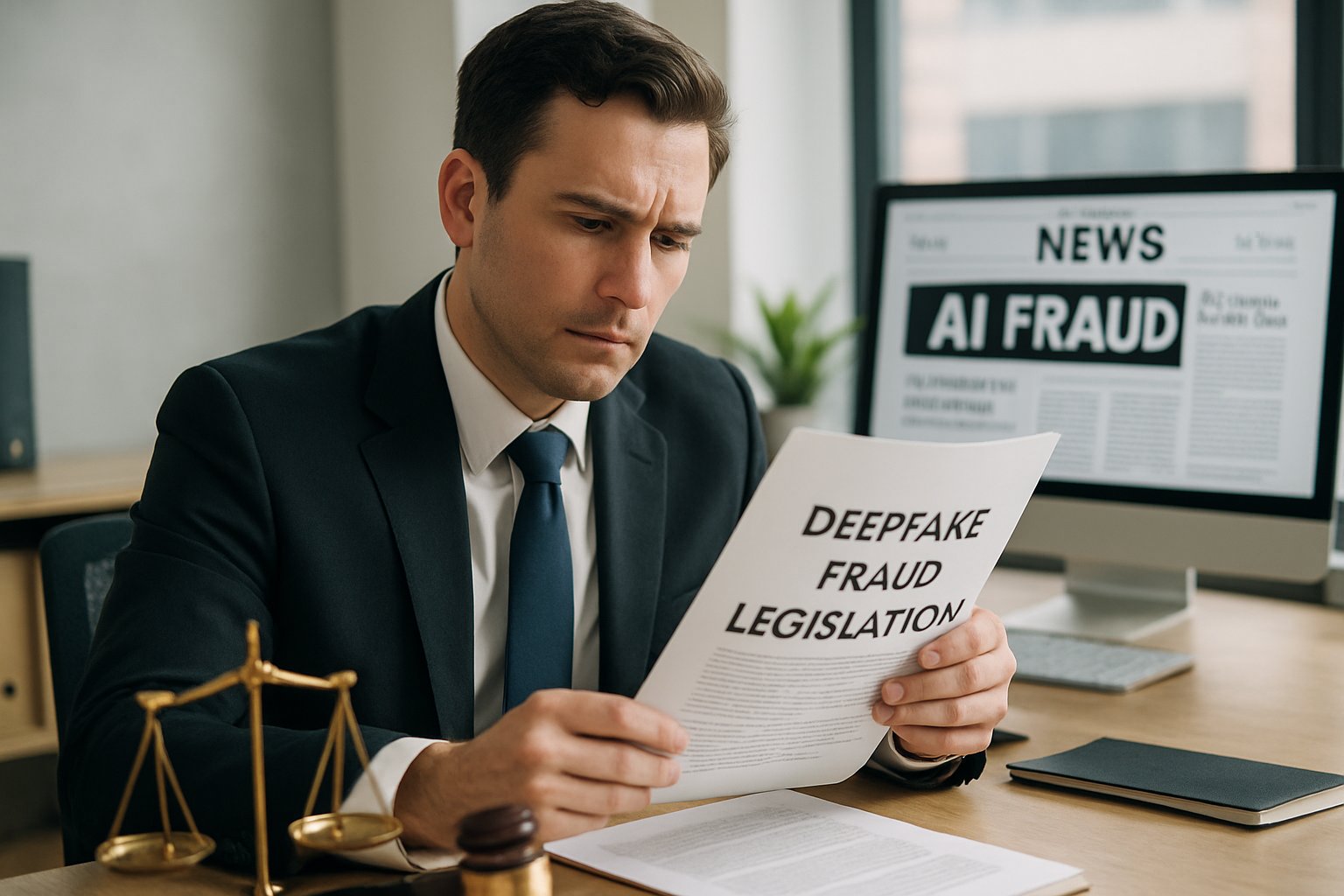
Wisconsin just joined that sprint with new Deepfake Fraud Legislation.
The state’s approach highlights how existing Criminal Law adapts to emerging technical threats.
Furthermore, the proposals reveal growing concern about escalating AI driven Scams.
This article unpacks Wisconsin’s two-part strategy, compares it with other jurisdictions, and explores practical implications.
Additionally, readers will learn where future Deepfake Fraud Legislation may head next.
Professionals can leverage these insights to prepare defences, avoid liability, and guide clients.
Let’s examine why the Badger State moved quickly and what comes afterward.
Wisconsin Legal Framework Shift
Wisconsin previously relied on general Criminal Law to prosecute harassment or fraud.
However, prosecutors struggled when evidence involved AI generated images without clear human authors.
Therefore, bipartisan sponsors introduced targeted Deepfake Fraud Legislation in two stages.
First, 2025 Act 34 criminalised non-consensual synthetic sexual images.
Subsequently, Senator Sarah Keyeski filed a 2026 bill focused on impersonation Scams and fraud.
Both measures signal a shift from reactive enforcement toward preventative deterrence.
Nevertheless, penalties differ, reflecting varied harm profiles.
Those distinctions appear next.
Deepfakes Driving Policy Urgency
Researchers estimate deepfake videos doubled yearly since 2019.
Moreover, a Sensity report found 96 percent still depict non-consensual sexual material.
Victims face reputational ruin, blackmail, and Identity Theft when biometric data leaks.
Consequently, Deepfake Fraud Legislation appeals to lawmakers seeking clear deterrents.
UW-Madison scholar Annette Zimmerman warned voice cloning enables frighteningly simple grandparent Scams.
In contrast, civic liberties groups fear rushed rules may silence parody or journalism.
Balancing those interests remains difficult, yet action momentum continues nationwide.
Therefore, Wisconsin’s statutes provide a timely case study.
These factors explain legislative urgency. However, specific statutory language matters most.
Details Of Act 34
Act 34 defines a “synthetic intimate representation” within the state code.
Posting such content to harass or intimidate becomes a Class I felony under Wisconsin sentencing tables.
Additionally, reproducing private images without consent is classified as a misdemeanor.
Maximum penalties include three-and-a-half years imprisonment plus $10,000 fines.
Moreover, Act 34 modernises Criminal Law terminology by explicitly naming AI derived media.
Governor Tony Evers said the update ensures justice keeps pace with technology.
Nevertheless, enforcement will require technical evidence linking creators to distributed files.
Deepfake Fraud Legislation therefore intersects digital forensics and victim advocacy.
These provisions address intimate-image harms.
However, financial deception demanded another bill.
The act also allows courts to order restitution for therapy and image removal costs.
Moreover, victims may seek injunctions paralleling civil revenge-porn remedies.
The legislative analysis notes minimal fiscal impact on correctional facilities.
However, district attorneys may absorb extra technology training expenses.
Keyeski Scam Bill Explained
Senator Keyeski’s 2026 proposal targets AI impersonation aimed at monetary gain.
Consequently, creating a deepfake to harass becomes a misdemeanor.
Furthermore, using synthetic media to obtain money rises to a felony.
The draft mirrors Pennsylvania’s 2025 “forged digital likeness” statute.
Supporters argue the text plugs gaps left by broader Criminal Law provisions.
Identity Theft victims may finally see clearer prosecutorial paths for cloned voice fraud.
However, civil liberties advocates request narrow definitions to protect satire.
Keyeski needs bipartisan co-sponsors before committees schedule hearings in Wisconsin.
Nevertheless, momentum behind Deepfake Fraud Legislation appears strong across party lines.
The next section reviews practical enforcement barriers.
The draft defines “digital impersonation” broadly, covering audio, video, and hybrid formats.
Furthermore, it directs the Department of Justice to publish consumer alerts within six months.
Sponsors hope proactive education will reduce call-centre fraud before charges ever arise.
Critics respond that education alone rarely deters sophisticated crime rings.
Enforcement Hurdles And Risks
Detecting manipulated media remains an arms race.
Furthermore, attributing files to a defendant demands cross-platform cooperation.
Prosecutors must prove intent, a core element of Deepfake Fraud Legislation.
Meanwhile, overseas hosting complicates subpoenas and takedown orders.
Law enforcement also juggles increased Identity Theft complaints linked to voice clones.
Consequently, agencies require specialised training and forensic tooling.
Professionals can enhance their expertise with the AI Security Specialist™ certification.
Moreover, platforms fear civil liability and over-remove borderline content.
EFF warns such chilling effects may undermine speech safeguards within Criminal Law.
These challenges complicate prosecution.
Nevertheless, emerging standards like watermarking could ease evidence collection.
Practical implications follow below.
Chain-of-custody protocols must include hash logging and secure storage.
Additionally, investigators should collect platform metadata before automated deletion sweeps.
Courts may soon develop bench guides for authenticating generative content exhibits.
Broader State Federal Landscape
More than fifteen states introduced deepfake bills during 2025 alone.
Moreover, the federal TAKE IT DOWN Act established a 48-hour removal window.
In contrast, Wisconsin focused on clear criminal penalties rather than platform deadlines.
Pennsylvania’s Act 35 inspired Keyeski’s draft concerning financial Scams.
Consequently, statutes converge around two themes: intimate content and fraud.
Deepfake Fraud Legislation now evolves through incremental, state-led experimentation.
However, overlapping rules risk creating compliance confusion for national businesses.
Therefore, legal teams must monitor both state and federal registers.
The list below summarises notable milestones.
- July 2025: Pennsylvania Act 35 passed, targeting AI forged likeness fraud.
- October 2025: Wisconsin Act 34 signed, banning synthetic intimate representations.
- January 2026: Keyeski bill introduced, pursuing impersonation Scams penalties.
- 2019 study: 96% of tracked deepfakes were pornographic, highlighting NCII focus.
- Current Wisconsin penalties: Class I felony carries 3.5 years prison and $10,000 fine.
These dates illustrate rapid legislative acceleration.
Consequently, compliance roadmaps must stay flexible.
Next, we outline actionable guidance.
Capitol Hill committees continue studying a nationwide watermark mandate for generative models.
Meanwhile, several countries are experimenting with provenance registries linked to broadcast licensing.
Global developments could eventually harmonise evidentiary standards.
Practical Steps For Professionals
Attorneys should catalogue relevant Deepfake Fraud Legislation across client operating states.
Additionally, update incident response playbooks to preserve synthetic media evidence.
Cyber teams must deploy detection tools and watermark verification.
Meanwhile, policy leads should brief executives on potential Identity Theft fallout.
Moreover, employee education reduces susceptibility to social-engineering Scams.
Professionals seeking deeper technical insight should pursue continuing education.
Therefore, consider the earlier mentioned AI Security Specialist credential.
The following checklist summarises priorities.
- Map applicable laws by jurisdiction.
- Train staff on synthetic media detection.
- Establish forensic evidence chain protocols.
- Monitor vendor compliance with watermark standards.
- Update crisis communications for deepfake incidents.
Implementing these measures builds resilience against future threats.
Consequently, organisations gain early-mover compliance advantages.
Legal departments should coordinate with cybersecurity leads for continuous tabletop exercises.
Additionally, media teams must prepare rapid rebuttal videos to counter malicious fabrications.
Regular audits can reveal outdated response protocols and training gaps.
Conclusion And Next Steps
Deepfake Fraud Legislation has moved from theoretical debate to enforceable statutes within three years.
The Badger State's twin bills demonstrate how states can modernise Criminal Law without waiting for Washington.
Moreover, other jurisdictions will watch closely as courts apply the new provisions.
Consequently, companies and counsel should update compliance playbooks immediately.
Meanwhile, technologists must keep improving detection and provenance tools.
Professionals seeking an edge should pursue the linked AI Security Specialist certification.
Act now, integrate best practices, and guide clients safely through the evolving synthetic media landscape.
Disclaimer: Some content may be AI-generated or assisted and is provided ‘as is’ for informational purposes only, without warranties of accuracy or completeness, and does not imply endorsement or affiliation.


