

AI CERTS
2 months ago
Reliance shake-up tests Battery Supply Chain resilience
Meanwhile, China Tech export controls complicate cross-border knowledge flows. Energy Storage developers now track every statement, because domestic cell output underpins project economics.
Market Rumor Sparks Confusion
Bloomberg’s unnamed sources suggested Reliance engineers recommended halting construction until proven Chinese lines became available. Reuters, in contrast, quoted a company spokesperson insisting milestones remain intact. Nevertheless, investors saw share volatility within minutes. Moreover, India’s Ministry of Heavy Industries faced renewed questions about Production-Linked Incentive enforcement.
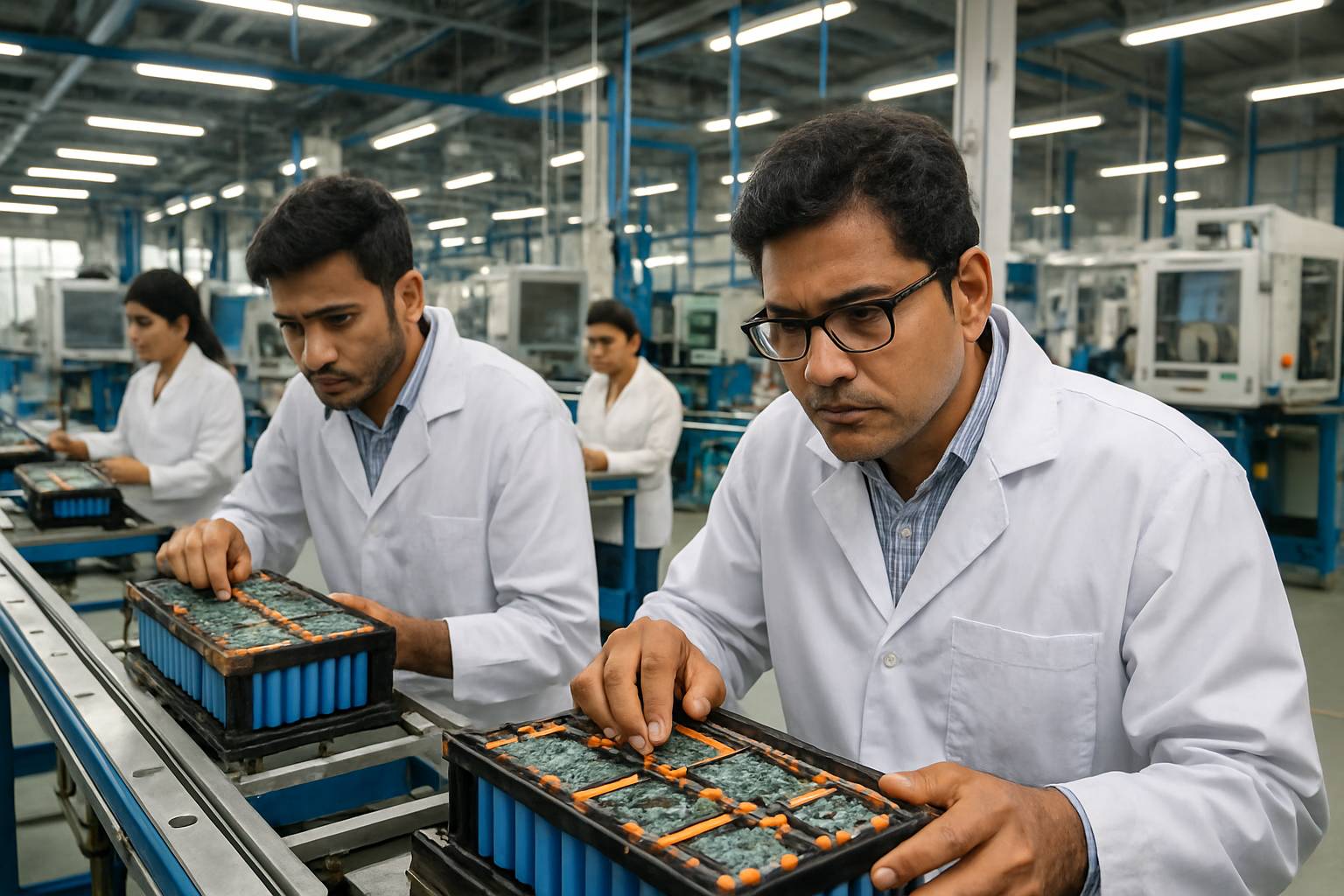
Several domestic outlets amplified the rumor, adding historical context on earlier penalty letters under the PLI scheme. In contrast, Reliance highlighted its February 2025 agreement for 10 GWh of capacity. The Battery Supply Chain debate therefore moved from factory floors to national headlines.
These conflicting narratives cloud near-term visibility. However, understanding policy deadlines clarifies the stakes ahead.
Policy Deadlines Raise Stakes
India’s ACC-PLI programme allocates ₹18,100 crore to spur 50 GWh of cell capacity. Beneficiaries must meet localisation milestones or forfeit subsidies. Consequently, compliance deadlines act as hard gates. Reliance previously requested extra time and absorbed a ₹31 million penalty, yet targets still loom.
Other grantees, including Ola and Rajesh Exports, face similar pressures. Furthermore, officials are considering relaxed localisation ratios because supply chains remain fragile. Clean Energy lobbyists argue that deadline flexibility would sustain momentum. In contrast, fiscal hawks warn of subsidy leakage.
Policy tension therefore intensifies capital-allocation choices. Clearer schedules could stabilise the Battery Supply Chain discussion. Transitioning next, export controls add another external variable.
China Controls Disrupt Licensing
Beijing introduced new export permits for high-performance batteries on 8 November 2025. Consequently, transferring advanced LFP designs now requires ministry approval. China Tech companies weigh strategic risks before sharing intellectual property. Xiamen HiTHIUM reportedly withdrew from talks soon after the regulation.
Analysts believe the rules aim to defend domestic advantages while negotiating global supply positions. Moreover, documentation lists cathode materials, graphite, and selected equipment. Energy Storage integrators dependent on Chinese suppliers must therefore diversify. The Battery Supply Chain faces fresh chokepoints, raising project costs.
Export-control uncertainty narrows supplier pools. However, economic fundamentals still shape feasibility decisions, as the next section explains.
Economics Challenge Local Build
Global cell oversupply has depressed prices. Meanwhile, scale leaders such as CATL undercut new entrants by leveraging mature plants. Therefore, greenfield Indian factories struggle to match delivered costs without proven blueprints.
Reliance reportedly judged non-Chinese licences too expensive per kilowatt-hour. Additionally, domestic raw-material networks remain nascent. Clean Energy proponents acknowledge cost hurdles yet emphasise long-term strategic value. Energy Storage projects for grids need competitive pricing or tariffs rise.
Economic headwinds complicate every Battery Supply Chain forecast. Nevertheless, industry voices provide grounded insight on timelines.
Industry Voices And Data
Debmalya Sen from the India Energy Storage Alliance recently projected two more years before substantial cell output begins. Furthermore, government monitoring by Engineers India Limited tracks monthly progress against PLI milestones. Updated dashboards show varied execution speeds.
Key metrics illustrate the gap:
- 50 GWh national capacity target by 2030.
- 10 GWh assigned to Reliance under February 2025 agreement.
- ₹18,100 crore total incentive pool.
- ₹31 million penalty already levied on Reliance projects.
Such numbers frame strategic debates. Moreover, professionals can enhance their expertise with the AI+ Supply Chain™ certification.
Data points underline urgency. However, companies still require actionable pathways, explored next.
Strategic Paths For Reliance
Multiple options remain on the table. Firstly, Reliance could pursue joint ventures with Korean or European specialists unaffected by China Tech restrictions. Secondly, accelerated in-house R&D might target mid-range chemistries less encumbered by permits. Additionally, importing cells while localising pack assembly offers interim relief.
Government policy can bolster these moves through adjusted customs duties and faster environmental clearances. Clean Energy advocacy groups urge consistent signals to unlock capital. Consequently, deliberate strategy selection will redefine the Battery Supply Chain map within India.
These pathways create divergent risk profiles. Nevertheless, global investors also weigh broader implications.
Implications For Global Investors
Portfolio managers track regulatory, geopolitical, and currency factors simultaneously. Moreover, shifting subsidy frameworks alter return calculations. Energy Storage asset owners need visibility on domestic cell availability before signing long-term power purchase agreements.
Geopolitical analysts note that tighter Chinese export rules may accelerate alternative hubs in Indonesia, the United States, and the Middle East. Consequently, capital may pivot toward ecosystems offering secure Battery Supply Chain access. Clean Energy targets remain aggressive, yet execution will define winners.
Investor sentiment hinges on clarity. However, the story continues evolving, as our conclusion summarises.
Conclusion
Bloomberg’s report sparked debate, yet Reliance insists its gigafactory journey remains intact. Nevertheless, PLI deadlines, China Tech controls, and cost pressures intersect to test every Battery Supply Chain participant. Furthermore, expert data show localisation progress but emphasise two critical years ahead. Clean Energy objectives, Energy Storage economics, and national industrial policy now converge on decisive strategy. Therefore, professionals should monitor policy updates and consider upskilling through accredited programmes. Explore certifications and stay prepared for the next market shift.


